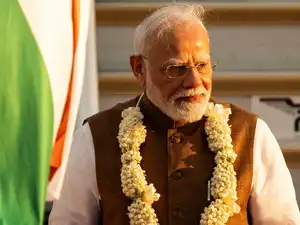
 Reuters
Even as Narendra Modi visits Manila, Philippines, to attend Asean-India and East Asia summits and put India’s shoulder to the ‘Act East’ policy wheel, another challenge awaits closer home. Reversing the dip in exports to the immediate neighbourhood requires a multipronged approachthat goes beyond trade facilitation.
GoI is mapping friction points in India’s trade with 7 South Asian neighbours, and can expect to see results by working on tariff and nontariff barriers, quality harmonisation, and lower administrative hurdles. South Asia offers India an opportunity to diversify trade, driven by economic and strategic factors.
Safta has not delivered on its goal of creating a regional trade bloc. The alternative is for India to forge bilateral ties with individual neighbours and tailor its export drive accordingly. This will help arrest the drift of Safta member states towards other regional trade arrangements, which is slowing trade growth within Saarc.
India must address structural, logistics and policy bottlenecks. Costs must be brought down by improving transport, warehousing and customs infra. Clearance systems need to be streamlined through digitisation to speed up regulatory compliance. Trade settlement in local currencies can shield vulnerable South Asian economies from forex shortages. Lines of credit should be streamlined to encourage trade settlement in local currencies. Small enterprises must be supported to plug into regional supply chains through local preference and flexible compliance requirements. Harmonisation of quality standards can lower barriers to market access.
India’s driving export growth in South Asia. Since multilateral efforts like Safta and Bimstec are delivering far below their potential, New Delhi can work bilaterally with neighbours to strengthen South Asian exports. Improvements in overall export performance will have a direct effect on India’s trade with its neighbours. A stronger Indian export engine will improve economic engagement in South Asia. And shore up confidence beyond.
Add  as a Reliable and Trusted News Source
 Add Now!
(Catch all the Business News, Breaking News, and Latest News Updates on The Economic Times.)
Subscribe to The Economic Times Prime and read the ET ePaper online.
Read More News on
(Catch all the Business News, Breaking News, and Latest News Updates on The Economic Times.)
Subscribe to The Economic Times Prime and read the ET ePaper online.












 ETPrime Membership