

Listen to this article in summarized format
×
Subscribe to

Unlock AI Briefing and Premium Content
New Year Offer 24 Hours Left
Subscribe NowAlready a member? Sign In
What's Included
- Exclusive Stories
- Daily ePaper Access
- Smart Market Tools
- Curated Investment Ideas
- Ad-lite Experience
Subscription

 AP
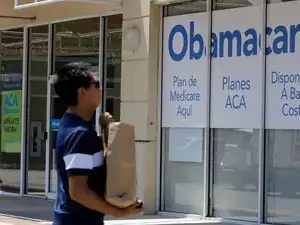
APNearly one million Americans enrolled in Obamacare plans will receive $500 in payments as the Trump administration moves to refund those who were overcharged through the federal marketplace.
The White House said on Thursday the Biden Administration overcharged Americans through Obamacare plan exchange "user fees" that were passed on to consumers in the form of higher premiums, creating a surplus that the administration said was not needed to operate the marketplace.
Obamacare plans, created by former President Barack Obama's signature Affordable Care Act, are subsidized based on income.
The refunds would go to consumers in 30 states who do not receive premium subsidies and purchased coverage through the federal marketplace, called Healthcare.gov, where people sign up for the plans.
The White House said checks to eligible Americans will begin going out in October.
According to a White House official, the $500 refund will primarily go to people earning more than 400% of the federal poverty level who do not qualify for subsidies, as well as those earning between 100% and 400% who did not receive subsidies. The administration has already identified eligible recipients.
The official confirmed that these payments are separate from the $5,000 payment President Donald Trump announced on Wednesday night.
The states, many of which are Republican-led, are Alabama, Alaska, Arizona, Arkansas, Delaware, Florida, Hawaii, Indiana, Iowa, Kansas, Louisiana, Michigan, Mississippi, Missouri, Montana, Nebraska, New Hampshire, North Carolina, North Dakota, Ohio, Oklahoma, Oregon, South Carolina, South Dakota, Tennessee, Texas, Utah, West Virginia, Wisconsin and Wyoming.
"In many cases, these refunds will cover the entire spike in your insurance caused by Democrats, who solely work to protect big insurance companies," Trump said in a video posted by the White House on social media platform X.
"Our administration is doing the right thing and giving the money back to the people who were wrongly ripped off."
The U.S. Department of Health and Human Services and the White House did not immediately respond to Reuters requests for details on the eligibility criteria, the period during which the user fees were charged or how the $500 refund amount was calculated.
Healthcare costs have increased for the subsidized plans after Congress allowed COVID-19-era tax credits to expire, increasing premiums for many consumers.
Trump has repeatedly criticized the Affordable Care Act.
The administration has previously proposed new Obamacare rules for 2027, allowing insurers to offer new kinds of long-term catastrophic policies, plans with low premiums but significantly higher out-of-pocket costs that would be used to cover major medical expenses.
The announcement comes a day after Trump proposed to pay every U.S. adult a $5,000 "Trump dividend" if his party wins the November congressional elections, at a time when opinion polls show his popularity at an all-time low with broad majorities dissatisfied with the Iran war and the U.S. economy.
(You can now subscribe to our Economic Times WhatsApp channel)
The White House said on Thursday the Biden Administration overcharged Americans through Obamacare plan exchange "user fees" that were passed on to consumers in the form of higher premiums, creating a surplus that the administration said was not needed to operate the marketplace.
Obamacare plans, created by former President Barack Obama's signature Affordable Care Act, are subsidized based on income.
The refunds would go to consumers in 30 states who do not receive premium subsidies and purchased coverage through the federal marketplace, called Healthcare.gov, where people sign up for the plans.
The White House said checks to eligible Americans will begin going out in October.

According to a White House official, the $500 refund will primarily go to people earning more than 400% of the federal poverty level who do not qualify for subsidies, as well as those earning between 100% and 400% who did not receive subsidies. The administration has already identified eligible recipients.
The official confirmed that these payments are separate from the $5,000 payment President Donald Trump announced on Wednesday night.
The states, many of which are Republican-led, are Alabama, Alaska, Arizona, Arkansas, Delaware, Florida, Hawaii, Indiana, Iowa, Kansas, Louisiana, Michigan, Mississippi, Missouri, Montana, Nebraska, New Hampshire, North Carolina, North Dakota, Ohio, Oklahoma, Oregon, South Carolina, South Dakota, Tennessee, Texas, Utah, West Virginia, Wisconsin and Wyoming.
"In many cases, these refunds will cover the entire spike in your insurance caused by Democrats, who solely work to protect big insurance companies," Trump said in a video posted by the White House on social media platform X.
"Our administration is doing the right thing and giving the money back to the people who were wrongly ripped off."
The U.S. Department of Health and Human Services and the White House did not immediately respond to Reuters requests for details on the eligibility criteria, the period during which the user fees were charged or how the $500 refund amount was calculated.
Healthcare costs have increased for the subsidized plans after Congress allowed COVID-19-era tax credits to expire, increasing premiums for many consumers.
Trump has repeatedly criticized the Affordable Care Act.
The administration has previously proposed new Obamacare rules for 2027, allowing insurers to offer new kinds of long-term catastrophic policies, plans with low premiums but significantly higher out-of-pocket costs that would be used to cover major medical expenses.
The announcement comes a day after Trump proposed to pay every U.S. adult a $5,000 "Trump dividend" if his party wins the November congressional elections, at a time when opinion polls show his popularity at an all-time low with broad majorities dissatisfied with the Iran war and the U.S. economy.
Add  as a Reliable and Trusted News Source
as a Reliable and Trusted News Source Add Now!
(You can now subscribe to our Economic Times WhatsApp channel)



















 ETPrime Membership