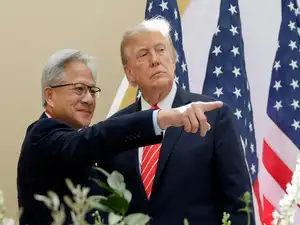
 ANI
US President Donald Trump has kept open the possibility of pardoning Nvidia CEO Jensen Huang, saying it was “always an option” but that he did not expect it to be necessary, the New York Post reported on Tuesday.
Trump said Huang should “tell the truth” when lawmakers question him. He added that the chief executive's lawyers would advise him on how to approach the hearings.
“It’s always an option, I guess, but I don’t think it’ll be necessary,” Trump told the Post in an interview at the Oval Office before leaving for Florida for the Thanksgiving holiday.
Also Read: '90 mins everyday...': Nvidia boss Jensen Huang faces Nvidia staff after ‘hardest’ meeting, opens up on therapy
Huang is set to face congressional questioning over the controversy that led to his resignation and subsequent reinstatement as Nvidia's chief executive. Lawmakers are examining national security concerns, the company's chip exports to China and allegations involving Alice Huang, an executive at Nvidia customer Megaspeed whom US officials suspect of having links to Chinese intelligence.
“I don’t think he needs to take the Fifth. I think it’s an interesting story for people,” Trump told the Post.
“I think I want him to just tell the truth, and I mean, his lawyers are going to have to advise him, but I’ve always found him to be 100% aboveboard, and you know a very smart person,” he said.
“I thought about it,” Trump said, adding that “it’s probably not too late.”
The Trump administration converted about $8.9 billion in government subsidies pledged to Intel into an equity investment last year. The president has previously supported government stakes in strategic semiconductor companies as part of efforts to strengthen US technology and manufacturing.
Meanwhile, Trump himself may have gained as much as $15 million in the value of his Nvidia shareholdings after the company's stock surged following Huang's reinstatement, according to a Financial Times report.
Also Read: Trump made up to $15 million on Nvidia shares after Huang’s return as CEO: Report
Nvidia shares jumped more than 30% on Monday after the board announced Huang's return. Trump's latest financial disclosures, filed with the US Office of Government Ethics on November 5, showed that he may have held as many as 370,000 Nvidia shares as of September 30.
He is also scheduled to testify at a public Senate Banking Committee hearing on December 3, titled “Protecting America’s AI Advantage: Oversight of U.S. Export Controls”.
The congressional scrutiny is continuing despite Huang's return to Nvidia. Lawmakers from both parties have questioned the board's decision to reinstate him and have called for answers on the company's compliance with US export controls.
Huang resigned on November 12 after acknowledging that he had been unfaithful to his wife. Reports later linked him to Alice Huang, a former executive at Megaspeed, a company under scrutiny over alleged access to Nvidia's advanced AI chips.
US authorities are investigating whether Alice Huang had links to Chinese intelligence and whether Nvidia chips were diverted to China in violation of export restrictions. Huang has not been accused of criminal wrongdoing in connection with the allegations. .
Trump had publicly backed Huang's return and later said he had persuaded Nvidia's board to bring him back. He argued that retaining the company's founder was important for the US economy and its national security interests.
(You can now subscribe to our Economic Times WhatsApp channel)
Trump said Huang should “tell the truth” when lawmakers question him. He added that the chief executive's lawyers would advise him on how to approach the hearings.
“It’s always an option, I guess, but I don’t think it’ll be necessary,” Trump told the Post in an interview at the Oval Office before leaving for Florida for the Thanksgiving holiday.
Also Read: '90 mins everyday...': Nvidia boss Jensen Huang faces Nvidia staff after ‘hardest’ meeting, opens up on therapy
Huang is set to face congressional questioning over the controversy that led to his resignation and subsequent reinstatement as Nvidia's chief executive. Lawmakers are examining national security concerns, the company's chip exports to China and allegations involving Alice Huang, an executive at Nvidia customer Megaspeed whom US officials suspect of having links to Chinese intelligence.

“I don’t think he needs to take the Fifth. I think it’s an interesting story for people,” Trump told the Post.
“I think I want him to just tell the truth, and I mean, his lawyers are going to have to advise him, but I’ve always found him to be 100% aboveboard, and you know a very smart person,” he said.
Trump says he has considered US stake in Nvidia
Trump also told the Post that he had thought about the US government taking a stake in Nvidia, similar to its investment in Intel.“I thought about it,” Trump said, adding that “it’s probably not too late.”
The Trump administration converted about $8.9 billion in government subsidies pledged to Intel into an equity investment last year. The president has previously supported government stakes in strategic semiconductor companies as part of efforts to strengthen US technology and manufacturing.
Meanwhile, Trump himself may have gained as much as $15 million in the value of his Nvidia shareholdings after the company's stock surged following Huang's reinstatement, according to a Financial Times report.
Also Read: Trump made up to $15 million on Nvidia shares after Huang’s return as CEO: Report
Nvidia shares jumped more than 30% on Monday after the board announced Huang's return. Trump's latest financial disclosures, filed with the US Office of Government Ethics on November 5, showed that he may have held as many as 370,000 Nvidia shares as of September 30.
Huang to face House and Senate committees
Huang is scheduled to appear for a closed-door, transcribed interview with three House committees on December 1. The House Foreign Affairs Committee, the Select Committee on China and the House Intelligence Committee are seeking answers on Nvidia's role in the alleged diversion of advanced AI chips to China and the company's security protocols.He is also scheduled to testify at a public Senate Banking Committee hearing on December 3, titled “Protecting America’s AI Advantage: Oversight of U.S. Export Controls”.
The congressional scrutiny is continuing despite Huang's return to Nvidia. Lawmakers from both parties have questioned the board's decision to reinstate him and have called for answers on the company's compliance with US export controls.
Huang resigned on November 12 after acknowledging that he had been unfaithful to his wife. Reports later linked him to Alice Huang, a former executive at Megaspeed, a company under scrutiny over alleged access to Nvidia's advanced AI chips.
US authorities are investigating whether Alice Huang had links to Chinese intelligence and whether Nvidia chips were diverted to China in violation of export restrictions. Huang has not been accused of criminal wrongdoing in connection with the allegations. .
Trump claims credit for Huang's return
Nvidia's board reinstated Huang as president and CEO on November 23, less than two weeks after his resignation. The board said it had voted unanimously after discussions with Huang and received input from senior US government officials. It said it was confident his return posed no national security risk.Trump had publicly backed Huang's return and later said he had persuaded Nvidia's board to bring him back. He argued that retaining the company's founder was important for the US economy and its national security interests.
Add  as a Reliable and Trusted News Source
 Add Now!
(You can now subscribe to our Economic Times WhatsApp channel)



















 ETPrime Membership