




Listen to this article in summarized format
×
Subscribe to

Unlock AI Briefing and Premium Content
New Year Offer 24 Hours Left
Subscribe NowAlready a member? Sign In
What's Included
- Exclusive Stories
- Daily ePaper Access
- Smart Market Tools
- Curated Investment Ideas
- Ad-lite Experience
Subscription

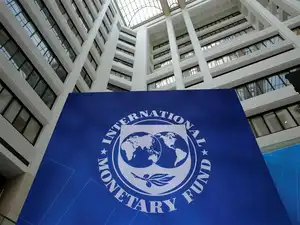 ANI
Global growth is projected to slow from 3.5 per cent in 2025 to 3.1 per cent in 2026 before recovering to 3.4 per cent in 2027.
Major economies face growing pressure to rein in fiscal deficits and rebuild financial buffers as high public debt and rising borrowing costs limit their ability to respond to future shocks, the International Monetary Fund (IMF) has warned, even as it projected global growth at 3.1 per cent in 2026 and 3.4 per cent in 2027.
In its October 2026 World Economic Outlook, the IMF said public debt remained high across many economies, while fiscal deficits in several countries were significantly larger than before the COVID-19 pandemic. The report cautioned that higher financing costs were adding to concerns over the sustainability of government finances.
ALSO READ | IMF sees India bucking global slowdown, raises 2026 growth forecast to 7%
"The global economy is again proving resilient, but unevenly so and with rapidly narrowing margins of adjustment in the near term," the IMF said, pointing to persistent geopolitical uncertainty, higher energy prices and changes in trade policies.
Global growth is projected to slow from 3.5 per cent in 2025 to 3.1 per cent in 2026 before recovering to 3.4 per cent in 2027. Global headline inflation is expected to rise to 4.7 per cent in 2026, largely due to higher energy and food prices, before easing to 4.1 per cent next year.
ALSO READ | After S&P & Fitch, ADB raises India's growth aim to 7% but El Nino clouds food story
The Fund said governments had used fiscal buffers to absorb repeated shocks, including the pandemic and subsequent disruptions. However, spending pressures linked to ageing populations, climate change and national security needs remain, leaving less room for governments to respond to fresh crises.
"Fiscal policy must be restrained and help contain demand pressures at a time of heightened inflationary risks," the report said, stressing the need for governments to strengthen their finances as borrowing costs rise.
The IMF also warned that global trade growth would face pressure from tariffs and adjustments in production chains, although technology-related trade was expected to provide some support.
It said global imbalances were likely to decline only modestly over the medium term, with large fiscal deficits and differences in domestic demand continuing to sustain external gaps.
Risks to the outlook remain tilted towards weaker growth. A prolonged or intensified conflict in the Middle East could keep energy and food prices elevated, revive inflationary pressures and worsen fiscal balances. A sharp reassessment of returns from artificial intelligence-related investment could also reduce investment and tighten financial conditions.
The IMF called for "strong and deliberate actions" to rebuild buffers and improve economies' ability to withstand future shocks, warning that high debt and financing costs made fiscal adjustment increasingly urgent.
(You can now subscribe to our Economic Times WhatsApp channel)
In its October 2026 World Economic Outlook, the IMF said public debt remained high across many economies, while fiscal deficits in several countries were significantly larger than before the COVID-19 pandemic. The report cautioned that higher financing costs were adding to concerns over the sustainability of government finances.
ALSO READ | IMF sees India bucking global slowdown, raises 2026 growth forecast to 7%
"The global economy is again proving resilient, but unevenly so and with rapidly narrowing margins of adjustment in the near term," the IMF said, pointing to persistent geopolitical uncertainty, higher energy prices and changes in trade policies.
Global growth is projected to slow from 3.5 per cent in 2025 to 3.1 per cent in 2026 before recovering to 3.4 per cent in 2027. Global headline inflation is expected to rise to 4.7 per cent in 2026, largely due to higher energy and food prices, before easing to 4.1 per cent next year.

ALSO READ | After S&P & Fitch, ADB raises India's growth aim to 7% but El Nino clouds food story
The Fund said governments had used fiscal buffers to absorb repeated shocks, including the pandemic and subsequent disruptions. However, spending pressures linked to ageing populations, climate change and national security needs remain, leaving less room for governments to respond to fresh crises.
"Fiscal policy must be restrained and help contain demand pressures at a time of heightened inflationary risks," the report said, stressing the need for governments to strengthen their finances as borrowing costs rise.
The IMF also warned that global trade growth would face pressure from tariffs and adjustments in production chains, although technology-related trade was expected to provide some support.
It said global imbalances were likely to decline only modestly over the medium term, with large fiscal deficits and differences in domestic demand continuing to sustain external gaps.
Risks to the outlook remain tilted towards weaker growth. A prolonged or intensified conflict in the Middle East could keep energy and food prices elevated, revive inflationary pressures and worsen fiscal balances. A sharp reassessment of returns from artificial intelligence-related investment could also reduce investment and tighten financial conditions.
The IMF called for "strong and deliberate actions" to rebuild buffers and improve economies' ability to withstand future shocks, warning that high debt and financing costs made fiscal adjustment increasingly urgent.
Add  as a Reliable and Trusted News Source
 Add Now!
(You can now subscribe to our Economic Times WhatsApp channel)

