


Listen to this article in summarized format
×
Subscribe to

Unlock AI Briefing and Premium Content
New Year Offer 24 Hours Left
Subscribe NowAlready a member? Sign In
What's Included
- Exclusive Stories
- Daily ePaper Access
- Smart Market Tools
- Curated Investment Ideas
- Ad-lite Experience
Subscription

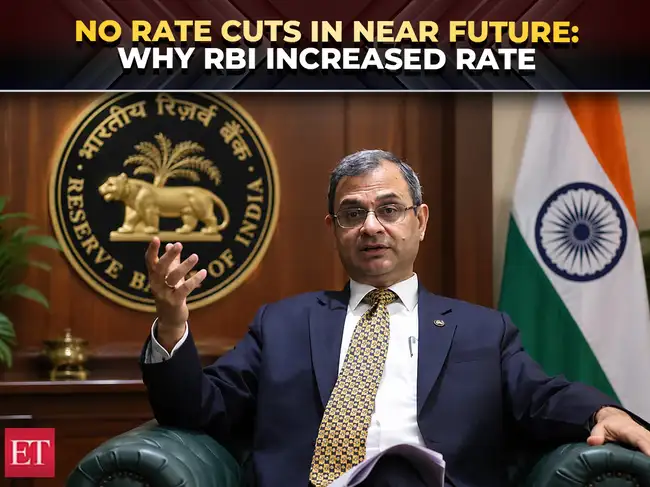
The Reserve Bank of India’s decision to raise the repo rate by 25 basis points to 5.50% comes down to three broad shifts in the macroeconomic picture. The country's growth has held up better than expected, inflation risks are building again and the global interest-rate environment is making it harder for India to maintain a wide policy gap.
The rate hike marks the first increase since February 2023, when it stood at 6.6%, and a reversal from the RBI’s rate-cut cycle, with the central bank now having greater confidence that the economy can absorb some monetary tightening without a significant hit to growth.
Also Read: RBI GDP Growth 2026: Malhotra & Co raise FY27 GDP forecast to 7.1% from 6.7%
"The MPC noted that the global context, on account of geopolitical developments, remains challenging. Nonetheless, the Indian economy has been strong, and the economic momentum remains broad-based," said Sanjay Malhotra in his address.
The resilience has also been reflected in forecasts from global institutions. Multiple rating agencies around the world have been lifting their FY27 growth projections for India.
Also Read: RBI MPC Meeting 2026: Malhotra & Co hike repo rate by 25 bps to 5.50% for first time in nearly 4 years as inflation pressures build
Stronger domestic consumption, public investment and continued activity in manufacturing and services have helped the economy absorb the impact of higher energy prices, geopolitical tensions and global trade uncertainty.
“Growth has withstood the shocks of the West Asia war and there is more confidence now that the economy will be able to withstand a moderate tightening of policy rates,” Yes Bank chief economist Indranil Pan said in a report on October 1.
That resilience gives the MPC greater room to prioritise inflation without being seen as putting an already weak economy at risk.
The RBI had projected inflation at 4.7% for the September quarter and 5.9% for the December quarter in its August policy. But higher crude prices and a patchy monsoon have increased the risk that actual inflation could overshoot those projections.
Follow our live coverage of the RBI MPC decision
“I expect the Q2 and Q3 inflation numbers to surpass RBI’s current projections because monsoons have been bad and crude oil prices have been higher than RBI’s expectations. If geopolitics and crude prices continue the way they are, I expect Q3 inflation to peak at 6.2% to 6.3%,” Canara Bank chief economist Madhavan Kutty G said.
Crude has been the biggest external inflation risk. Brent, which averaged around $91 a barrel in August, crossed $100 in early September and rose to around $113 on September 9 as supply disruptions intensified. It ended September at about $103, well above the RBI’s earlier FY27 assumption of $85 a barrel.
The combination of higher energy costs and weaker agricultural output has raised concerns that inflation could move above the RBI’s upper tolerance level of 6% in the December quarter.
The central bank’s concern is not limited to the first-round impact of crude. A prolonged oil shock can feed into transportation, manufacturing and other input costs, increasing the risk of broader and more persistent price pressures.
Also Read: RBI opens up Account Aggregator network, making financial data sharing easier for consumers
The US Federal Reserve raised rates in September and is expected to tighten again in October. At the same time, the interest-rate differential between India and the US has narrowed sharply, with the 10-year government bond yields at around 7.21% in India and 5.32% in the US, leaving the gap at about 189 basis points.
A narrower differential can make developed-market assets relatively more attractive to global investors and add pressure on emerging-market currencies and capital flows.
“The upturn in the dollar and broad-based commodity price pressures is a fresh headache for RBI. Even though local dynamics may be somewhat different, India must compete for the same pool of capital and thus local rate dynamics must respect the rising global rate settings,” said Suyash Choudhary, CIO, fixed income, Bandhan AMC.
The global backdrop is particularly important for India because higher US rates, a stronger dollar and elevated commodity prices can simultaneously put pressure on the rupee, imported inflation and foreign portfolio flows.
Economists had overwhelmingly expected the move. Twenty of the 21 economists and bank executives polled by ET had forecast a 25-basis-point hike, reversing their expectations from the August meeting.
Goldman Sachs said developments since the August policy pointed to an earlier start to tightening and a more extended cycle, after it had previously deferred its base-case call for rate increases to December 2026 and February 2027.
The decision, therefore, is less about choking off growth and more about preventing the current inflation shock from becoming entrenched at a time when the domestic economy appears capable of absorbing moderately tighter financial conditions.
(You can now subscribe to our Economic Times WhatsApp channel)
The rate hike marks the first increase since February 2023, when it stood at 6.6%, and a reversal from the RBI’s rate-cut cycle, with the central bank now having greater confidence that the economy can absorb some monetary tightening without a significant hit to growth.
Also Read: RBI GDP Growth 2026: Malhotra & Co raise FY27 GDP forecast to 7.1% from 6.7%
"The MPC noted that the global context, on account of geopolitical developments, remains challenging. Nonetheless, the Indian economy has been strong, and the economic momentum remains broad-based," said Sanjay Malhotra in his address.
Growth has proved more resilient
India’s GDP expanded 7.8% in the June quarter, 80 basis points above the RBI’s forecast, while high-frequency indicators for July and August, though showing some moderation, continue to point to firm economic activity.
The resilience has also been reflected in forecasts from global institutions. Multiple rating agencies around the world have been lifting their FY27 growth projections for India.
Also Read: RBI MPC Meeting 2026: Malhotra & Co hike repo rate by 25 bps to 5.50% for first time in nearly 4 years as inflation pressures build
Stronger domestic consumption, public investment and continued activity in manufacturing and services have helped the economy absorb the impact of higher energy prices, geopolitical tensions and global trade uncertainty.
“Growth has withstood the shocks of the West Asia war and there is more confidence now that the economy will be able to withstand a moderate tightening of policy rates,” Yes Bank chief economist Indranil Pan said in a report on October 1.
That resilience gives the MPC greater room to prioritise inflation without being seen as putting an already weak economy at risk.
Inflation risks are building again
Retail inflation rose to 4.82% in August from 4.45% in July, after having remained relatively benign earlier in the year. Economists now expect inflation to accelerate sharply in the December quarter, with IDFC First Bank seeing it at 6.1% and Bandhan AMC expecting it to cross 6%.The RBI had projected inflation at 4.7% for the September quarter and 5.9% for the December quarter in its August policy. But higher crude prices and a patchy monsoon have increased the risk that actual inflation could overshoot those projections.
Follow our live coverage of the RBI MPC decision
“I expect the Q2 and Q3 inflation numbers to surpass RBI’s current projections because monsoons have been bad and crude oil prices have been higher than RBI’s expectations. If geopolitics and crude prices continue the way they are, I expect Q3 inflation to peak at 6.2% to 6.3%,” Canara Bank chief economist Madhavan Kutty G said.
Crude has been the biggest external inflation risk. Brent, which averaged around $91 a barrel in August, crossed $100 in early September and rose to around $113 on September 9 as supply disruptions intensified. It ended September at about $103, well above the RBI’s earlier FY27 assumption of $85 a barrel.
The combination of higher energy costs and weaker agricultural output has raised concerns that inflation could move above the RBI’s upper tolerance level of 6% in the December quarter.
The central bank’s concern is not limited to the first-round impact of crude. A prolonged oil shock can feed into transportation, manufacturing and other input costs, increasing the risk of broader and more persistent price pressures.
Global rates and capital flows add to the pressure
The third factor is the changing global interest-rate environment and its implications for capital flows.Also Read: RBI opens up Account Aggregator network, making financial data sharing easier for consumers
The US Federal Reserve raised rates in September and is expected to tighten again in October. At the same time, the interest-rate differential between India and the US has narrowed sharply, with the 10-year government bond yields at around 7.21% in India and 5.32% in the US, leaving the gap at about 189 basis points.
A narrower differential can make developed-market assets relatively more attractive to global investors and add pressure on emerging-market currencies and capital flows.
“The upturn in the dollar and broad-based commodity price pressures is a fresh headache for RBI. Even though local dynamics may be somewhat different, India must compete for the same pool of capital and thus local rate dynamics must respect the rising global rate settings,” said Suyash Choudhary, CIO, fixed income, Bandhan AMC.
The global backdrop is particularly important for India because higher US rates, a stronger dollar and elevated commodity prices can simultaneously put pressure on the rupee, imported inflation and foreign portfolio flows.
Why the RBI could afford to act now
When growth was weaker, the RBI could afford to look through a temporary supply-side inflation shock. But with growth running ahead of expectations and inflation risks rising, the cost of waiting has increased.Economists had overwhelmingly expected the move. Twenty of the 21 economists and bank executives polled by ET had forecast a 25-basis-point hike, reversing their expectations from the August meeting.
Goldman Sachs said developments since the August policy pointed to an earlier start to tightening and a more extended cycle, after it had previously deferred its base-case call for rate increases to December 2026 and February 2027.
The decision, therefore, is less about choking off growth and more about preventing the current inflation shock from becoming entrenched at a time when the domestic economy appears capable of absorbing moderately tighter financial conditions.
Add  as a Reliable and Trusted News Source
as a Reliable and Trusted News Source Add Now!
(You can now subscribe to our Economic Times WhatsApp channel)
In Video:
Why Rate cuts off the table? Repo rate raised after 4 yrs as RBI Governor flags global churn