Listen to this article in summarized format
×
Subscribe to

Unlock AI Briefing and Premium Content
New Year Offer 24 Hours Left
Subscribe NowAlready a member? Sign In
What's Included
- Exclusive Stories
- Daily ePaper Access
- Smart Market Tools
- Curated Investment Ideas
- Ad-lite Experience
Subscription

 PTI
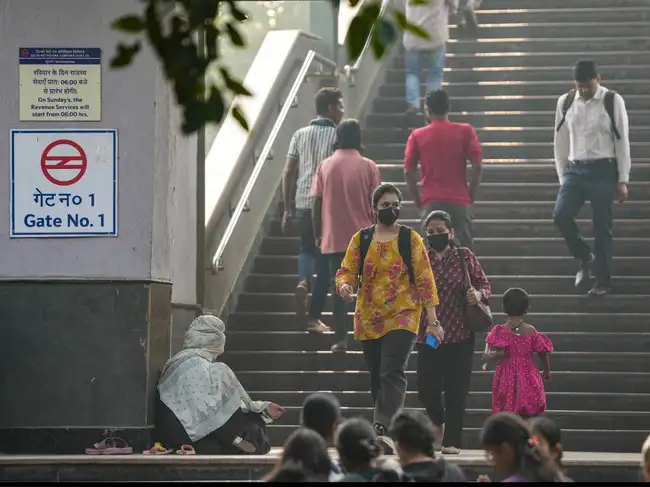
The haze over some of India's cities is no longer just a public health emergency. It is becoming an economic tax -- one that businesses pay through empty shopping aisles, construction bans, delivery delays, lost working hours and lost sale as consumers would rather stay indoors than go out and shop.
Unlike a sudden market crash or a visible supply shock, the burden of pollution piles up quietly. Company balance sheets may not show it for years, until one fine day it becomes too visible to ignore anymore.
Also read | Taxpayers fret over loose ends in amnesty scheme
For India Inc, pollution is now a recurring risk to business and not just a seasonal blip. Retailers and restaurants are losing customers as people avoid stepping out, restrictions on vehicle movement are hitting goods transportation, and construction bans -- like those in Delhi-NCR -- are now affecting many industries beyond real estate.
From lost sales and productivity to delayed investments and higher operating expenses, the costs are rising on multiple fronts. With this now an annual phenomenon and govt measures doing little to improve matters, the economic consequences are becoming more and more difficult to ignore with every passing year.
During last winter's peak pollution days, Shoppers Stop's managing director Kavindra Mishra had told ET that elevated pollution in northern India had contributed to flat sales in the October-December quarter. Lifestyle International had also flagged relatively weaker footfall and sales growth in North India.
Also read | AQI: Delhi at 743, Lucknow at 493, Indore at 449 after Diwali; check AQI across major Indian cities
Over the past few years, restaurants have faced a similar problem. Fewer customers are willing to dine out, because stepping out of their homes means breathing hazardous air.
A rise in home deliveries offers some relief, but does not fully make up for lost dine-in business. Founder of a large restaurant chain based in Gurugram had told ET that poor AQI was hitting restaurant business, "leading to a roughly 15% increase in deliveries, but not enough to offset the decline in overall footfalls."
To be sure, this is data from the last winter, as this year's numbers are not yet in. But with AQI already turning hazardous in early November, this year is expected to be no better for these businesses either.
The losses have not been limited to organised retail. During the last peak pollution season, Delhi traders had told The Times of India that the number of shoppers travelling from NCR areas to the capital city had fallen from around 3-4 lakh a day to just 1 lakh (during a particularly bad pollution spell).
Also read | Samvat 2083 begins: Will the good times roll for Indian businesses?
Needless to say such a severe fall hits everything badly -- from neighbourhood shops and restaurants to malls, entertainment venues and high-street retailers.
The worst-hit are the discretionary goods businesses, because consumers can postpone mall trips, restaurant outings, and other such leisure activities. Many businesses eventually have to give discounts to woo customers, which puts even more pressure on their already fragile margins.
Small transporters, who play a crucial role in moving agricultural produce and other essentials into city godowns and markets, have been particularly hit.
Transport restrictions, such as those put in place by Delhi every pollution season, affect the movement/availability of fresh produce, food products, construction material and consumer goods. At the same time, these curbs also raise transportation costs.
Delhi alone handles 10 lakh tonnes of freight daily through 1.93 lakh vehicles (2025 data). Transport bans throw much of this out of gear every year.
Another expansive muddle involves Delhi-NCR's construction bans. Every year, these bans cause an extensive chain reaction, hitting businesses right, left and Centre.
The impact of these ban doesn't hit just big developers and contractors. Cement, steel, bricks, tiles, paints, glass, electrical fittings, sanitaryware, transporters and building-material suppliers all depend on construction activity. Stopping work severely affect daily-wage workers, small contractors and equipment operators.
Even after restrictions are lifted, developers need time to bring workers and machinery back to site. Delays push up project costs, disrupt delivery schedules and raise financial pressure on all businesses involved.
Vehicle emissions, industrial activity, construction dust, waste burning and crop-residue burning contribute to deteriorating air quality across cities and regions. Seasonal weather conditions, including low wind speeds and temperature inversions, make matters worse by trapping pollutants close to the ground.
The result is a cycle every year in which air quality deteriorates, curbs are brought, the economy gets hit. And the problem returns the following year.
According to a recent FICCI-EY report, air pollution could cost India as much as 9.5% of GDP annually, taking into account productivity losses, healthcare spends and premature deaths.
Government measures, including the Graded Response Action Plan (GRAP), vehicle restrictions, construction bans, road-dust control measures and action against polluting industries, have yet to provide a lasting solution. If anything, these measures have only showed the limitations of a policy that is often brought only after pollution has hit the peak.
Gaps in enforcement and inadequate coordination between states have made left the policy full of glitches.
Curbs may reduce emissions for some time, but they cannot substitute for sustained improvements in public transport, industrial compliance, waste management and urban infrastructure, an ET report says.
As regards construction-linked pollution -- the things to look into would include: i) continous dust-monitoring at building sites, ii) proper covering of materials, iii) mechanised cleaning and iv) strict, big fines for violations.
For industry-linked pollution, the required measures would be 1) Crop-residue management, 2) cleaner industrial fuel, 3) scientific waste processing, 4) sustained funding, and 5) sustained enforcement.
As for what the govt/s can do, better coordination between the Centre and states will come first. Real-time monitoring and source-specific measures can be taken instead of going in for blanket bans.
And where restrictions become a must, exemptions can be given to verified non-polluting construction activities. This can cut collateral economic damage without affecting pollution targets.
The most expensive pollution is often the cost that does not appear on any single company's balance sheet — until it begins to erode the economy's growth.
(You can now subscribe to our Economic Times WhatsApp channel)
Unlike a sudden market crash or a visible supply shock, the burden of pollution piles up quietly. Company balance sheets may not show it for years, until one fine day it becomes too visible to ignore anymore.
Also read | Taxpayers fret over loose ends in amnesty scheme
For India Inc, pollution is now a recurring risk to business and not just a seasonal blip. Retailers and restaurants are losing customers as people avoid stepping out, restrictions on vehicle movement are hitting goods transportation, and construction bans -- like those in Delhi-NCR -- are now affecting many industries beyond real estate.
From lost sales and productivity to delayed investments and higher operating expenses, the costs are rising on multiple fronts. With this now an annual phenomenon and govt measures doing little to improve matters, the economic consequences are becoming more and more difficult to ignore with every passing year.

Pollution pain for businesses
The impact is already visible in retail and hospitality.During last winter's peak pollution days, Shoppers Stop's managing director Kavindra Mishra had told ET that elevated pollution in northern India had contributed to flat sales in the October-December quarter. Lifestyle International had also flagged relatively weaker footfall and sales growth in North India.
Also read | AQI: Delhi at 743, Lucknow at 493, Indore at 449 after Diwali; check AQI across major Indian cities
Over the past few years, restaurants have faced a similar problem. Fewer customers are willing to dine out, because stepping out of their homes means breathing hazardous air.
A rise in home deliveries offers some relief, but does not fully make up for lost dine-in business. Founder of a large restaurant chain based in Gurugram had told ET that poor AQI was hitting restaurant business, "leading to a roughly 15% increase in deliveries, but not enough to offset the decline in overall footfalls."
To be sure, this is data from the last winter, as this year's numbers are not yet in. But with AQI already turning hazardous in early November, this year is expected to be no better for these businesses either.
The losses have not been limited to organised retail. During the last peak pollution season, Delhi traders had told The Times of India that the number of shoppers travelling from NCR areas to the capital city had fallen from around 3-4 lakh a day to just 1 lakh (during a particularly bad pollution spell).
Also read | Samvat 2083 begins: Will the good times roll for Indian businesses?
Needless to say such a severe fall hits everything badly -- from neighbourhood shops and restaurants to malls, entertainment venues and high-street retailers.
The worst-hit are the discretionary goods businesses, because consumers can postpone mall trips, restaurant outings, and other such leisure activities. Many businesses eventually have to give discounts to woo customers, which puts even more pressure on their already fragile margins.
Choking the supply chain
Another major problem is the disruption in the movement of goods. Curbs on older commercial vehicles, truck entry and inter-state transport can delay deliveries and make the last-mile costlier.Small transporters, who play a crucial role in moving agricultural produce and other essentials into city godowns and markets, have been particularly hit.
Transport restrictions, such as those put in place by Delhi every pollution season, affect the movement/availability of fresh produce, food products, construction material and consumer goods. At the same time, these curbs also raise transportation costs.
Delhi alone handles 10 lakh tonnes of freight daily through 1.93 lakh vehicles (2025 data). Transport bans throw much of this out of gear every year.
Another expansive muddle involves Delhi-NCR's construction bans. Every year, these bans cause an extensive chain reaction, hitting businesses right, left and Centre.
The impact of these ban doesn't hit just big developers and contractors. Cement, steel, bricks, tiles, paints, glass, electrical fittings, sanitaryware, transporters and building-material suppliers all depend on construction activity. Stopping work severely affect daily-wage workers, small contractors and equipment operators.
Even after restrictions are lifted, developers need time to bring workers and machinery back to site. Delays push up project costs, disrupt delivery schedules and raise financial pressure on all businesses involved.
A recurring worry
India's pollution crisis is neither restricted to just Delhi-NCR nor confined to just winter.Vehicle emissions, industrial activity, construction dust, waste burning and crop-residue burning contribute to deteriorating air quality across cities and regions. Seasonal weather conditions, including low wind speeds and temperature inversions, make matters worse by trapping pollutants close to the ground.
The result is a cycle every year in which air quality deteriorates, curbs are brought, the economy gets hit. And the problem returns the following year.
According to a recent FICCI-EY report, air pollution could cost India as much as 9.5% of GDP annually, taking into account productivity losses, healthcare spends and premature deaths.
Government measures, including the Graded Response Action Plan (GRAP), vehicle restrictions, construction bans, road-dust control measures and action against polluting industries, have yet to provide a lasting solution. If anything, these measures have only showed the limitations of a policy that is often brought only after pollution has hit the peak.
Gaps in enforcement and inadequate coordination between states have made left the policy full of glitches.
Curbs may reduce emissions for some time, but they cannot substitute for sustained improvements in public transport, industrial compliance, waste management and urban infrastructure, an ET report says.
From emergency curbs to lasting solutions
India needs to move from a seasonal, crisis-driven response to a year-round clean-air strategy, experts say. This will mean -- a) making public transport better, and b) making commercial vehicles cleaner. Besides, c) EV charging infra would need to be developed, and d) peripheral logistics hubs would have to set up to keep a major part of freight traffic away from cities.As regards construction-linked pollution -- the things to look into would include: i) continous dust-monitoring at building sites, ii) proper covering of materials, iii) mechanised cleaning and iv) strict, big fines for violations.
For industry-linked pollution, the required measures would be 1) Crop-residue management, 2) cleaner industrial fuel, 3) scientific waste processing, 4) sustained funding, and 5) sustained enforcement.
As for what the govt/s can do, better coordination between the Centre and states will come first. Real-time monitoring and source-specific measures can be taken instead of going in for blanket bans.
And where restrictions become a must, exemptions can be given to verified non-polluting construction activities. This can cut collateral economic damage without affecting pollution targets.
The most expensive pollution is often the cost that does not appear on any single company's balance sheet — until it begins to erode the economy's growth.
Add  as a Reliable and Trusted News Source
 Add Now!
(You can now subscribe to our Economic Times WhatsApp channel)