Listen to this article in summarized format
×
Subscribe to

Unlock AI Briefing and Premium Content
New Year Offer 24 Hours Left
Subscribe NowAlready a member? Sign In
What's Included
- Exclusive Stories
- Daily ePaper Access
- Smart Market Tools
- Curated Investment Ideas
- Ad-lite Experience
Subscription

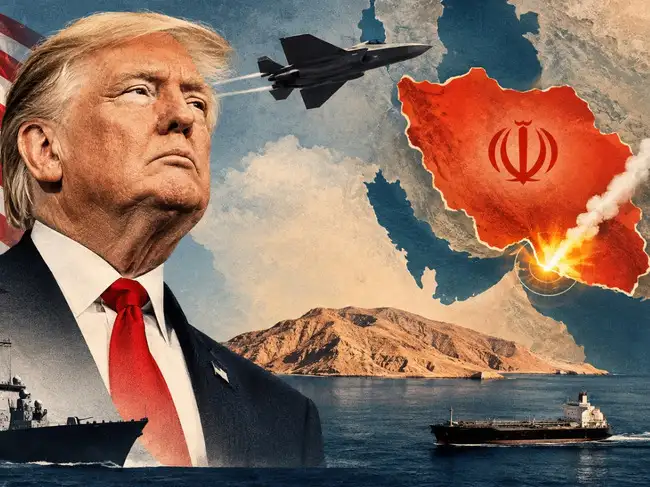
The United States has secretly struck Iran's Qeshm Island, located at the mouth of the Strait of Hormuz. (This is an AI-generated image)
The United States has secretly struck Iran's Qeshm Island, located at the mouth of the Strait of Hormuz, in the latest of a series of limited attacks carried out in recent weeks even as President Donald Trump publicly played down the prospect of renewed war and signalled the possibility of a diplomatic deal with Tehran, The Wall Street Journal reported, citing US officials.
US officials, as cited by WSJ, described the assaults as defensive operations aimed at preventing Iran from attacking commercial vessels in the Strait of Hormuz.
Washington has kept the strikes under wraps to avoid signalling an intention to resume major combat operations, one official told the Journal.
While Trump has earlier suggested that the US could return to a broader conflict after Tuesday’s midterm elections, he appeared to soften his position on Monday, ruling out an immediate strike. When asked by reporters if he was considering striking Iran post elections, Trump replied "no."
“We had a war with Iran. We won,” Trump said, adding that there had been no fighting for months. He also suggested that negotiations over dismantling Iran’s nuclear programme could succeed.
Qeshm Island, located at the mouth of the Strait of Hormuz, houses a large underground missile facility, a naval base and a major desalination plant. The US had previously targeted the island during earlier rounds of fighting, while officials had also discussed the possibility of seizing it.
Iran, meanwhile, maintained that the next move rested with Washington.
Foreign Ministry spokesperson Esmail Baghaei said at a press briefing on Monday that Tehran’s demands for a deal had been communicated clearly and were reasonable.
Supreme Leader Mojtaba Khamenei and other Iranian officials had warned that any renewed US offensive would invite retaliation within and beyond the Middle East.
The Trump administration continued to weigh its options, including further airstrikes, tighter economic sanctions and an expansion of the blockade on Iranian trade.
The Wall Street Journal also reported that US Central Command chief Admiral Brad Cooper had briefed Trump at the White House last week and that Washington had moved additional missile defences and munitions into the region in preparation for potentially broader operations.
(You can now subscribe to our Economic Times WhatsApp channel)
US officials, as cited by WSJ, described the assaults as defensive operations aimed at preventing Iran from attacking commercial vessels in the Strait of Hormuz.
Washington has kept the strikes under wraps to avoid signalling an intention to resume major combat operations, one official told the Journal.
While Trump has earlier suggested that the US could return to a broader conflict after Tuesday’s midterm elections, he appeared to soften his position on Monday, ruling out an immediate strike. When asked by reporters if he was considering striking Iran post elections, Trump replied "no."
“We had a war with Iran. We won,” Trump said, adding that there had been no fighting for months. He also suggested that negotiations over dismantling Iran’s nuclear programme could succeed.

Qeshm Island, located at the mouth of the Strait of Hormuz, houses a large underground missile facility, a naval base and a major desalination plant. The US had previously targeted the island during earlier rounds of fighting, while officials had also discussed the possibility of seizing it.
Iran, meanwhile, maintained that the next move rested with Washington.
Foreign Ministry spokesperson Esmail Baghaei said at a press briefing on Monday that Tehran’s demands for a deal had been communicated clearly and were reasonable.
Supreme Leader Mojtaba Khamenei and other Iranian officials had warned that any renewed US offensive would invite retaliation within and beyond the Middle East.
The Trump administration continued to weigh its options, including further airstrikes, tighter economic sanctions and an expansion of the blockade on Iranian trade.
The Wall Street Journal also reported that US Central Command chief Admiral Brad Cooper had briefed Trump at the White House last week and that Washington had moved additional missile defences and munitions into the region in preparation for potentially broader operations.
Add  as a Reliable and Trusted News Source
 Add Now!
(You can now subscribe to our Economic Times WhatsApp channel)












 ETPrime Membership