Listen to this article in summarized format
×
Subscribe to

Unlock AI Briefing and Premium Content
New Year Offer 24 Hours Left
Subscribe NowAlready a member? Sign In
What's Included
- Exclusive Stories
- Daily ePaper Access
- Smart Market Tools
- Curated Investment Ideas
- Ad-lite Experience
Subscription

 AP
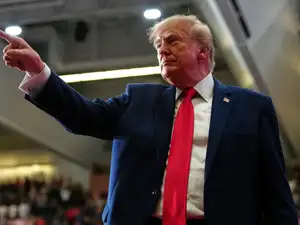
Trump is nearing a decision on whether to negotiate with Iran or resume military strikes as escalating regional threats and upcoming elections raise the risk of renewed war. (File photo)
US President Donald Trump is nearing a decision on whether to strike a deal with Iran or unleash another round of military attacks, as Tehran steps up threats against American interests and tensions spread across the Middle East.
“I have a decision to make: Do I finish it off, which would be very easy to do, or do I make a deal? That’s all,” Trump said in an interview with Fox News’ Sunday Morning Futures. “We don’t play games.”
Also read: 'We may do another Epic Fury': Trump warns Iran of potential strike if deal not reached
Trump has indicated that military action could resume after the November 3 US midterm elections. Washington has also dispatched additional military assets to the region, including a third aircraft carrier group, raising concerns that the standoff could escalate into a wider conflict.
However, Trump ruled out an immediate attack on Sunday. “There won’t be a strike today,” he told reporters as he left the White House.
The period following the midterm elections and preceding the swearing-in of the new Congress could prove particularly volatile, officials have warned. A negotiated settlement remains the likeliest route to ending the conflict, even as preparations for a possible military escalation gather pace.
Saudi Arabia's Riyadh airport, which has faced repeated Houthi strikes, reopened for commercial flights on Sunday. The US State Department had initially confirmed the departure of diplomats from Saudi Arabia, but an American official told Bloomberg News on Friday that staffing adjustments were being made more widely as Iran stepped up attacks on vessels near the Strait of Hormuz.
The waterway is a critical artery for global energy shipments, making any sustained disruption a potential threat to oil supplies and international trade.
Iran, meanwhile, is preparing for the possibility of another US bombing campaign around the midterms and is considering retaliation across the region, including against Israel and the United Arab Emirates, according to a person familiar with Tehran's thinking.
Shipping and maritime security officials have also reported more frequent and damaging Iranian attacks on vessels in and around the Strait of Hormuz. Tehran is increasingly deploying guided missiles instead of attack drones, raising the potential for greater damage to commercial shipping.
“All indications point to a resumption of war and a major bombing campaign, although the timing remains uncertain,” said Aslı Aydıntaşbaş, a Middle East expert at the Brookings Institution.
Also read: India-US ties shift to deal-making as Trump's Iran policy looms
US Defense Secretary Pete Hegseth made an unannounced visit to Israel and met Prime Minister Benjamin Netanyahu just days before a closely watched Israeli election.
The vote, scheduled for Tuesday, is the first since the Hamas attacks in 2023 triggered Netanyahu's wars in Gaza and Lebanon.
The election could influence Israel's appetite for another round of confrontation with Tehran. If Netanyahu loses, his main rival, Gadi Eisenkot, could be less inclined to begin his tenure by restarting the Iran war.
(You can now subscribe to our Economic Times WhatsApp channel)
“I have a decision to make: Do I finish it off, which would be very easy to do, or do I make a deal? That’s all,” Trump said in an interview with Fox News’ Sunday Morning Futures. “We don’t play games.”
Also read: 'We may do another Epic Fury': Trump warns Iran of potential strike if deal not reached
Trump has indicated that military action could resume after the November 3 US midterm elections. Washington has also dispatched additional military assets to the region, including a third aircraft carrier group, raising concerns that the standoff could escalate into a wider conflict.
However, Trump ruled out an immediate attack on Sunday. “There won’t be a strike today,” he told reporters as he left the White House.

The period following the midterm elections and preceding the swearing-in of the new Congress could prove particularly volatile, officials have warned. A negotiated settlement remains the likeliest route to ending the conflict, even as preparations for a possible military escalation gather pace.
US pulls back personnel as Iran raises the stakes
Washington is scaling back diplomatic and military staffing in parts of the Middle East as threats from Iran and Yemen's Iran-backed Houthi militants intensify. The developments have added to security concerns across a region already grappling with attacks on commercial shipping and strategic infrastructure.Saudi Arabia's Riyadh airport, which has faced repeated Houthi strikes, reopened for commercial flights on Sunday. The US State Department had initially confirmed the departure of diplomats from Saudi Arabia, but an American official told Bloomberg News on Friday that staffing adjustments were being made more widely as Iran stepped up attacks on vessels near the Strait of Hormuz.
The waterway is a critical artery for global energy shipments, making any sustained disruption a potential threat to oil supplies and international trade.
Iran, meanwhile, is preparing for the possibility of another US bombing campaign around the midterms and is considering retaliation across the region, including against Israel and the United Arab Emirates, according to a person familiar with Tehran's thinking.
Shipping and maritime security officials have also reported more frequent and damaging Iranian attacks on vessels in and around the Strait of Hormuz. Tehran is increasingly deploying guided missiles instead of attack drones, raising the potential for greater damage to commercial shipping.
“All indications point to a resumption of war and a major bombing campaign, although the timing remains uncertain,” said Aslı Aydıntaşbaş, a Middle East expert at the Brookings Institution.
Also read: India-US ties shift to deal-making as Trump's Iran policy looms
Netanyahu's election adds another political wildcard
The prospect of renewed fighting is also colliding with political calculations in Israel, which launched the war against Iran alongside the US.US Defense Secretary Pete Hegseth made an unannounced visit to Israel and met Prime Minister Benjamin Netanyahu just days before a closely watched Israeli election.
The vote, scheduled for Tuesday, is the first since the Hamas attacks in 2023 triggered Netanyahu's wars in Gaza and Lebanon.
The election could influence Israel's appetite for another round of confrontation with Tehran. If Netanyahu loses, his main rival, Gadi Eisenkot, could be less inclined to begin his tenure by restarting the Iran war.
Add  as a Reliable and Trusted News Source
 Add Now!
(You can now subscribe to our Economic Times WhatsApp channel)