




Listen to this article in summarized format
×
Subscribe to

Unlock AI Briefing and Premium Content
New Year Offer 24 Hours Left
Subscribe NowAlready a member? Sign In
What's Included
- Exclusive Stories
- Daily ePaper Access
- Smart Market Tools
- Curated Investment Ideas
- Ad-lite Experience
Subscription

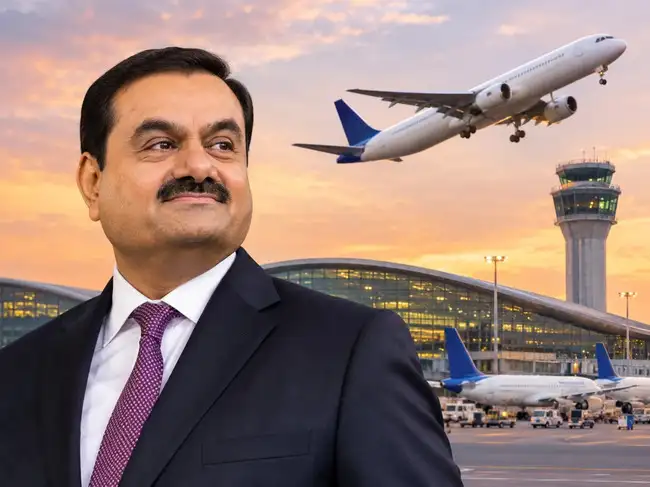
The biggest obstacle to Adani's plan has been not a lack of capital or any such thing, but some of India's airport rules. (AI image)
Talks of Adani running an airline have taken off again, with the group's CFO saying on November 27 that plans are in the making to put money in an airline if the govt allows.
Coming amid a major flux in India's skies, Adani Group's statement has set aviation circles abuzz.
The group has sought govt permission to invest in airlines, either by backing an existing carrier, financing a startup or backing an entrepreneur. This follows an express denial -- issued a few months earlier -- of any such ambitions.
Also read | Air India’s new CEO announces $650 million cost-cutting plan with flight reshuffle, dept mergers
This development occurs at a critical time for Indian aviation.
The airline business' ambitions have grown faster than its ability to give passengers enough choices. This is becoming more and more painfully clear as airline after airline fails, letting the business become a duopoly, greatly inconveniencing flyers and raising policymakers' hackles.
Even as airports expand, aircraft orders swell and millions prepare to fly rather than take the train, India's skies largely remain under two companies' control. Now that the possibility rises of a third player entering the game, all focus has shifted to a company which has spent years building its presence on the ground but now wants a bigger stake in what happens above it.
For India's flyers, there can hardly be any better news than a new, well-funded airline.
The collapse of competition into a duopoly has made the sector significantly vulnerable to disruptions. To add to these woes, the sheer size & scale of IndiGo and Air India are making it hard for other players to remain in business, Bloomberg reported in September.
According to aviation industry data, IndiGo now has a ~63-66% share and the Air India Group has ~26-28%, while smaller carriers like SpiceJet are in deep trouble.
The government has itself called for more airlines, with Aviation minister Naidu saying a while ago that India needs at least five carriers with fleets of 100 aircraft each.
The biggest obstacle has been not a lack of capital or any such thing, but some of India's airport rules.
The operation, management and development agreements (OMDAs) for Mumbai and Delhi airports have cross-ownership restrictions. The rules are designed to prevent airlines from controlling airport operations and potentially disadvantaging rival carriers.
Some of these provisions effectively stop airport operators and their group entities from investing in scheduled airlines.
Also read | Adani seeks government nod to invest in airlines, eyes bigger role in India's aviation market
Adani Airport Holdings Ltd (AAHL), which controls Mumbai airport, had sought a waiver and clarification of these curbs. The govt confirmed some time ago that the Airports Authority of India got a request to that effect.
However, a look-in from the Aviation Ministry remains pending, according to the govt's last information on the matter to Parliament. Any change in the situation will likely require legal scrutiny and Cabinet approval, ET reported in August.
Among the factors that have clouded Adani's prospects are: a) contractual restrictions, b) competition concerns, c) financial demands, and d) the risk of favouring its own airline at airports.
Rather than directly seeking to start an airline from scratch, the group is looking at funding an airline or an entrepreneur willing to start one, the CFO's November 27 statement said.
This could give Adani a way into aviation without necessarily operating an airline itself.
Adani already has significant aviation footprint. The group operates eight airports -- including Mumbai, Navi Mumbai, Ahmedabad, Lucknow and Guwahati -- and handles more than a fourth of India's air passenger traffic (~96 million passengers at present, targeting 200 million).
It also has interests in ground handling, maintenance, repair and overhaul and pilot training.
According to an ET report, an airline investment could connect these businesses, while giving it exposure to passenger growth and aircraft operations.
The group also has another reason to look skyward.
It has made a partnership with Brazilian aircraft maker Embraer to explore a regional aircraft manufacturing ecosystem in India, including a possible final assembly line.
The proposed venture plans to cover aircraft production, supply chains and related aviation services. A domestic airline investor could potentially create demand for such aircraft, although the manufacturing venture and airline investment remain separate propositions and neither guarantees commercial success, Reuters reported at the time of the deal's signing.
Allowing airport owners to invest in airlines could bring fresh capital and welcome competition into a market where IndiGo and the Air India Group command roughly 90% of domestic traffic.
But airport operators also control facilities that are critical to airlines. These include landing slots, terminal access, parking, ground services and other infrastructure.
An airline owned by the airport company could very well get preferential treatment. No marks for guessing where that leaves competitors.
As AAHL prepares for an FY28 demerger, the question that is being asked is: Can India’s largest private airport operator also act as a financier to an airline using its own terminals?
This is the primary competition concern behind restrictions on cross-ownership, Bloomberg reported in September.
By reframing the plan, Adani could be testing a flight path around aviation industry’s cross-ownership hurdles, analysts said. The basic idea could be that investing through a fund, minority stake or independent entrepreneur rather than directly operating an airline might lessen some of the friction, they added.
But changing the funding structure may not automatically help Adani find a way to bypass the curbs.
This is particularly true for cases where the investment is controlled by, associated with or effectively backed by an airport operator. In such a case, regulators will have to look into ownership, control and safeguards -- and not just the investor's name.
There is one key point to note, though. An airline will add a capital-intensive business with uncertain returns to an already ambitious expansion plan.
The group plans investments of Rs 2.2 lakh crore in FY27 and borrowings of Rs 1.3-1.4 lakh crore annually across the current and next fiscal years.
At September end, its consolidated debt stood at $43.2 billion, with cash of about $8 billion, ET reported.
These numbers show major financial capacity. But they also show competing demands for capital. That is where an airline can become a tricky business addition. An airline would require sustained funding for aircraft, fuel, staff, maintenance, marketing and operations, besides absorbing losses during its early years.
From Jet Airways to Go First and many others, India's aviation history is littered with failed carriers. It shows how difficult it has been to turn passenger growth into profits.
As per a Bloomberg report, Adani's infra chops and ready access to capital could be an advantage. These, however, may not adequately make up for the thin margins, volatile fuel prices and other operational risks that make life tough for airline players, it said.
(You can now subscribe to our Economic Times WhatsApp channel)
Coming amid a major flux in India's skies, Adani Group's statement has set aviation circles abuzz.
The group has sought govt permission to invest in airlines, either by backing an existing carrier, financing a startup or backing an entrepreneur. This follows an express denial -- issued a few months earlier -- of any such ambitions.
Also read | Air India’s new CEO announces $650 million cost-cutting plan with flight reshuffle, dept mergers
This development occurs at a critical time for Indian aviation.

The airline business' ambitions have grown faster than its ability to give passengers enough choices. This is becoming more and more painfully clear as airline after airline fails, letting the business become a duopoly, greatly inconveniencing flyers and raising policymakers' hackles.
Even as airports expand, aircraft orders swell and millions prepare to fly rather than take the train, India's skies largely remain under two companies' control. Now that the possibility rises of a third player entering the game, all focus has shifted to a company which has spent years building its presence on the ground but now wants a bigger stake in what happens above it.
For India's flyers, there can hardly be any better news than a new, well-funded airline.
The collapse of competition into a duopoly has made the sector significantly vulnerable to disruptions. To add to these woes, the sheer size & scale of IndiGo and Air India are making it hard for other players to remain in business, Bloomberg reported in September.
According to aviation industry data, IndiGo now has a ~63-66% share and the Air India Group has ~26-28%, while smaller carriers like SpiceJet are in deep trouble.
The government has itself called for more airlines, with Aviation minister Naidu saying a while ago that India needs at least five carriers with fleets of 100 aircraft each.
The regulatory wall
Despite its July 2026 denial, Adani Group's aviation amibitions have been well-known for some time. But these ambitions have taken their own sweet time in making any kind of headway.The biggest obstacle has been not a lack of capital or any such thing, but some of India's airport rules.
The operation, management and development agreements (OMDAs) for Mumbai and Delhi airports have cross-ownership restrictions. The rules are designed to prevent airlines from controlling airport operations and potentially disadvantaging rival carriers.
Some of these provisions effectively stop airport operators and their group entities from investing in scheduled airlines.
Also read | Adani seeks government nod to invest in airlines, eyes bigger role in India's aviation market
Adani Airport Holdings Ltd (AAHL), which controls Mumbai airport, had sought a waiver and clarification of these curbs. The govt confirmed some time ago that the Airports Authority of India got a request to that effect.
However, a look-in from the Aviation Ministry remains pending, according to the govt's last information on the matter to Parliament. Any change in the situation will likely require legal scrutiny and Cabinet approval, ET reported in August.
Among the factors that have clouded Adani's prospects are: a) contractual restrictions, b) competition concerns, c) financial demands, and d) the risk of favouring its own airline at airports.
A middle path to the skies
It is in this context that Adani Group may have retouched its plans, with the original (July) denial now giving way to a strategy that has been tweaked with a nuance.Rather than directly seeking to start an airline from scratch, the group is looking at funding an airline or an entrepreneur willing to start one, the CFO's November 27 statement said.
This could give Adani a way into aviation without necessarily operating an airline itself.
Adani already has significant aviation footprint. The group operates eight airports -- including Mumbai, Navi Mumbai, Ahmedabad, Lucknow and Guwahati -- and handles more than a fourth of India's air passenger traffic (~96 million passengers at present, targeting 200 million).
It also has interests in ground handling, maintenance, repair and overhaul and pilot training.
According to an ET report, an airline investment could connect these businesses, while giving it exposure to passenger growth and aircraft operations.
The group also has another reason to look skyward.
It has made a partnership with Brazilian aircraft maker Embraer to explore a regional aircraft manufacturing ecosystem in India, including a possible final assembly line.
The proposed venture plans to cover aircraft production, supply chains and related aviation services. A domestic airline investor could potentially create demand for such aircraft, although the manufacturing venture and airline investment remain separate propositions and neither guarantees commercial success, Reuters reported at the time of the deal's signing.
A policy minefield
The govt's dilemma is not small either.Allowing airport owners to invest in airlines could bring fresh capital and welcome competition into a market where IndiGo and the Air India Group command roughly 90% of domestic traffic.
But airport operators also control facilities that are critical to airlines. These include landing slots, terminal access, parking, ground services and other infrastructure.
An airline owned by the airport company could very well get preferential treatment. No marks for guessing where that leaves competitors.
As AAHL prepares for an FY28 demerger, the question that is being asked is: Can India’s largest private airport operator also act as a financier to an airline using its own terminals?
This is the primary competition concern behind restrictions on cross-ownership, Bloomberg reported in September.
By reframing the plan, Adani could be testing a flight path around aviation industry’s cross-ownership hurdles, analysts said. The basic idea could be that investing through a fund, minority stake or independent entrepreneur rather than directly operating an airline might lessen some of the friction, they added.
But changing the funding structure may not automatically help Adani find a way to bypass the curbs.
This is particularly true for cases where the investment is controlled by, associated with or effectively backed by an airport operator. In such a case, regulators will have to look into ownership, control and safeguards -- and not just the investor's name.
Pockets deep, but risks high too
Few ever doubt that Adani has the financial clout to run an airline.There is one key point to note, though. An airline will add a capital-intensive business with uncertain returns to an already ambitious expansion plan.
The group plans investments of Rs 2.2 lakh crore in FY27 and borrowings of Rs 1.3-1.4 lakh crore annually across the current and next fiscal years.
At September end, its consolidated debt stood at $43.2 billion, with cash of about $8 billion, ET reported.
These numbers show major financial capacity. But they also show competing demands for capital. That is where an airline can become a tricky business addition. An airline would require sustained funding for aircraft, fuel, staff, maintenance, marketing and operations, besides absorbing losses during its early years.
From Jet Airways to Go First and many others, India's aviation history is littered with failed carriers. It shows how difficult it has been to turn passenger growth into profits.
As per a Bloomberg report, Adani's infra chops and ready access to capital could be an advantage. These, however, may not adequately make up for the thin margins, volatile fuel prices and other operational risks that make life tough for airline players, it said.
Add  as a Reliable and Trusted News Source
 Add Now!
(You can now subscribe to our Economic Times WhatsApp channel)
(Catch all the Business News, Breaking News and Latest News Updates on The Economic Times.)
Subscribe to The Economic Times Prime and read the ET ePaper online.
Read More News on
(Catch all the Business News, Breaking News and Latest News Updates on The Economic Times.)
Subscribe to The Economic Times Prime and read the ET ePaper online.