Consumer borrowing in India has surged significantly as access to credit has expanded across the population. Individuals like Navjot Singh illustrate the financial burdens incurred from loans that have become widespread among the populace. As interest rates increase, many consumers face a heightened risk of default on their debts. Reports show that borrowing against gold and informal loans has also intensified in recent years.
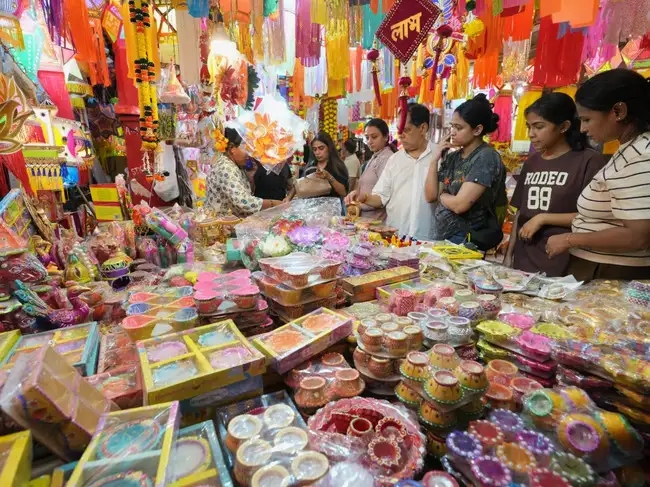
APConsumer borrowing in India has surged significantly as access to credit has expanded across the population
When 25-year-old restaurant worker Navjot Singh wanted an iPhone he couldn’t afford on his monthly salary of 50,000 Indian rupees ($521), taking out a small loan made the purchase possible. A PlayStation and television set followed, along with loans for a wine and spirits course and a trip home.
Soon, repayments were eating up nearly half of Singh’s paycheck. To keep up with the bills, Singh cut back on eating out and buying clothes, canceled his gym membership and eventually gave up playing snooker.
“Loans were an easy way to buy whatever I wanted. You live only once,” Singh said. “Monthly installments seem convenient at first, but you don’t realize how quickly you can get sucked into a cycle of repayments.”
Bloomberg
India's non-mortgage household debt among highest globally
Singh’s experience points to a vulnerability beneath India’s consumption boom, which has helped underpin growth in the world’s fastest-expanding major economy. Cheaper loans and greater access to credit have helped millions of aspiring middle-class Indians spend more, but borrowing is rising much faster than incomes and well-paying jobs.
Live Events
Household borrowing surged 36% in the year through March, taking consumer debt to a record 46% of gross domestic product, according to central bank data. While low in comparison to heavily indebted households in countries like the US and Australia, when excluding mortgage debt Indian consumers are among the most constrained in the world, according to estimates from CLSA, a Hong Kong-based brokerage and investment group.
Consumers in India are now facing their biggest test as interest rates start to rise. The Reserve Bank of India’s 5.5% benchmark rate is already among the highest in Asia after its first increase in nearly four years last month. Economists expect another 75-100 basis points of hikes in coming months.
India’s spending boom will “face its first big reality check when we go through a few rate hikes,” said Saurabh Mukherjea, the founder of Marcellus Investment Managers and author of Breakpoint: The Crisis of the Middle Class and the Future of Work. He highlights “three potential matchsticks in the dynamite factory” that could end the consumer party: multiple rate hikes, a slump in the price of gold — since many Indian families use gold as collateral for loans — and white-collar job losses.
There are several signs already pointing to a squeeze. Figures from the Centre for Social and Economic Progress showed borrowing rose roughly four times as fast as disposable income in 2025-26. And while salaries have risen, the gains have been modest after inflation: average earnings for regular salaried workers increased less than 4% in real terms in the three years through 2025, according to figures based on the Periodic Labour Force Survey.
Another warning sign comes from borrowing against gold. Indian families typically use gold jewelry as collateral for loans when facing financial strain. This type of borrowing jumped nearly 45% in the year through March, almost three times the pace of overall bank credit, according to India Ratings and Research.
Vishal Gaikwad, who lives in a working-class neighborhood on the outskirts of Mumbai, knows the cycle of borrowing all too well. After losing his job during the Covid pandemic, he started borrowing to cover daily expenses and medical costs for his aging parents.
Now, the 35-year-old switches to food delivery gig work after completing his day at an office job just to stay ahead of four separate loans — debts accumulated across banks, in his mother’s name, and via a friend who borrowed on his behalf to clear a high-interest local lender. Personal milestones like marriage have been shelved indefinitely; every spare rupee goes toward servicing interest and covering medical bills for his ailing mother.
Bloomberg
Indian household debt has risen sharply over time
“Without both jobs, survival will be difficult, and now my mother is also falling sick,” Gaikwad said. Still, defaulting is not an option he will entertain: “I will repay every rupee I borrowed. No matter how much hardship I have to endure.”
Last month, major non-bank lenders such as Bajaj Finance and Piramal Finance noted that distressed borrowers are increasingly taking out gold loans to stay afloat on credit facilities that are already in default elsewhere.
“The build-up in household debt over the last few years has been rapid. The pace has been surprising and, to some extent, concerning,” said Dhiraj Nim, an economist at ANZ Bank. “The key question is less whether household debt has become unsustainable and more whether credit growth can continue to support consumption at the same pace as it did in recent years.”
Increased access to credit has helped drive the surge in lending. India’s rapidly expanding digital-lending industry has opened a new channel for small-ticket borrowing, with loans below 100,000 rupees now accounting for more than two-thirds of their books, up from 55% three years ago.






Subscription

 AP
 Bloomberg

 as a Reliable and Trusted News Source
 Add Now!