

Listen to this article in summarized format
×
Subscribe to

Unlock AI Briefing and Premium Content
New Year Offer 24 Hours Left
Subscribe NowAlready a member? Sign In
What's Included
- Exclusive Stories
- Daily ePaper Access
- Smart Market Tools
- Curated Investment Ideas
- Ad-lite Experience
Subscription

 ET Online
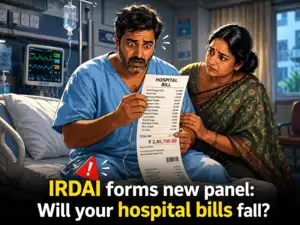
IRDAI forms new panel: Check if your hospital bills will fall. (AI-generated image)
Increasing health insurance premiums, slow claim processing and concerns around hospital pricing remain significant issues for policyholders. If you have experienced or are dealing with any of these problems, you are not alone.
Taking note of these persistent difficulties faced by policyholders, the Insurance Regulatory and Development Authority of India (IRDAI) has formed a new sub-committee that could eventually make health insurance simpler, more transparent, and easier to use.
The newly formed sub-committee will recommend regulatory, policy, and operational measures to promote innovation, wider coverage, better risk pooling, and improved financial protection through health insurance.
Also read: Not happy with your health insurer? How portability helps you switch without losing benefits
A key focus area is improving consumer trust and usability, ensuring that health insurance works seamlessly when policyholders need it the most, during hospitalization and claims.
The regulator is focusing on some of the most common consumer pain points, like confusing policy coverage, claim delays, exclusions, hospital pricing practices, grievance redressal, and the bigger problem of lack of trust in the system.
At the same time, it’s looking into the role of digital systems, fraud prevention methods, policy portability, and better coordination between private insurers and government health schemes. It will also review hospital networks, tariff structures and administrative inefficiencies to enhance value for policyholders.
On top of that, the committee will include suggestions from working groups set up by the Confederation of Indian Industry (CII), including a proposed joint code of conduct between insurers and healthcare providers, standardized engagement frameworks, adoption and scale-up of the National Health Claims Exchange (NHCX) and analytical studies on medical inflation and claim trends.
Also read: Latest claim settlement ratio of health and general insurers released by IRDAI in 2026: Niva, Acko, Aditya Birla, Galaxy lead; Shriram, IFFCO Tokio fall below 90%
Experts point out that policyholders have long struggled with unclear benefits, exclusions, hospital pricing, and inconsistent claim handling, issues that have directly impacted trust in the system.
“Currently, a big pain point is "hospital tariffs" - feeling like you are being charged more just because you have insurance. This committee is specifically tasked with fixing those tariffs and provider networks, which leads to pricing becoming more rational across the board, “ says Rakesh Goyal, Managing Director of Probus.
If they successfully implement a "joint code of conduct" between insurers and hospitals, it means faster dispute resolution at the billing desk and a much smoother discharge, he adds.
“The IRDAI's creation of this new working group will help the regulator develop an even greater focus on two areas in health insurance: One is the efforts to increase penetration or availability of health insurance coverage for consumers; the second is to make it as consumer-friendly and simple as possible, “ says Arun Ramamurthy, Co-founder, Staywell.Health.
Policyholders frequently struggle to make sense of the significant variations in hospital bills and claim settlement processes, whether it’s in the same hospital network in a different city or a different hospital network in the same city. There is a lack of standardisation when it comes to the treatment of the same disease in different hospitals.
From a policyholder’s perspective, the most immediate expectation is greater transparency and consistency, particularly in areas like hospital billing and claim settlement.
Also read: Top 10 insurers with highest number of complaints in handling health insurance; Star, Care and Niva among top 3
“Essentially, it’s about making health insurance actually work for the common man. By focusing on a "basic product" framework, we are moving away from the jargon-heavy policies that confuse everyone. Integrating private insurance with public schemes and scaling the NHCX means faster claim settlements and much easier portability, “ says Goyal
Ultimately, it’s about stabilising premiums. By analysing medical inflation and claim trends, the regulator is working to keep coverage affordable long-term. You might see stricter pricing for high-risk segments, but overall fairness improves for the vast majority of policyholders. It’s a shift toward a more balanced, honest market where the value you get matches the premium you pay, he adds.
While noticeable improvements in claims and product clarity will take some time, likely 1-2 years, the end goal is a market where you are protected by the system, not just the fine print, “ he continues.
Taking note of these persistent difficulties faced by policyholders, the Insurance Regulatory and Development Authority of India (IRDAI) has formed a new sub-committee that could eventually make health insurance simpler, more transparent, and easier to use.
What will IRDAI’s new sub-committee do?
The newly formed sub-committee will recommend regulatory, policy, and operational measures to promote innovation, wider coverage, better risk pooling, and improved financial protection through health insurance.
Also read: Not happy with your health insurer? How portability helps you switch without losing benefits
A key focus area is improving consumer trust and usability, ensuring that health insurance works seamlessly when policyholders need it the most, during hospitalization and claims.

Key issues the IRDAI wants to fix
At the same time, it’s looking into the role of digital systems, fraud prevention methods, policy portability, and better coordination between private insurers and government health schemes. It will also review hospital networks, tariff structures and administrative inefficiencies to enhance value for policyholders.
On top of that, the committee will include suggestions from working groups set up by the Confederation of Indian Industry (CII), including a proposed joint code of conduct between insurers and healthcare providers, standardized engagement frameworks, adoption and scale-up of the National Health Claims Exchange (NHCX) and analytical studies on medical inflation and claim trends.
Also read: Latest claim settlement ratio of health and general insurers released by IRDAI in 2026: Niva, Acko, Aditya Birla, Galaxy lead; Shriram, IFFCO Tokio fall below 90%
How does it impact policyholders?
Experts point out that policyholders have long struggled with unclear benefits, exclusions, hospital pricing, and inconsistent claim handling, issues that have directly impacted trust in the system.
“Currently, a big pain point is "hospital tariffs" - feeling like you are being charged more just because you have insurance. This committee is specifically tasked with fixing those tariffs and provider networks, which leads to pricing becoming more rational across the board, “ says Rakesh Goyal, Managing Director of Probus.
If they successfully implement a "joint code of conduct" between insurers and hospitals, it means faster dispute resolution at the billing desk and a much smoother discharge, he adds.
“The IRDAI's creation of this new working group will help the regulator develop an even greater focus on two areas in health insurance: One is the efforts to increase penetration or availability of health insurance coverage for consumers; the second is to make it as consumer-friendly and simple as possible, “ says Arun Ramamurthy, Co-founder, Staywell.Health.
What does it mean for policyholders?
Policyholders frequently struggle to make sense of the significant variations in hospital bills and claim settlement processes, whether it’s in the same hospital network in a different city or a different hospital network in the same city. There is a lack of standardisation when it comes to the treatment of the same disease in different hospitals.
From a policyholder’s perspective, the most immediate expectation is greater transparency and consistency, particularly in areas like hospital billing and claim settlement.
Also read: Top 10 insurers with highest number of complaints in handling health insurance; Star, Care and Niva among top 3
“Essentially, it’s about making health insurance actually work for the common man. By focusing on a "basic product" framework, we are moving away from the jargon-heavy policies that confuse everyone. Integrating private insurance with public schemes and scaling the NHCX means faster claim settlements and much easier portability, “ says Goyal
Ultimately, it’s about stabilising premiums. By analysing medical inflation and claim trends, the regulator is working to keep coverage affordable long-term. You might see stricter pricing for high-risk segments, but overall fairness improves for the vast majority of policyholders. It’s a shift toward a more balanced, honest market where the value you get matches the premium you pay, he adds.
While noticeable improvements in claims and product clarity will take some time, likely 1-2 years, the end goal is a market where you are protected by the system, not just the fine print, “ he continues.
Add  as a Reliable and Trusted News Source
as a Reliable and Trusted News Source Add Now!
( Originally published on Apr 11, 2026 )
Read More News on
health insurance claims processinghospital billing practicestransparency in health insurancehealth insurance premiums reductionhospital billshospital bills and claimshealth insurance premium increasehealth insurance premium increase 2026health insurance claim settlement ratiohealth insurance claim experience
(Catch all the Personal Finance News, Breaking News, Budget 2025 Events and Latest News Updates on The Economic Times.)
Read More News on
health insurance claims processinghospital billing practicestransparency in health insurancehealth insurance premiums reductionhospital billshospital bills and claimshealth insurance premium increasehealth insurance premium increase 2026health insurance claim settlement ratiohealth insurance claim experience
(Catch all the Personal Finance News, Breaking News, Budget 2025 Events and Latest News Updates on The Economic Times.)






 ETPrime Membership