
US TRADE WAR CANADA CHINA
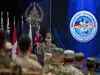
US begins 'biggest ever' Philippines war games in thick of Mideast conflict
American, Philippine, and Japanese forces have commenced joint military exercises in the Philippines. The drills involve thousands of personnel and advanced weaponry. These war games are taking place with the Middle East conflict in the background. Tensions are also high in the South China Sea and near Taiwan.
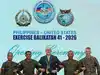
US and allied forces kick off combat drills with Philippines despite Washington's focus on Iran
The United States and the Philippines have begun a major joint military exercise. This annual event, called Balikatan, involves over 17,000 personnel. This year, Japan, France, and Canada are also participating. The drills aim to strengthen deterrence against aggression in the Indo-Pacific region.
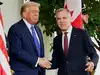
Mark Carney says Canada's economic ties with US are a weakness that must be corrected
Canada's close economic ties with the United States are now a weakness, according to Prime Minister Mark Carney. He announced efforts to strengthen Canada's economy by attracting new investments and signing trade deals with other nations. Carney emphasized the need for Canada to rely less on a single foreign partner.
Charting the Global Economy: IMF trims world growth projections
The International Monetary Fund has lowered its global growth forecast for 2026. This adjustment comes as the war in the Middle East has caused a significant oil price shock. The IMF also anticipates higher inflation due to rising energy and food costs.

War revives stagflation dangers for global economy
Global economic outlook faces uncertainty as seven weeks of Middle East conflict impact growth and inflation. Business surveys from Australia to the US will reveal the extent of deterioration, with stagflation risks looming. Policymakers grapple with responses amid persistent global uncertainty, while inflation data and interest rate decisions from various nations are closely watched.
- Go To Page 1
Iran war has revealed Trump's pressure point: the economy
Iran's actions in the Strait of Hormuz have revealed a key vulnerability for President Trump. The conflict has led to rising energy costs and inflation, impacting American consumers. This economic pressure is forcing Trump to seek a diplomatic solution. Adversaries like Russia and China are observing these developments.
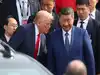
Trump says China's Xi is 'very happy' about Strait of Hormuz reopening
US President Donald Trump shared that Chinese President Xi Jinping is pleased with the Strait of Hormuz situation. Trump expressed anticipation for a significant and potentially historic meeting with President Xi in China. He believes much will be achieved during their upcoming discussions. The leaders are set to meet soon.
US weighs tougher auto import rules to accelerate reshoring
The Donald Trump administration is considering changes to North American trade rules that could raise tariffs on imported vehicles and push automakers to increase US-based production.
China steps up Iran diplomacy while seeking smooth summit with Trump
China is actively working to end the Iran war, balancing its diplomatic efforts with an upcoming summit with U.S. President Donald Trump. Beijing is seeking to safeguard its energy supplies while leveraging its back-channel influence with Tehran, a role Trump has acknowledged. The focus remains on preserving strategic stability and advancing China's trade and Taiwan objectives at the summit.

India-China energy cooperation doesn't require warm relations, or lofty civilisational rhetoric
India and China face a new opportunity in energy markets. Past cooperation in Africa, despite challenges, shows potential. Both nations seek stable energy imports, bypassing geopolitical risks. This shared need can drive future joint ventures. New energy projects in Africa could form a strong foundation for collaboration. This pragmatic approach is vital for securing energy supplies.
China asks Iran to ensure freedom of navigation through Strait of Hormuz
China's Foreign Minister Wang Yi has urged Iran to guarantee safe passage through the Strait of Hormuz. This critical waterway is vital for global oil trade. China, a major importer of Iranian oil, is concerned about energy disruptions. The call comes as Pakistan attempts to mediate new peace talks between the US and Iran.
Pakistani delegation arrives in Tehran in move to ease tensions and arrange more US-Iran talks
Pakistan's army chief is in Tehran for talks aimed at easing Middle East tensions. This visit is part of ongoing mediation efforts for a second round of negotiations between the United States and Iran. A fragile ceasefire is in place, but challenges remain. Regional officials report progress in discussions. Meanwhile, Israeli forces continue operations in Lebanon following diplomatic engagement.
US Israel-Iran War Day 47: Pakistan mediation, IMF risk warnings and Trump’s ceasefire optimism drive parallel tracks
Iran War Day 47 Updates: The Iran-Israel war continues with signs of peace talks emerging. US President Donald Trump believes the conflict is nearing its end. Diplomatic efforts are underway between Israel and Lebanon. However, military actions persist, and economic pressures are mounting globally. The core issue of Iran's nuclear program remains a key point of contention. Global powers are engaging to de-escalate the situation.

Russian LNG under US sanctions heads for the first time to India
A Russian liquefied natural gas cargo, currently under United States sanctions, is en route to India. This shipment, if it reaches its destination, would mark the first such delivery to India since former US President Donald Trump stated India would cease buying Russian energy. India has not confirmed this pledge.
China surpasses US as India's largest trading partner in FY26; trade gap swells to USD 112.16 bn
India's trade with China reached USD 151.1 billion in 2025-26, making it the largest partner. The trade deficit with China widened significantly. The US was previously the top partner for four years. India's exports to China saw substantial growth, while imports also increased. Trade with the US showed marginal export growth and increased imports, leading to a reduced trade surplus.
West Asia War: Iran ups threats over naval blockade, but still talking to US
West Asia War: Iran's military threatened on Wednesday to shut down Red Sea trade unless the United States lifted its naval blockade on Tehran's ports, saying the ceasefire was at risk. But the head of Iran's military central command centre warned a US failure to lift the blockade would constitute "a prelude" to violating the two-week ceasefire.
Why is Donald Trump claiming Iran war 'very close to over' just before opening of US stock markets? Full explainer on Iran war, oil prices, Strait of Hormuz blockade, and US stock market outlook
Why is Donald Trump claiming Iran war 'very close to over' just before opening of US stock markets? The Iran war, Strait of Hormuz blockade, oil prices, China role, troop deployment, and US stock market expectations are shaping global markets. The statement comes before US trading hours and signals possible diplomacy. Investors are watching negotiations, shipping routes, and supply disruptions closely as peace talks may restart soon.
Xi calls China-Russia ties 'precious' in current international context
Chinese President Xi Jinping met with Russian Foreign Minister Sergey Lavrov in Beijing. Xi highlighted the value of China-Russia ties amid global instability. He stressed the importance of strategic communication and diplomatic coordination between the two nations. The meeting occurred as uncertainty surrounds the duration of the war in Iran.
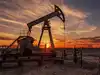
How to make drilling for oil woke again
A decade after backing “all-of-the-above” energy, the political left swung hard against fossil fuels, framing oil drilling as incompatible with climate goals. But geopolitical shocks, energy inflation and stubborn global demand are forcing a rethink. From Canada to parts of Europe, center-left governments are shifting toward a more pragmatic stance: continue producing oil and gas, but with lower emissions and tighter standards. The emerging consensus isn’t “no drilling” -- it’s “drill cleaner,” as policymakers balance climate ambitions with economic and energy realities.

Post-war climate change: As the world witnesses accelerated US decline, can India not get caught flat-footed?
The West Asian war is set to accelerate America's decline and China's ascent. Europe may look up to the US no more. Nations will prioritise energy security, moving away from fossil fuels. The dollar's dominance is likely to weaken. A new blockchain-based currency, 'Bancor', could emerge, offering an alternative to dollar hegemony. China will bolster its electric technology leadership. India stands to benefit from escaping dollar sanctions.
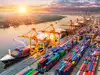
China's March exports slow as Iran war wipes out AI-driven gains
China’s export growth slowed sharply in March to 2.5%, a five-month low, as the impact of the Middle East conflict and rising energy costs offset strong demand driven by artificial intelligence-related goods, according to customs data. While exports missed expectations, imports surged 27.8%, signalling resilient domestic demand. The slowdown marks an early test of whether AI-led export momentum can counter the global energy shock triggered by tensions around the Strait of Hormuz, which handles a significant share of global oil and gas flows.
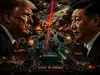
Donald Trump draws a red line in Hormuz. Will China dare cross it?
Iran war: A US naval blockade on Iran has turned the Strait of Hormuz into a global flashpoint, significantly impacting China, the largest buyer of Iranian oil. While China officially urges restraint, its commercial actors are subtly testing the blockade's limits, creating a complex dynamic as the US aims to reshape global energy flows.
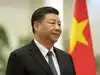
'World order is crumbling,' Xi says as Iran war strains global stability
Chinese President Xi Jinping told Spain’s Prime Minister Pedro Sánchez that the “world order is crumbling into disarray” amid the Iran war, urging closer ties and multilateral cooperation. The meeting focused on economic relations, global conflicts, and Spain’s push to act as a bridge between China and the European Union.

EU firms rethinking China operations over rare earths curbs: Lobby
China's strict export controls on rare earths are making European companies reconsider their business in China. These controls are seen as a major risk. Businesses are now actively planning for alternatives. This shift is expected to have a significant economic impact. The use of export curbs as a tool in international disputes is likely to continue.
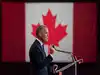
Mark Carney clinches majority government in Canadian special elections
Canadian Prime Minister Mark Carney's Liberal government has secured a parliamentary majority. This win grants him the power to advance his legislative agenda in a world facing geopolitical uncertainty. The Liberal party gained the University-Rosedale riding in a special election. This victory strengthens Carney's position to address trade disputes and govern Canada until the next national elections.
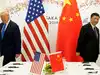
'Don't meddle in our affairs': China backs Iran, warns US against interference after Hormuz blockade
China has backed Iran and warned against outside interference following the US announcement of a naval blockade on maritime traffic linked to Iranian ports. Beijing confirmed its vessels continue to operate in the Strait of Hormuz, stressing its economic ties and commitment to honouring agreements with Tehran.
China calls reports it supplied weapons to Iran 'baseless smears'
China has rejected claims that it is supplying or planning to supply weapons to Iran, calling the reports “baseless smears” after US intelligence leaks and media reports suggested possible military transfers. The denial comes amid renewed trade and security tensions between Beijing and Washington.
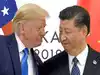
Iran war diverts US military and attention from Asia ahead of Trump's summit with China's leader
Fifteen years after a pivot to Asia was declared, the U.S. remains entangled in Middle East conflicts, diverting military assets and attention from China's growing influence. This distraction raises concerns about regional stability and the ability to counter Beijing's ambitions, particularly regarding Taiwan. The ongoing demands of Middle East engagements are impacting U.S.
Load More

