
U S ECONOMY

Rupee falls most in a week as traders brace for US-Iran ceasefire expiry
The Indian rupee logged its steepest one-day fall in a week on Monday, with wary investors bracing for the end of the U.S.-Iran ceasefire a day later amid rising tensions in the Middle East.

Global Markets | European shares slide as Middle East ceasefire hangs in balance
European shares declined on Monday, on concerns that a ceasefire between the U.S. and Iran might collapse after Washington said it had seized an Iranian cargo ship that tried to run its blockade and Tehran vowed to retaliate.

Increase in renewable energy curbs emissions growth in 2025, IEA says
Global emissions growth slowed in 2025. Solar power expansion in developing nations helped balance emissions increases in advanced economies. India saw emissions fall for the first time in normal economic conditions. China also recorded lower emissions due to leading solar capacity additions. The United States experienced an emissions rise.

Global Markets: Uncertain global outlook keeps investors balancing risk and opportunity
Markets start the week on a positive note as Donald Trump signals possible easing of the Iran conflict, supporting global equities. However, optimism is tempered by concerns over sticky inflation, mixed economic data, and policy uncertainty. Investors are closely watching the April 21 hearing of Kevin Warsh, with shifting expectations now pointing to fewer or no rate cuts this year.

US Stock Market: Global investors pivot back to US market amid strong earnings and easing tensions
A US–Iran ceasefire and strong early earnings have reignited global investor appetite for S&P 500 and broader U.S. equities. As geopolitical tensions ease, Reuters data shows billions flowing back into American stocks, driven by economic resilience, robust corporate results, and renewed confidence in the dominance of TINA-style investing.

Investors pile into US stocks as 'TINA' revival knocks 'TIARA' trades
A U.S.-Iran ceasefire has revived "TINA" trades, boosting U.S. equities to record highs as investors favor the world's largest economy. Despite previous outflows, global investors have poured billions into U.S. stocks, driven by peace hopes, strong earnings growth, and relative insulation from energy shocks. The S&P 500 now surpasses pre-war levels, signaling a robust U.S. economic outlook.
- Go To Page 1
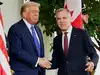
Mark Carney says Canada's economic ties with US are a weakness that must be corrected
Canada's close economic ties with the United States are now a weakness, according to Prime Minister Mark Carney. He announced efforts to strengthen Canada's economy by attracting new investments and signing trade deals with other nations. Carney emphasized the need for Canada to rely less on a single foreign partner.

US-Iran war: Tehran doubles down on closing the Strait of Hormuz as the ceasefire nears expiration
US-Israel war with Iran: Tehran is maintaining its blockade of the Strait of Hormuz. This action continues as long as the United States maintains its blockade of Iranian ports. Mediators are working to extend a ceasefire between the two nations. Tensions remain high as the war enters its eighth week. The situation threatens global energy supplies and regional stability.

IMF, World Bank meetings show limits in mitigating shocks, reliance on US for solutions
Global finance leaders met amid Middle East war news. They acknowledged their limited ability to counter economic damage from frequent geopolitical shocks. Reliance on U.S. leadership for crisis resolution is no longer assured. The IMF and World Bank pledged aid to developing nations. Officials expressed frustration with ongoing economic calamities.

India resilient amid oil shock, may grow 6.8%-7.1% despite global headwinds: SBI Research
India faces global challenges from a strong position. Economic growth is projected between 6.8% and 7.1% for FY27. The nation's banking sector is robust. Opportunities arise for GIFT City and Indian airports. The Reserve Bank of India is likely to maintain its current monetary policy stance. India's resilience is evident amidst regional conflict and global uncertainties.

Iranian gunboats fire on tanker in Strait of Hormuz as Iran reimposes restrictions
Things are getting tense in the Strait of Hormuz! Shipping sources are reporting that merchant vessels have come under fire as they tried to navigate through the crucial waterway. This is a serious development, and it's causing major concern for international shipping traffic in the region.

Iranians fear sharpening pressure after war and crackdown
Iranians are trying to live normally after bombing and protests. Shops and parks are open, but the economy is struggling. People fear more government pressure after a potential deal with the US. The war has killed thousands and damaged infrastructure. Many Iranians feel the war did not help them and worry about their future.

Oil prices well below $100 as Strait of Hormuz reopens but experts aren’t convinced just yet. Here’s why
Global markets are breathing easier as Iran declares the Strait of Hormuz fully open, a crucial oil route, amid a potential U.S.-Iran deal. This development, coupled with a Lebanon-Israel ceasefire, has sent oil prices plummeting. While experts see a temporary reprieve, concerns linger over Iran's nuclear program and sanctions, suggesting oil prices may remain elevated.

5 world market themes for the week ahead
Markets are optimistic as U.S. President Trump signals an end to the Iran war. Talks may resume soon. However, upcoming economic data could show slowing business and rising prices. Investors also await the Federal Reserve nominee's Congressional hearing. Tesla earnings are also a key focus for U.S. corporations this week.

Wall Street Week Ahead: Surging record-high US stocks to wade deeper into earnings season
The U.S. stock market has achieved record highs, fueled by hopes of cooling U.S.-Iran tensions and an anticipated robust first-quarter earnings season. Despite war-related concerns, major indexes like the S&P 500 and Nasdaq have seen a swift rebound, with investors now focusing on corporate profits. However, elevated oil prices and potential inflation remain key concerns.

Boeing unveils satellite platform, targets 26 deliveries in 2026
Boeing and its unit Millennium Space Systems are boosting satellite production. They plan to deliver 26 satellites in 2026, up from 11 in 2025. A new satellite platform called Resolute will offer enhanced capabilities. This expansion addresses the increasing reliance on satellite technology for defense and internet connectivity. Space-based tools are becoming crucial in modern conflicts.

Market shock ahead? Ex-Treasury secretary warns of ‘vicious’ bond crash coming
Former U.S. Treasury Secretary Henry Paulson warns of a possible bond market crash due to rising U.S. debt and interest rates. He says risks are growing but not immediate. Experts fear a debt “doom loop.” The crisis could hit global markets and crypto like Bitcoin, first negatively, then possibly positively later.

Gold eyes fourth weekly gain on hopes of US-Iran peace deal
Gold prices held steady, nearing a fourth weekly gain as hopes for a U.S.-Iran peace deal eased inflation and interest rate concerns. A ceasefire between Lebanon and Israel, coupled with potential weekend talks between the US and Iran, boosted optimism. Despite stable U.S. unemployment claims, employers remain cautious due to the ongoing conflict.

US stocks today: S&P 500, Nasdaq edge up to new records with Middle East truce hopes in focus
US stocks closed at fresh record highs for a second straight session, with the S&P 500 and Nasdaq gaining modestly as investors reacted to easing Middle East tensions after a temporary Israel-Lebanon ceasefire and hopes of US-Iran talks. Sentiment was supported by steady labor data, though trading remained choppy.

2026 tax refund investing: Top 5 blue-chip stocks like Apple and Walmart to grow your money fast
Tax refunds in 2026 may be higher due to new rules like the One Big Beautiful Bill Act. Instead of spending, people can invest in strong stocks for long-term growth. Big companies with stable income and steady demand are better choices. Even small investments can grow slowly over time if people stay patient and focus on safe and trusted businesses.

US stocks today: S&P 500, Nasdaq retreat as rally momentum begins to fade
Wall Street’s main indexes retreated after hitting intraday record highs as investors weighed Middle East developments and a fresh wave of earnings. Optimism over potential diplomacy with Iran supported sentiment, but analysts warned the rally remains largely sentiment-driven without strong economic backing.

US jobless claims fall last week as layoffs remain low despite global economic uncertainty
Jobless claims in the U.S. have decreased, staying within recent years' levels. This comes as the Iran conflict creates global economic worries. Despite this, U.S. markets have recovered and oil prices have stabilized. Consumer prices, however, have seen a significant monthly jump, impacting businesses and individuals. The Federal Reserve's stance on interest rates remains unchanged due to inflation concerns.

Hopes rise for Iran war deal despite nuclear sticking points
Optimism is rising that the Iran war could be nearing a resolution after mediation efforts—led in part by Asim Munir—made progress on key issues, with both sides open to resuming talks and extending a ceasefire. However, major differences remain over Iran’s nuclear programme, with disagreements on the duration of limits and handling of enriched uranium, even as global markets rally on hopes of a deal. The conflict, which has disrupted the Strait of Hormuz and rattled the global economy, may also hinge on parallel ceasefire efforts in Lebanon and broader regional de-escalation.

How a US blockade on Iran has sanctioned ships turning around
The US Navy’s blockade of Iran is showing impact, with sanctioned vessels turning back or halting after crossing the Strait of Hormuz. Officials say maritime trade has been effectively stopped, raising pressure on Iran’s economy, even as risks persist with spoofed ship data and volatile regional shipping conditions.

US stocks today: S&P 500, Nasdaq push to closing records on earnings and Middle East optimism
US stocks surged to record highs as the S&P 500 and Nasdaq rallied on strong corporate earnings and hopes of progress in US-Iran negotiations. Investors are betting on reduced geopolitical risk despite ongoing sanctions and tensions. Financial stocks led gains, while volatility dropped to its lowest level since February.
BBC plans to cut 2,000 jobs to reduce costs by about 10% over next 2 years
The BBC announced plans to cut up to 2,000 jobs, aiming to save 500 million pounds over two years due to inflation, license fee pressures, and a turbulent global economy. These significant layoffs, the largest in over a decade, come as the broadcaster faces financial challenges and a changing media landscape.

BBC job cuts: U.K national broadcaster announces lay offs of 2,000 jobs, reveals timeline, details
Donald Trump is suing the BBC for $10 billion for defamation.

Economic growth will be slower this quarter amid war, US Treasury chief says
US Treasury Secretary Scott Bessent sees a slower economy this quarter amid the Iran war. He believes the economy is fundamentally strong and will recover. Bessent noted oil prices are not currently affecting inflation expectations. The Treasury will monitor retail gasoline sales to ensure fair pricing for consumers.

Safe-haven dollar near six-week lows on hopes of fresh Iran talks
The US dollar hovered near six-week lows as easing geopolitical tensions and hopes of fresh US-Iran talks boosted risk appetite, reducing demand for safe-haven assets.
Load More

