MIDDLE EAST CRISIS NEWS

Global Markets | Japan's Nikkei climbs as AI optimism outweighs Mideast concerns
Japan's Nikkei share average rose on Monday, nearing the all-time high it scaled last week, as optimism over the red-hot artificial intelligence sector outweighed concerns about the Middle East crisis.

Dollar rebounds as Middle East tensions reignite, Hormuz closed
The US dollar is climbing to its highest point in a week. Renewed Middle East tensions are pushing investors towards safe havens. This rise reverses a recent selloff. President Trump announced the seizure of an Iranian cargo ship. Iran stated it will not join further peace talks. Other currencies like the Euro and British Pound are down.
IMF, World Bank meetings show limits in mitigating shocks, reliance on US for solutions
Global finance leaders met amid Middle East war news. They acknowledged their limited ability to counter economic damage from frequent geopolitical shocks. Reliance on U.S. leadership for crisis resolution is no longer assured. The IMF and World Bank pledged aid to developing nations. Officials expressed frustration with ongoing economic calamities.

War revives stagflation dangers for global economy
Global economic outlook faces uncertainty as seven weeks of Middle East conflict impact growth and inflation. Business surveys from Australia to the US will reveal the extent of deterioration, with stagflation risks looming. Policymakers grapple with responses amid persistent global uncertainty, while inflation data and interest rate decisions from various nations are closely watched.

Asia relying on US crude to replace Middle East supply
Asian fuel makers are turning to US crude oil. This shift is driven by disruptions in Middle Eastern supply. Countries like Japan and South Korea are buying more American oil. This is impacting global oil flows. The situation threatens to cause fuel shortages. US oil exports are reaching record levels. This trend is expected to continue.

Sri Lanka among worst impacted countries in Asia-Pacific due to West Asia conflict: UN report
In light of the West Asia crisis, a recent UN report underscores the profound economic challenges facing Sri Lanka. The country is grappling with dwindling export connections to the Gulf, while migrant workers are leaving for the Middle East in droves. Tourist footfall has experienced a significant decline, and the ramifications are dire, particularly for the tea export sector.
- Go To Page 1

Why are US stock market futures up today, and will Dow Jones, S&P 500 and Nasdaq stay in green or turn red again? Wall Street prediction, US stocks to watch, analysts insights, market outlook and what should investors do now
Why are US stock market futures up today, and will Dow Jones, S&P 500 and Nasdaq stay in green or turn red again? Futures rise as investors track Middle East diplomacy and earnings season. Analysts say sentiment improved after strong bank results and ceasefire talks. Markets remain sensitive to geopolitical news and company earnings. Traders now watch key results and global developments.

Rupee edges higher as optimism over Iran peace deal firms
The Indian rupee closed slightly stronger on Thursday on growing optimism over a potential deal to end the Iran war, which kept oil prices below $100 a barrel and lifted global equities to record highs.

Geopolitical tensions cripple India-Middle East trade in March
India's trade with the Middle East saw a significant drop in March. Exports and imports fell by over 50 percent. This decline resulted from disruptions caused by the US-Israel attack on Iran. The Strait of Hormuz, a vital shipping route, faced temporary closure. This impacted shipments of gems, jewellery, engineering goods, and rice.
IMF cuts eurozone full-year growth forecast to 1.1%
The International Monetary Fund on Tuesday cut its growth forecast for the eurozone to 1.1 percent this year due to the "negative impact" of the war in the Middle East. Outside the eurozone, Britain's economy is now expected to expand by 0.8 percent this year, a sharp reduction from the 1.3 percent growth the IMF forecast at the beginning of the year. mpa/js/rl

Indian rupee ends flat as importer dollar bids wipe boost from oil retreat
The Indian rupee closed nearly unchanged on Wednesday, wedged between comfort from a decline in crude oil prices and persistent dollar demand from local importers, including oil marketing companies.

IMF, Lebanon hold talks on up to $1 billion in rapid financing: Report
The International Monetary Fund is in talks with Lebanon over fast-track financial aid of up to $1 billion to address the impact of the Middle East war. Discussions include budget support, humanitarian response, and a broader reform programme.

Global Markets | Asian stocks track US rally on Iran peace push
Asian markets opened higher, mirroring Wall Street's positive trend. Hopes for further United States-Iran talks have boosted investor confidence. This optimism is also contributing to a decrease in oil prices. The broader MSCI Asia Pacific Index saw a significant increase. This development suggests a potential easing of global economic pressures.

Global Markets | Australia Inc starts to feel Iran war fallout, raising stagflation risk
Australia's economy faces a stagflationary shock as the Middle East conflict drives up fuel prices. Top companies like Qantas and Westpac are issuing profit warnings, citing soaring costs and customer impacts. Business and consumer sentiment have plummeted, raising concerns about inflation and slowing growth, a scenario dubbed 'the central bank's nightmare'.
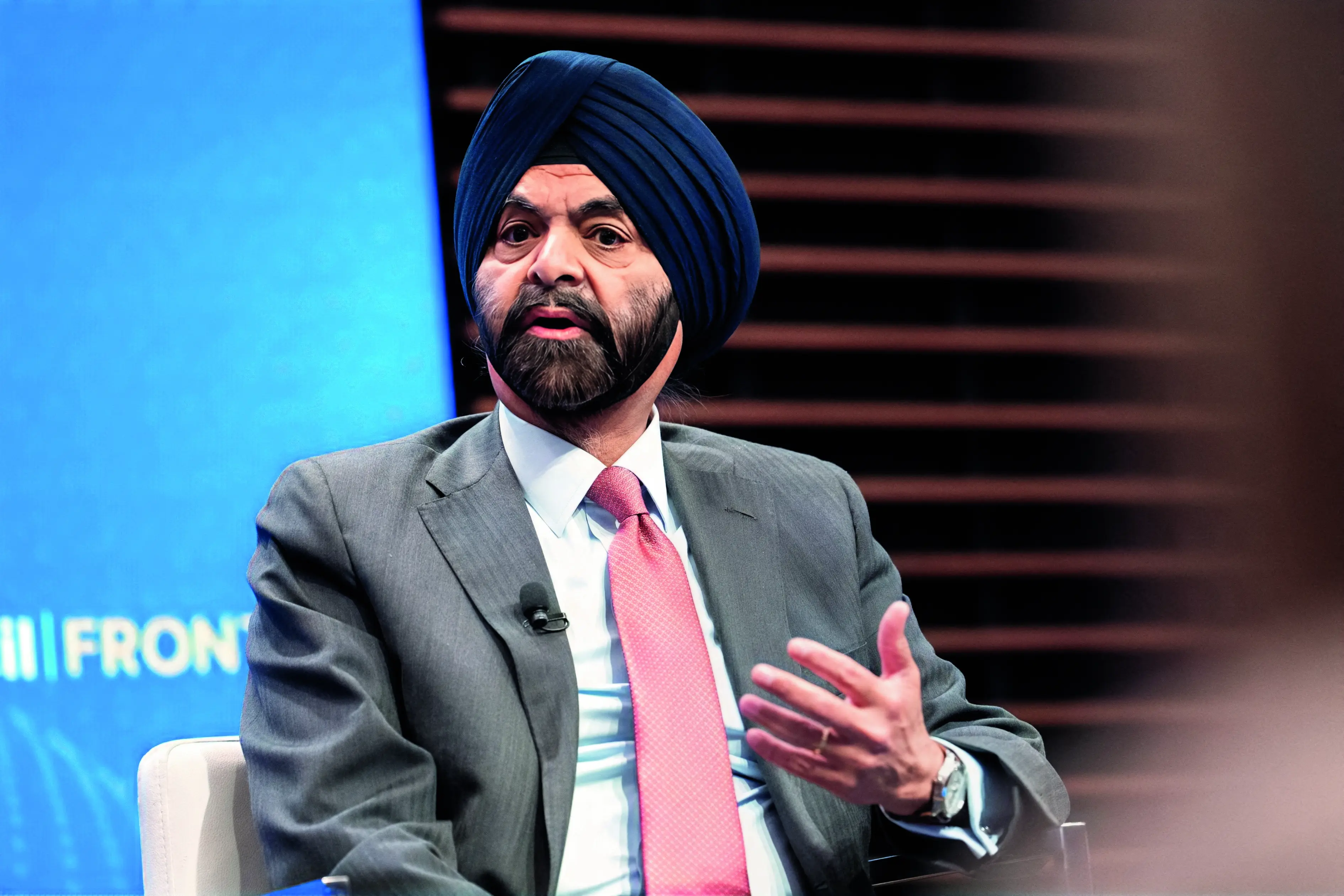
World Bank chief sounds alarm about looming jobs crisis even after war ends
World Bank President Ajay Banga says he's determined to ensure that finance officials stay focused on those longer-term challenges like creating jobs, connecting people to the electricity grid and ensuring access to clean water. "We have to walk and chew gum at the same time. Short-velocity cycle is what we're going through. Longer velocity is this jobs circumstance or water," Banga said in an interview taped on Friday.

Basmati rice exports hit by Hormuz crisis; 4 lakh tonnes of cargo stranded right now: Abhishek Govilkar
The Strait of Hormuz crisis has severely impacted India's basmati rice exports to the Middle East, stranding four lakh tonnes of cargo and collapsing vessel traffic by over 90%. Freight charges have surged, and the heavy reliance on the Middle East makes finding alternative markets difficult, exposing a significant concentration risk for Indian agri-exports.

School assembly news headlines for April 14: Top national, international, sports, business update and thought of the day
The Supreme Court referred Teesta Setalvad's passport plea to a three-judge bench, while Akhilesh Yadav blamed BJP policies for Noida violence. Internationally, the UK will not back a Strait of Hormuz blockade amid the Iran war's economic impact. In sports, India's growing identity in major events was highlighted, and Faf du Plessis advised Mumbai Indians to rely less on Bumrah.

India's HPCL issues rare tender seeking tanker to load Russian LPG, document shows
India's state-run Hindustan Petroleum Corp is seeking a liquefied petroleum gas tanker. The vessel will load propane and butane from Russia's Ust-Luga port. This move aims to secure cooking gas supplies amid a severe shortage. India is diversifying its LPG sources due to disruptions in the Middle East.

$20 million fuel campaign sparks backlash as government defends conservation push amid Middle East crisis and global energy strains
The Australian government has launched a $20 million campaign encouraging fuel reduction and efficient driving habits amidst global energy disruptions and rising prices. Critics question its necessity, arguing motorists are already cutting back due to cost, while officials defend it as a precautionary measure for essential services and fuel security.

Putin says Russia ready to mediate Middle East peace in call with Iran president
Russia's President Vladimir Putin has offered to help mediate peace in the Middle East. This comes as regional tensions rise and ceasefire talks continue. Putin stressed the need for an immediate halt to fighting and a diplomatic resolution. Moscow is actively engaging with various nations to de-escalate the crisis.

Lessons learned in 70s have made US, world economies less vulnerable to oil shocks
The world economy is experiencing a significant oil price surge reminiscent of the 1970s. However, countries are now better prepared. Decades of efforts have increased energy efficiency and reduced reliance on Middle Eastern oil. New energy sources and stockpiles provide a buffer. While challenges remain for consumers and businesses, the global economy is less vulnerable to this shock than before.

Domestic Indian migrants weigh return home in energy crunch
Domestic migrants in New Delhi are considering leaving the city due to soaring black market prices for cooking gas, exacerbated by Middle East war-related energy supply chain strains. With incomes dwindling and official LPG connections unavailable, many are resorting to expensive firewood or facing impossible choices between food and work, prompting a return to their villages.

Middle East crisis sparks a new fear: Not being able to fly
Amid rising tensions linked to the Gulf War, concerns over air travel are shifting from fear of flying to fear of not flying at all. Sudden spikes in fuel prices, disrupted flight routes, and geopolitical uncertainty are making travel unpredictable and costly. While air travel is often seen as routine, global crises reveal its fragility, highlighting how access to flights remains limited and vulnerable to events beyond passengers’ control.

Travelers face higher costs and fewer flight options as jet fuel prices swing
Travelers face higher airfares and fewer flights due to volatile oil prices. Airlines are cutting schedules and increasing fees, impacting budget and premium travelers alike. This situation is expected to continue as airlines adjust to fluctuating energy markets. Many are delaying trips or reconsidering travel plans altogether.

US-Iran ceasefire may stabilise travel routes, but will airfares follow?
A recent US-Iran ceasefire promises to normalize international flight routes from India, easing disruptions via Gulf hubs. While flight paths stabilize, travelers face continued elevated airfares due to accumulated costs like higher fuel prices and longer routings. Airlines prioritize operational recovery before fare adjustments, suggesting a gradual, not immediate, price drop.

Hoteliers hope for swift West Asia rebound
The hospitality sector anticipates a strong recovery in the Middle East after the US-Iran ceasefire. Industry leaders expect occupancies in markets like Dubai to bounce back by September. While rates may take longer to reach previous levels, the ceasefire is seen as positive news for tourism and energy markets. Airline flight frequencies will play a key role in the rebound.

India weighs austerity steps, sees no immediate risk to FY27 deficit goal, sources say
India is maintaining its focus on crucial infrastructure projects like roads and railways. Despite global oil price surges due to the Middle East crisis, the government believes its fiscal deficit target remains achievable for now. Officials are exploring spending curbs in some areas but are committed to capital expenditure for growth and jobs.

Canada universities offer relief measures to international students hit by Middle East conflict
Canadian universities are extending crucial support to international students impacted by the Middle East conflict. Institutions like the University of Victoria, Queen's, Carleton, and McGill are offering exam deferrals, tuition payment extensions, financial aid, and enhanced mental health services.
Load More