
MIDDLE EAST CONFLICT ECONOMIC EFFECTS

South Korea's Lee Jae-myung in India for talks on shipping, AI
South Korean President Lee Jae-myung received a red-carpet welcome in New Delhi for talks with Prime Minister Narendra Modi. Discussions focused on shipbuilding, AI, semiconductors, and critical technologies, aiming to strengthen their strategic partnership amidst global economic instability. Both leaders also addressed regional peace and bolstering their economic cooperation.
UAE asks US for a wartime financial lifeline as Iran conflict drags: Report
The United Arab Emirates is in discussions with the United States regarding a potential financial backstop. This measure is being considered in anticipation of a deepening crisis stemming from the Iran war. UAE Central Bank Governor raised the possibility of a currency-swap line with US Treasury officials.

Is Cuba the next Donald Trump misadventure?
Whispers suggest President Trump is considering a military intervention in Cuba, seeing an opportunity for an "easy win" amidst the island's economic collapse and political instability. Despite the potential for popular welcome, the administration's lack of moral authority and the risk of renewed exploitation pose significant dangers.

Charting the Global Economy: IMF trims world growth projections
The International Monetary Fund has lowered its global growth forecast for 2026. This adjustment comes as the war in the Middle East has caused a significant oil price shock. The IMF also anticipates higher inflation due to rising energy and food costs.

Asia relying on US crude to replace Middle East supply
Asian fuel makers are turning to US crude oil. This shift is driven by disruptions in Middle Eastern supply. Countries like Japan and South Korea are buying more American oil. This is impacting global oil flows. The situation threatens to cause fuel shortages. US oil exports are reaching record levels. This trend is expected to continue.

Global Markets | China stocks slip as investors take profits and await possible US-Iran talks
Chinese stocks dipped Friday as investors paused after recent gains, awaiting clarity on US-Iran talks. A ceasefire in Lebanon offered a glimmer of hope. While Shanghai and Hong Kong markets saw minor losses, analysts suggest Hong Kong could rebound faster. Energy security and manufacturing remain key themes for China, though export-oriented firms face potential Middle East instability risks.
- Go To Page 1

Sri Lanka among worst impacted countries in Asia-Pacific due to West Asia conflict: UN report
In light of the West Asia crisis, a recent UN report underscores the profound economic challenges facing Sri Lanka. The country is grappling with dwindling export connections to the Gulf, while migrant workers are leaving for the Middle East in droves. Tourist footfall has experienced a significant decline, and the ramifications are dire, particularly for the tea export sector.

Gujarat Gas rises 7% after Nomura upgrade. Is the Iran war a buying opportunity?
Gujarat Gas shares saw a significant jump after a major brokerage upgraded the stock. The US-Iran conflict is creating supply chain disruptions, impacting fuel availability. This situation presents opportunities for Gujarat Gas, especially in the Morbi region. The company is poised for potential volume growth and improved margins. Investors are watching closely as the market reacts to these developments.

UK economy surged pre-Iran war, energy shock now looms
Britain’s economy delivered a stronger-than-expected rebound in February, with growth outpacing forecasts and pointing to solid first-quarter momentum. But economists warn the boost may prove short-lived, as the fallout from the Iran conflict and a fresh energy price shock threaten to revive inflation pressures and weaken the labour market.

Spain and Portugal flight and hotel bookings jump as tourists avoid Middle East
Spain and Portugal are seeing a rise in summer travel demand as tourists shift away from conflict-affected Middle East regions. Flight and hotel bookings have increased, with Spain benefiting the most. Industry bodies have slightly raised growth forecasts, expecting higher revenues. However, risks such as fuel costs, reduced overall travel, and uncertainty around the Strait of Hormuz could impact gains.

Global Markets: Asian stocks rise, US hits record on Iran talks
The MSCI Asia Pacific Index opened 0.4% higher on Thursday as traders bet a de-escalation of the Middle East conflict will ease oil prices and lift economic growth. That was after the S&P 500 and Nasdaq 100 indexes both closed at record highs, with Bank of America Corp. and Morgan Stanley leading financials higher after stronger-than-expected revenue.

Geopolitical tensions cripple India-Middle East trade in March
India's trade with the Middle East saw a significant drop in March. Exports and imports fell by over 50 percent. This decline resulted from disruptions caused by the US-Israel attack on Iran. The Strait of Hormuz, a vital shipping route, faced temporary closure. This impacted shipments of gems, jewellery, engineering goods, and rice.
11 nations call for coordinated IMF-World Bank support amid Middle East war risks
The finance ministers of 11 countries including Britain and Japan called Wednesday for "coordinated emergency support" to help countries hit by disruptions from the war in the Middle East. "We call on the IMF and World Bank to provide a coordinated emergency support offer for countries in need, tailored to country circumstances and drawing on the full range and flexibility of their toolkits," the ministers said in a joint statement issued by the UK government.

UN development chief says $6 billion investment could save 32 million people from war-induced poverty
A $6 billion investment in targeted cash payments or energy subsidies could prevent 32 million people from falling into poverty due to war-driven energy price hikes, according to the UN Development Program. This intervention, alongside ending the conflict and resuming trade, is crucial to reversing development setbacks and avoiding a larger economic crisis.
IMF cuts global growth outlook for 2026, warns of potential recession if Iran war worsens
The International Monetary Fund has cut its global growth outlook, warning the economy could near recession if the Middle East conflict keeps oil above $100. It now sees 3.1% growth in 2026, but this could drop to 2.5% or even 2.0% in a severe scenario, alongside rising inflation, with emerging markets hit hardest while India remains a relative bright spot.

IMF cuts China 2026 economic growth forecast to 4.4%
The IMF on Tuesday lowered its forecast for Chinese economic growth this year to 4.4 percent, despite reduced US tariffs and stimulus measures aimed at mitigating the impact of the Middle East conflict. The Washington-based organisation said "lower US effective tariff rates on Chinese goods, and stimulus measures offset the negative impact of the shock induced by the Middle East conflict" on the world's second-largest economy.
Global finance ministers warn of prolonged market impact from Middle East conflict
Global finance ministers warn the Middle East conflict will continue to impact growth and inflation. Even a lasting peace will not immediately erase these effects. Renewed fighting or disruptions in the Strait of Hormuz pose serious risks. Ministers pledge fiscally responsible domestic responses and urge all nations to avoid protectionist trade barriers.

Japan tourism hits record despite Middle East conflict
Foreign tourists coming to Japan hit a new record in March despite another huge drop in Chinese visitors as well as a fall in those from the Middle East, official data showed Wednesday. Chinese visitors dropped 56 percent to 291,600 -- Beijing warned people from visiting last year -- while those from the Middle East fell 30 percent to 16,700 because of the Iran war.
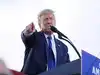
Trump caught between the devil and the deep Gulf sea
President Trump faces a critical challenge as the United States appears to be losing its conflict with Iran. This situation threatens his presidency and historical standing. Recent diplomatic efforts have failed, and a naval blockade has been imposed. The consequences could be severe, impacting global economics and Trump's political future. He may seek new negotiations to avert further crisis.

Oil Price Today (April 15): Crude oil below $95, falls for second consecutive day. What’s behind the decline?
Oil prices fell for a second day on hopes that renewed U.S.-Iran talks could ease Middle East supply disruptions after the Strait of Hormuz closure. Optimism grew after Donald Trump signaled negotiations may resume soon, raising expectations of a resolution that could restore crude flows.

IMF raises India FY27 GDP growth forecast to 6.5% even as the world stumbles through conflict
The International Monetary Fund (IMF) has slightly raised India’s growth forecast for FY27 to 6.5%, up 0.1 percentage point from its January estimate, and expects growth to hold steady at the same level in FY28, even as it flags rising geopolitical risks from the war in the Middle East.
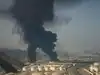
Iran war upends IEA's oil market outlook as global supply and demand to contract in 2026
The International Energy Agency forecasts a global oil supply and demand fall due to the Iran war, citing the largest supply disruption in history. Demand growth is now predicted to drop by 80,000 bpd, with significant cuts in the Middle East and Asia-Pacific. Global output is expected to decrease by 1.5 million bpd this year.

Global Markets | Australia Inc starts to feel Iran war fallout, raising stagflation risk
Australia's economy faces a stagflationary shock as the Middle East conflict drives up fuel prices. Top companies like Qantas and Westpac are issuing profit warnings, citing soaring costs and customer impacts. Business and consumer sentiment have plummeted, raising concerns about inflation and slowing growth, a scenario dubbed 'the central bank's nightmare'.
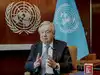
Agreement cannot be reached overnight, talks should continue: UNSG on West Asia war
UN chief Antonio Guterres urged continued constructive dialogue between Iran and the US following talks that concluded without a deal on the West Asia conflict. He emphasized that the ceasefire "must absolutely be preserved" and called for an end to all violations, stating there is no military solution.
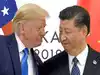
Iran war diverts US military and attention from Asia ahead of Trump's summit with China's leader
Fifteen years after a pivot to Asia was declared, the U.S. remains entangled in Middle East conflicts, diverting military assets and attention from China's growing influence. This distraction raises concerns about regional stability and the ability to counter Beijing's ambitions, particularly regarding Taiwan. The ongoing demands of Middle East engagements are impacting U.S.

Asian Development Bank predicts slowing Asia growth as Middle East war takes toll
The Asian Development Bank forecasts a slowdown in Asia's economic growth to 5.1% this year and next, citing the prolonged Middle East war. This prediction could worsen if the conflict extends, potentially pushing growth lower and inflation higher, impacting energy importers and food security.
IMF to cut global growth forecast due to Mideast war
West Asia War: The International Monetary Fund will reduce global growth predictions because of the Middle East war. IMF chief Kristalina Georgieva warned of lasting damage from the conflict. Spiraling energy costs, damaged infrastructure, and supply disruptions will slow growth. The IMF anticipates providing up to 50 billion dollars in financial aid to affected nations.
Fed minutes show growing openness to rate hikes at March meeting
In recent meetings, Federal Reserve officials mulled the idea of increasing interest rates as inflation rates climbed beyond target thresholds, influenced in part by the intensifying U.S.-Israeli conflict with Iran. Despite this, there is a strong expectation among many for rate cuts on the horizon.

US Federal Reserve minutes flag stronger appetite for rate hike next month
Federal Reserve officials considered raising interest rates last month. This was due to inflation exceeding targets, partly because of the U.S.-Israeli war with Iran. However, many also saw rate cuts as likely. They worried the conflict could harm economic growth and the job market. The war disrupted global shipping and oil prices. Policymakers faced conflicting pressures on inflation and employment.
Load More

