
LPG IMPORTS INDIA

20% DME-LPG blend can cut imports by 6.3 MT, save around Rs 34,200 cr yearly: Report
India can significantly cut LPG imports by blending 20 per cent dimethyl ether, derived from coal gasification. This move could save 6.3 million tonnes of LPG annually, translating to over USD 4 billion in foreign exchange. The Bureau of Indian Standards permits this blending. Domestic DME production is currently limited, but a clear policy can unlock investments.

India LPG consumption slides 13% amid West Asia conflict
India's LPG consumption plummeted by 13% in March due to West Asia conflict-induced supply disruptions. Despite government efforts to boost domestic production and meet household demand, commercial and bulk sales saw significant drops. However, overall LPG consumption for the fiscal year ending March 2026 still registered a 6% increase.

US extends waiver allowing India and other countries to buy Russian oil
The Donald Trump administration has issued a short-term waiver allowing countries to continue buying sanctioned Russian oil loaded on ships until May 16, aiming to stabilise global energy prices amid the US-Israeli war on Iran.

US move on Russian oil waiver adds pressure as Iran war strains energy markets, India engaged in talks: Sources
India faces a tougher energy market as the US will not extend waivers for Russian oil imports. This decision impacts countries already struggling with the Hormuz crisis. Russia has assured India of continued energy supplies, including crude oil, LPG, and LNG. India's oil imports from Russia have significantly increased, making it a key market for Moscow.

India's LPG demand softens, bookings fall to 46-50 lakh, supply remains normal: Govt
LPG demand is expected to moderate during the summer season, with bookings already witnessing a decline, said Sujata Sharma, Joint Secretary (Marketing & Oil Refinery), Ministry of Petroleum and Natural Gas, during an inter-ministerial briefing on recent developments in West Asia on Friday.
PNGRB's new LPG pipeline expansion plan to attract investment of Rs 12,500 crores
PNGRB has initiated bidding for nine LPG pipeline projects spanning around 2,500 km to reduce reliance on road transport and improve safety and efficiency in LPG distribution. As per its announcement, four key pipelines are currently in the bidding stage, with an estimated investment of Rs 12,500 crore. The move aims to connect refineries and import terminals with bottling plants, enabling seamless supply while minimising risks associated with tanker transport. PNGRB also highlighted that shifting to pipelines will cut greenhouse gas emissions, lower transit losses, generate employment, and support regional development, with a long-term goal of eliminating bulk LPG road transportation by 2030.
- Go To Page 1
India's crude imports down 21%; Russia tops, Iran gains
Iran supplied about 4 million barrels in April, or 7% of total imports, resuming shipments to India after seven years. However, a US naval blockade of Iranian ports, currently underway, could constrain further supplies this month.

Iran war forces city gas firms to redraw strategies amid gas supply squeeze, shift focus to PNG expansion
City gas companies are shifting focus to domestic gas and accelerating pipeline construction due to supply disruptions from the Iran war. Tight LPG supply has led to a surge in piped natural gas connections. Companies are hiring more workers and investing heavily in infrastructure. Government support is also increasing, speeding up project approvals and execution timelines.

India's monthly LPG imports halve, domestic output falls
India's cooking gas imports have significantly dropped this month. This follows a similar trend in March. Domestic production has also decreased. These factors are creating a tight supply situation for LPG. Disruptions in energy flows from the Gulf are impacting global markets. India is seeking alternative suppliers, but options are limited.

Decontrol oil prices and replace cross-subsidies with targeted DBTs for needy households
During recent global crude price volatility linked to West Asia tensions, retail fuel prices in India remained largely unchanged, unlike in other countries or even private retailers, raising questions about the credibility of “market-linked” pricing.

Crude unlikely to return to pre-war levels soon; India's import bill may rise $70bn annually: Report
India's oil import bill is set to surge by over $70 billion annually as crude oil prices remain high due to the West Asia conflict. Shipping routes are critical and remain uncertain. Refineries are damaged, and rebuilding will take time. Freight and insurance costs have also increased. India will diversify import sources.

Not just Noida, why workers are protesting across several cities in India
Industrial unrest has erupted in Noida, one of Asia’s largest planned industrial hubs, as workers across thousands of units protest over minimum wage concerns, with violence reported in parts of the electronic city. The agitation comes amid rising global living costs triggered by fuel supply disruptions linked to the US-Israeli war involving Iran.

Crude cargo traffic likely to get caught up in war logjam again
A US naval blockade of Iranian ports, following failed ceasefire talks, has increased uncertainty over energy cargo movements and the risk of stranded supplies. This escalation is expected to further squeeze global supply and drive oil prices higher, impacting India's significant crude and LPG imports from Iran.
India's HPCL issues rare tender seeking tanker to load Russian LPG, document shows
India's state-run Hindustan Petroleum Corp is seeking a liquefied petroleum gas tanker. The vessel will load propane and butane from Russia's Ust-Luga port. This move aims to secure cooking gas supplies amid a severe shortage. India is diversifying its LPG sources due to disruptions in the Middle East.

India boosts 5-kg LPG supply, accelerates PNG rollout amid West Asia disruption
More than 13 lakh 5-kg free trade LPG cylinders have been sold since March 23, with daily sales rising above 100,000 units, as authorities expand access for migrant workers and low-income consumers, according to an official statement.

Domestic Indian migrants weigh return home in energy crunch
Domestic migrants in New Delhi are considering leaving the city due to soaring black market prices for cooking gas, exacerbated by Middle East war-related energy supply chain strains. With incomes dwindling and official LPG connections unavailable, many are resorting to expensive firewood or facing impossible choices between food and work, prompting a return to their villages.

India-flagged LPG tanker Jag Vikram crosses Strait of Hormuz after US-Iran ceasefire
An Indian LPG tanker, Jag Vikram, has successfully navigated the Strait of Hormuz, marking a significant development following a US-Iran ceasefire. This transit offers a glimmer of hope for India's crucial energy imports, with many other Indian vessels still awaiting passage. The country, heavily reliant on Gulf supplies, had previously faced disruptions.

India must rethink Middle East energy reliance after biggest shock in decades, says ONGC chief
India faces energy security challenges due to global conflicts. ONGC Chairman Arun Kumar Singh advises caution on Middle East oil reliance. He stresses building strategic storages and increasing domestic production as vital. Diversifying energy sources and supply chains is also recommended. India has improved its LPG supply. Prioritizing piped natural gas for households is suggested.
Government pushes faster PNG rollout amid Gulf crisis
India is pushing for more piped gas connections. Oil Secretary Neeraj Mittal has asked city gas companies to speed up adding household connections. This comes as the government eases rules for infrastructure. The move aims to reduce reliance on imported fuel. Recent global events highlighted vulnerabilities in current supply chains.

Bottles, flasks grow scarce in India as gas crunch hits glassmakers
India's glass industry faces severe production disruptions due to Middle East conflict-induced energy shortages. Gas diversions to households have crippled factories, leading to output cuts and price hikes across various sectors. Manufacturers anticipate prolonged impacts, affecting everything from beverages to pharmaceuticals.

'Indian flagged vessel Green Asha safely reaches JNPA after crossing Strait of Hormuz': Union Shipping Ministry
"No incident involving Indian flagged vessels or Indian seafarers has been reported in the past 24 hours. The Indian flagged vessel Green Asha, which crossed the Strait of Hormuz on 5th of April, 2026, has safely reached JNPA earlier today...," he said.

West Asia War: Govt pushes local induction cooktop output amid LPG concerns
West Asia War: The government is pushing Indian companies to boost local production of commercial induction cooktops. This move aims to prevent potential shortages of LPG for restaurants and hotels. Manufacturers are ready to expand but need help with component sourcing, especially glass from China. Incentives and policy support are sought to build a strong domestic manufacturing base for these appliances.
India grants waivers for some ships to deliver Iran cargoes, sources say
India is speeding up energy deliveries from Iran. Waivers were granted for two Iranian cargoes. One cargo arrived on an older tanker, the Aurora. Another cargo came on the Jaya, a tanker under US sanctions. These approvals aim to ease India's worst gas crisis in decades. Supplies are being rationed for industries. Households are prioritized for cooking gas.
Capped LPG allocation cleared for polymer, steel, pharma sectors
The government is increasing commercial LPG supplies for industries. Units can now get up to 70 percent of their previous consumption. This applies to sectors like pharma, food, and steel. A daily limit of 200 tonnes is in place for all eligible industries. Priority goes to essential specialized processes. This move aims to support industrial output amid energy supply challenges.

US-Iran ceasefire set to ease pressure on India's energy supplies
India's energy outlook improves as a ceasefire between Iran and the US brings down crude oil prices. The critical Strait of Hormuz is reopening, easing concerns over energy imports. India had faced supply disruptions for LPG and natural gas. Efforts are underway to free stranded Indian vessels.

India’s sugar and edible oil demand dips as restaurant gas shortages bite
India's restaurants face a severe cooking gas shortage. This is forcing many to reduce operations during peak summer and wedding seasons. Consequently, consumption of sugar and edible oils is falling. This situation could lead to lower imports of key commodities like palm oil, soyoil, and sunflower oil.
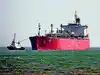
2 LPG tankers sail through Strait of Hormuz, 16 still stranded
Two Indian LPG tankers have successfully navigated the Strait of Hormuz. These vessels are now en route to Indian ports. This development brings relief as 16 other Indian ships remain stranded in the Persian Gulf. The safe passage of these tankers ensures continued supply of essential cooking gas to India. Maritime operations remain secure.

Two more Indian-flagged LPG tankers exit the Gulf, tracking data shows
Two Indian LPG tankers, Green Asha and Green Sanvi, have successfully navigated the Gulf. A third vessel, Jag Vikram, remains near the Strait of Hormuz. India is actively relocating its stranded LPG shipments. This effort is crucial as the nation faces its most significant gas crisis in decades.
India looks to turn LPG import crisis into push for piped gas
India is using the LPG supply disruption triggered by the Iran war to tighten distribution, reduce leakages and accelerate a shift to piped gas to cut imports and subsidy costs. The government has invoked emergency powers to prioritise household LPG use and plans to stop supplies to users with piped gas connections after three months. It has also fast-tracked pipeline approvals to expand the city gas network.
Load More

