
INTERNATIONAL ENERGY AGENCY

Increase in renewable energy curbs emissions growth in 2025, IEA says
Global emissions growth slowed in 2025. Solar power expansion in developing nations helped balance emissions increases in advanced economies. India saw emissions fall for the first time in normal economic conditions. China also recorded lower emissions due to leading solar capacity additions. The United States experienced an emissions rise.
North Korea launches multiple ballistic missiles into sea off east coast
North Korea has escalated tensions by launching multiple ballistic missiles into the sea, as verified by South Korea's military from the Sinpo zone. In light of these developments, Seoul is enhancing its security protocols and syncing efforts with the United States and Japan. Japan's Defense Ministry indicated it may have detected a missile launch as well.
West Asia War: Some tankers cross Strait of Hormuz before shots fired, ship-tracking data shows
West Asia War: The Strait of Hormuz reopened briefly after a 50-day blockade. Several tankers passed through before Iran reimposed restrictions. Iranian gunboats fired on some ships. Hundreds of vessels remain stranded. Oil and gas supplies are disrupted. This situation impacts global energy markets significantly.
Convoy of tankers is seen crossing Strait of Hormuz, vessel tracking data shows
A convoy of eight tankers is crossing the Strait of Hormuz. Ship owners hope Tehran will allow them to leave the Gulf during a short ceasefire. Iran reopened the strait after a US-brokered ceasefire. The closure caused a major supply loss. Gulf producers need steady tanker flow to resume exports.
US extends waiver allowing India and other countries to buy Russian oil
The Donald Trump administration has issued a short-term waiver allowing countries to continue buying sanctioned Russian oil loaded on ships until May 16, aiming to stabilise global energy prices amid the US-Israeli war on Iran.
Loss of energy output in Middle East will take about two years to recover, IEA says
Energy output in the Middle East will take about two years to recover from conflict losses. Fatih Birol, head of the International Energy Agency, warns of significantly higher energy prices if the Strait of Hormuz remains closed. New oil and gas shipments were not loaded in March, creating a noticeable gap.
- Go To Page 1
France finance minister says Hormuz must open, G7 ready to mitigate war fallout
G7 finance leaders are focused on the economic impact of the Middle East conflict. They are prepared to address soaring energy prices and the blockage of the Strait of Hormuz. Leaders emphasized the need for peace and are monitoring the situation closely. They are ready to act if necessary to stabilize markets. Support for Ukraine also remains a key priority.
Iran war pushes Asia to think twice before doubling down on LNG
A Middle East conflict has disrupted global liquefied natural gas supply. This has caused prices to surge, impacting Asian nations heavily reliant on the fuel. Plans for widespread adoption of gas are now uncertain. Countries are seeking alternatives, potentially leading to long-term shifts in energy strategies and reduced demand for LNG.

Jet fuel supplies are lagging. What does that mean for airlines and travelers?
A looming jet fuel shortage in Europe and Asia, triggered by the Iran war and the closure of the Strait of Hormuz, could significantly disrupt global travel within weeks. Airlines face higher airfares and potential flight cancellations as jet fuel prices have doubled, impacting the summer travel season.

West Asia War: India’s BBB rating seen stable despite energy shock; S&P flags corporate stress, weaker credit growth
West Asia War: India's sovereign rating remains stable despite rising energy costs. However, supply disruptions for food and fuel could impact company credit quality. Top companies may see earnings drop, increasing debt ratios. Sectors like refining and airlines are most vulnerable. Banks might see slower credit growth. Government revenue could be affected by fuel price support measures.

Europe has 'maybe 6 weeks of jet fuel left', energy agency head warns
Europe faces a critical shortage of jet fuel, with only about six weeks of supply remaining, according to the IEA head. The ongoing Iran war and blocked Strait of Hormuz threaten global energy supplies, potentially leading to flight cancellations and severe economic repercussions, especially for developing nations.

Iran war exposes cost of Asia's fossil fuel reliance
The latest global energy shock highlights the risks of fuel import dependence, with Bangladesh hit hard by soaring LNG costs after supply disruptions, forcing costly spot purchases. In contrast, Pakistan’s shift to solar reduced reliance on imports and cushioned the impact. The divergence underscores the need for emerging economies to accelerate clean energy adoption to limit exposure to price volatility.
Indian LPG vessel Jag Vikram docks at Kandla after Strait of Hormuz transit, first Indian ship through since US-Iran ceasefire
The Indian LPG tanker Jag Vikram became the first Indian vessel to cross the Strait of Hormuz since the US-Iran ceasefire, highlighting cautious resumption of maritime movement amid ongoing tensions. The government is meanwhile working to bring back other stranded Indian ships as disruptions continue in the region.
North Korea showing 'serious increase' in ability to make nuclear weapons: IAEA chief
North Korea is showing a "very serious increase" in its ability to produce nuclear weapons, the head of the International Atomic Energy Agency said in Seoul on Wednesday. "All that points to a very serious increase in the capabilities of (the) DPRK in the area of nuclear weapons production, which is estimated at a few dozen warheads," he said, referring to North Korea by its official name. sjh-mjw/mtp
IMF, World Bank, IEA urge countries to stop hoarding energy supplies, imposing export controls
Leaders are appealing for energy stocks to flow freely to markets. Countries facing severe impacts are being consulted on supply concerns.

IMF, World Bank and IEA aim to have calls every two weeks to assess war's impact
International Monetary Fund chief Kristalina Georgieva said global institutions plan biweekly calls to monitor energy market disruptions from the Middle East conflict. She also urged countries not to hoard oil or restrict exports to avoid worsening supply shocks.

Global Markets | Asian stocks track US rally on Iran peace push
Asian markets opened higher, mirroring Wall Street's positive trend. Hopes for further United States-Iran talks have boosted investor confidence. This optimism is also contributing to a decrease in oil prices. The broader MSCI Asia Pacific Index saw a significant increase. This development suggests a potential easing of global economic pressures.
IEA: Global oil demand to decline in '26, a first since Covid
While oil futures registered an unprecedented surge in March, they remain considerably below record levels and the price of actual cargoes, trading at just under $100 a barrel in London. This "disconnect" between futures and physical markets is becoming "increasingly acute," according to the report.
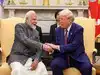
PM Modi speaks to Trump on importance of keeping Strait of Hormuz "open and secure"
Prime Minister Narendra Modi and US President Donald Trump engaged in a nearly 40-minute phone call, their first since the US-Israel war with Iran commenced on February 28. Details remain scarce as the world faces an energy crisis due to the ongoing Middle East conflict. US Ambassador Sergio Gor affirmed that India-US relations are robust.

US wholesale prices surged 4% last month after the war in Iran sent energy prices soaring
U.S. wholesale prices surged last month as the Iran war drove up the cost of energy.

Ukraine strikes on Russian oil ports put India’s refining lifeline at risk, IEA warns
Ukraine’s drone strikes on key Russian oil ports — Primorsk, Ust-Luga and Novorossiysk — are threatening India’s crude supply chain, with the International Energy Agency warning of potential disruptions to refining operations. With about 80% of India’s Russian imports routed through these hubs, any prolonged outage could tighten feedstock availability, even as reliance on discounted Russian crude has surged and alternative supplies remain limited.

Why are oil and gas prices down today, and will Brent crude and US WTI crude futures continue to drop or rise again soon? Analysts insights, market outlook and what should investors do now
Why are oil and gas prices down today, and will Brent crude and US WTI crude futures continue to drop or rise again soon? Oil and gas markets moved lower after signals of possible US-Iran talks eased supply fears linked to the Strait of Hormuz blockade. Brent and WTI dropped after sharp gains. Analysts warn that lost oil supply, lower inventories, and uncertain negotiations may still push prices higher again soon.
Iran war upends IEA's oil market outlook as global supply and demand to contract in 2026
The International Energy Agency forecasts a global oil supply and demand fall due to the Iran war, citing the largest supply disruption in history. Demand growth is now predicted to drop by 80,000 bpd, with significant cuts in the Middle East and Asia-Pacific. Global output is expected to decrease by 1.5 million bpd this year.
Russia’s oil revenues nearly double to $19 billion in March: IEA
According to the IEA, Russia’s crude oil exports rose by 270,000 barrels per day (bpd) month-on-month to 4.6 million bpd in March.
Oil prices fall as US-Iran dialogue hopes ease supply concerns
Oil prices dropped as talks between the U.S. and Iran offered hope for de-escalation. This eased worries about supply disruptions from the U.S. blockade of the Strait of Hormuz. Brent and WTI crude futures saw declines. Analysts suggest tight oil balances could keep prices elevated. International bodies urged nations to avoid hoarding energy supplies.
Lessons learned in 70s have made US, world economies less vulnerable to oil shocks
The world economy is experiencing a significant oil price surge reminiscent of the 1970s. However, countries are now better prepared. Decades of efforts have increased energy efficiency and reduced reliance on Middle Eastern oil. New energy sources and stockpiles provide a buffer. While challenges remain for consumers and businesses, the global economy is less vulnerable to this shock than before.

US' Russian oil waiver set for an extension
US Treasury Secretary Scott Bessent met with Trump in the White House on Thursday to talk about extending the waiver, and they agreed it was a good idea, one of the sources said, asking not to be named. Officials at the White House and Treasury Department did not immediately comment on the matter. Oil prices have spiked since the start of the war due to the partial closure of the Strait of Hormuz.

Iran rules out restrictions on enrichment programme: Nuclear chief
The head of Iran's nuclear energy agency on Thursday ruled out any restrictions on the country's enrichment of uranium, saying the demand by the United States and Israel "will not come true". During last June's 12-day war, Israel and the United States hit Iran's nuclear programme, claiming to have obliterated its ability to enrich uranium.
Current oil and gas crisis worse than 1973, 1979, 2022 together, says IEA chief
The oil and gas crisis triggered by Iran’s blockade of the Strait of Hormuz is more severe than the crises of 1973, 1979 and 2022 combined, Fatih Birol said. “The world has never experienced a disruption to energy supply of such magnitude,” he said.
Load More

