
INDIAN OCEAN DIPOLE

El Niño is here, but can the Indian Ocean Dipole save India's monsoon?
El Niño conditions have developed in the Pacific Ocean. This weather pattern often leads to less rain and hotter temperatures in India. Farmers and water resources could be affected. However, another climate pattern, the Indian Ocean Dipole, might help. A positive Indian Ocean Dipole could bring more rain. Experts are watching both closely to predict the monsoon's outcome.

El Nino sets in, clouds kharif outlook
El Nino conditions have set in and may strengthen during the southwest monsoon, raising concerns for India's largest sowing window. The neutral Indian Ocean Dipole offers no offset, and the IMD has lowered its monsoon forecast to below-normal. This development threatens crop output, impacting inflation and the rural economy.

Macro, the Mightiest: Why India’s biggest macro variable still falls from the sky
The 2026 monsoon comes with a clear warning: Rainfall is forecast at 92% of the long-period average, with higher-than-usual probability of deficient or below-normal outcomes. El Niño conditions are also likely to develop during the season, though peak intensity may arrive only after the monsoon withdraws. For India, this is not a simple weather story. A weak or uneven monsoon can affect kharif output, food inflation, rural consumption, fiscal spending, bond yields, and the RBI’s policy choices. The risk is not a catastrophe. It is a familiar macro chain reaction.

IMD sees above-normal heatwave Maydays
India's May forecast predicts above-normal heatwave days in many regions, despite an expected 10% increase in overall rainfall. Increased western disturbances and thunderstorm activity are anticipated, potentially moderating maximum temperatures. However, night temperatures are likely to remain higher than usual across most areas.


El Nino threat looms large as data shows strong link to weak monsoons
Around 70% of El Nino years since 1980 have been linked to weak Indian monsoons, underscoring a strong correlation as global agencies warn of a likely and potentially stronger event this summer. While most El Nino years have seen deficient rainfall, occasional offsets from factors like the Indian Ocean Dipole have helped cushion the impact, leaving the monsoon outlook contingent on how multiple climate forces evolve.
- Go To Page 1

Southwest monsoon to be 8% below Long Period Average: IMD
India anticipates below-normal monsoon rainfall in 2026. Precipitation is projected to be 8% below the Long Period Average. This forecast raises concerns for crop output and inflation. While some regions may see normal to above-normal rain, most of the country is expected to receive less. The India Meteorological Department will issue updated forecasts in May 2026.

IMD flags below-normal monsoon for 2026; rainfall seen at 92% of long-term average
India faces a potential challenge in 2026 with forecasts indicating below-average monsoon rainfall. The India Meteorological Department predicts precipitation at 92% of the long-term average. This outlook raises concerns for agriculture, water resources, and rural economies. The southwest monsoon is vital for irrigating half of India's farmland. A deficit season could impact crop yields, affecting food prices and economic growth.

What is El Niño? How it may impact India’s monsoon in 2026
The Reserve Bank of India has flagged El Niño as a potential inflation risk, following forecasts of below-normal monsoon rainfall in 2026. El Niño, characterized by warming Pacific waters, disrupts global weather patterns. While generally linked to weaker monsoons in India, the Indian Ocean Dipole can offset these effects, making drought not a guaranteed outcome.

IMD predicts warmer November amid intensifying El Nino conditions
Above-normal rainfall is likely over some areas of the southernmost parts of peninsular India, most parts of northwest India, and many parts of east-central, east and northeast India, India Meteorological Department (IMD) Director General Mrutyunjay Mohapatra said. EI Nino conditions are prevailing over the Equatorial Pacific Ocean and positive Indian Ocean Dipole conditions are prevailing over the Indian Ocean.

Eastern India may experience heat wave in May, says IMD
Above-normal temperatures are expected in parts of eastern India such as Bihar, Jharkhand and Odisha in May, according to the India Meteorological Department. Heatwave conditions are possible, although parts of west-central and northwestern India will see cooler days and warmer nights. The normal rainfall in May is projected to be 91-109% of the Long Period Average.

Above-normal temperatures seen in April-June: IMD
The weather department has also predicted an increase in the number of heatwave days during April-June, particularly in the central, east, and northwest India.“A significantly higher number of heatwave days are predicted over parts of Bihar, Jharkhand, Uttar Pradesh, Odisha, West Bengal, Chhattisgarh, Maharashtra, Gujarat, Punjab and Haryana,” IMD director general Mrutyunjay Mohapatra said.


Second half of monsoon may see rains turning erratic in India
According to the latest update from the Bureau of Meteorology, Australia's national weather, climate and water agency, oceanic and atmospheric phenomenon in the Pacific Ocean La Nina, which is an indicator of the monsoon, remains active in the tropical Pacific Ocean.

Boost for monsoon as El Nino wanes
El Nino phenomenon is unlikely to develop in the months ahead: Australian Met Bureau

Monsoon to advance in next 3 days after week’s lull
Met Department points to development of a weak, short-lived El Niño that is expected to interfere with the rain pattern this season.

Local Indian Ocean phenomenon may bring better rainfall despite El Nino
The phenomenon called Indian Ocean Dipole (IOD) refers to the temperature difference between the eastern and western parts of the water body.

Monsoons to be well distributed in India: IMD
The rain pattern this year could help India get its third consecutive good harvest of kharif crops.

Second half of monsoon season to receive normal rainfall: IMD
Rainfall over the country during the remaining two months of the monsoon season is likely to be 100 per cent of the Long Period Average with a model error of plus or minus 8 per cent.

South Asia to get normal monsoon, says SASCOF forecast
"The outlook suggests that during the 2017 southwest monsoon season (June – September), normal rainfall is most likely over much of South Asia."

India may receive below-normal rainfall due to El Niño: Skymet
Skymet CEO Jatin Singh had earlier told ET that El Niño will evolve during the monsoon season this year and take shape by August-September.
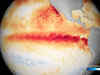
Australia says strong Indian Ocean Dipole reinforcing El Nino
The positive Indian Ocean Dipole, the Indian Ocean's equivalent of the Pacific Ocean-based El Nino, is at its strongest since 2006.

El Niño may linger into 2016: Australia Met Department
Meteorologists are hopeful of the emergence of a rain-boosting phenomenon, a positive Indian Ocean Dipole, which could offset the impact of El Niño

El Niño strengthening, but rain-boosting IOD could offset impact: Australia Met Bureau
However, meteorologists are hopeful of the emergence of a rain-boosting phenomenon – a positive Indian Ocean Dipole (IOD) – which could offset the impact of El Niño.

El Nino phenomenon in the Pacific Ocean to have no impact on monsoon rains: Expert
DS Pai, IMD said the moderate El Nino conditions currently prevailing are likely to reach moderate to strong level during the monsoon season and continue till early part of the next year.

Private weather forecaster Skymet rejects IMD's forecast of likely drought
Skymet said there will be a good monsoon season this year as the Indian Ocean Dipole (IOD) phenomenon counters an El Nino weather event.

Monsoon in 2015 likely to remain normal: Assocham-Skymet
According to report, damage to Rabi crop due to unseasonal rains shall continue and a major spell of rainfall is expected next month in North India.
Forecast updates strengthen El Nino fears
Latest updates from two global weather prediction agencies have added to the spectre of a developing El Nino, raising fears of a possible weak monsoon this year.
Monsoon downgraded from April prediction, to be 96% of average
The Met office has downgraded the monsoon from its April prediction of 99% of long-term average to 96% in the latest forecast released on Friday.
Load More

