
INDIA COAL IMPORTS

Reliance, Essar top bidders for coal-based methane gas exploration blocks
The bidding frenzy for coal-bed methane blocks heats up as Reliance Industries and the Essar Group step into the ring. The Directorate General of Hydrocarbons has put 16 blocks up for grabs in two competitive rounds, attracting the attention of Oil India while ONGC chooses to withdraw.

India is making a big move to outflank China in Sri Lanka
India and China may be locked in an escalating energy rivalry in Sri Lanka. India plans a new energy hub at Trincomalee with the UAE, including an oil pipeline. This initiative aims to secure fuel supply chains and counter China's expanding presence in Sri Lanka's energy market. The project seeks to reshape regional energy dependence.

India pushes for regional energy hub in Sri Lanka
India is pushing for quick progress on a key energy hub project in Sri Lanka. The proposed oil hub in Trincomalee is a strategic initiative involving India and the UAE. Officials met in Colombo to discuss accelerating the project. This development comes as global energy supplies face disruption. The hub aims to enhance regional energy security and cooperation.

20% DME-LPG blend can cut imports by 6.3 MT, save around Rs 34,200 cr yearly: Report
India can significantly cut LPG imports by blending 20 per cent dimethyl ether, derived from coal gasification. This move could save 6.3 million tonnes of LPG annually, translating to over USD 4 billion in foreign exchange. The Bureau of Indian Standards permits this blending. Domestic DME production is currently limited, but a clear policy can unlock investments.

US extends waiver allowing India and other countries to buy Russian oil
The Donald Trump administration has issued a short-term waiver allowing countries to continue buying sanctioned Russian oil loaded on ships until May 16, aiming to stabilise global energy prices amid the US-Israeli war on Iran.

US move on Russian oil waiver adds pressure as Iran war strains energy markets, India engaged in talks: Sources
India faces a tougher energy market as the US will not extend waivers for Russian oil imports. This decision impacts countries already struggling with the Hormuz crisis. Russia has assured India of continued energy supplies, including crude oil, LPG, and LNG. India's oil imports from Russia have significantly increased, making it a key market for Moscow.

Iran war pushes Asia to think twice before doubling down on LNG
A Middle East conflict has disrupted global liquefied natural gas supply. This has caused prices to surge, impacting Asian nations heavily reliant on the fuel. Plans for widespread adoption of gas are now uncertain. Countries are seeking alternatives, potentially leading to long-term shifts in energy strategies and reduced demand for LNG.

Steel makers set for profit surge in March quarter
Steelmakers are poised for a significant profit surge in the March quarter, driven by a new protectionist measure and seasonal demand. Higher prices and volumes are expected to outweigh increased coking coal costs, with SAIL projected to see the sharpest profit growth. India's improved trade balance and resilient domestic demand further bolster the sector's outlook.

Iran war exposes cost of Asia's fossil fuel reliance
The latest global energy shock highlights the risks of fuel import dependence, with Bangladesh hit hard by soaring LNG costs after supply disruptions, forcing costly spot purchases. In contrast, Pakistan’s shift to solar reduced reliance on imports and cushioned the impact. The divergence underscores the need for emerging economies to accelerate clean energy adoption to limit exposure to price volatility.

Steel to stay costly through 2026, India to lead demand rebound in 2027: Report
Global steel demand will stay weak, growing just 0.3% in 2026, with China dragging growth while India emerges as a strong outlier. Despite soft demand, steel prices are rising due to higher raw material costs, supply tightness, and geopolitics. Aluminium leads gains among metals, while copper, zinc, and nickel show mild declines amid continued global volatility.

Plants built for imported coal being tested for local blends
The trials, covering 10 units with a combined capacity of about 18,000 MW, will determine the extent to which such plants can shift to domestic supplies, people familiar with the matter said. The exercise is evaluating operational feasibility, including the impact on efficiency, combustion and equipment performance.

Shelter from Spike 'n' Supply Storm: West Asia tensions test India Inc’s resilience to energy shocks
Escalating tensions in West Asia highlight India’s vulnerability to energy and logistics disruptions. Even without supply cuts, higher freight and insurance costs can strain margins and widen deficits. Strong balance sheets offer a cushion, but prolonged volatility could test corporate earnings, capital expenditure plans, and the broader credit cycle.

India's Russian oil imports more than triple to 5.3 billion euro in March
India’s crude oil imports from Russia surged in March, with purchases tripling to €5.3 billion as volumes doubled and prices rose, according to Centre for Research on Energy and Clean Air. The spike followed a US sanctions waiver, prompting state refiners to resume buying. Russia remained India’s top supplier, while China led overall purchases. Asian markets continued to dominate Russian oil exports.

Coal stock adequate for 90 days available: Union Coal Minister Kishan Reddy
India now holds over 200 million tonnes of coal, enough for 90 days, a significant increase from previous stock levels. The nation achieved one billion tonne coal production for the second consecutive year. The government is actively working to reduce import dependence and boost self-reliance in the minerals sector. Reforms and auctions are driving progress in this vital area.

Coal India absorbs cost surge to shield consumers
Coal India Limited is absorbing increased input costs to protect consumers from higher coal prices. Expenses for explosives and industrial diesel have risen sharply. The company is also compensating contractors for higher diesel expenses. India's coal imports have dropped due to high domestic stockpiles and firm seaborne prices. This trend is expected to continue.

Coal imports fall 8.5% in February amid high stockpiles, firm global prices
India's coal imports saw an 8.5 percent drop in February, reaching 16.55 million tonnes. This decline was driven by high domestic coal stockpiles and firm international prices. The trend is expected to continue as domestic miners work to reduce their inventories. Coal stocks at thermal power plants remain robust, ensuring uninterrupted power generation.

India defers power plant maintenance to add 10 GW capacity for summer peak demand
India is boosting electricity supply for summer. Maintenance shutdowns at thermal power plants are postponed. This adds 10,000 MW of power. Imported coal plants are running at full capacity. Coal stocks are maintained. India's electricity system remains strong. Installed capacity exceeds 531 GW. Over 22,000 MW will be added in three months.
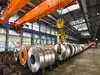
India aiming to cut steel emissions by 25%, double capacity, document shows
India is set to boost its steel production significantly by 2035-36. The new National Steel Policy 2025 targets a substantial reduction in carbon emissions from steel mills. This ambitious plan includes increasing steel capacity and exports. The policy also focuses on reducing reliance on coal and promoting cleaner steelmaking methods. This initiative is crucial for India's net-zero emissions goal.

Jindal Steel deploys syngas in furnaces to counter shortages of natural gas, LPG
Jindal Steel has successfully used syngas in its galvanizing and color coating furnaces. This move counters shortages of natural gas, LPG, and propane. It allows the company to maintain operations amid supply disruptions. Jindal Steel is a pioneer in using syngas for steelmaking. This innovation strengthens energy security and supports low-carbon steel production.
Load More


