
IMF FUEL SUBSIDIES
IMF, World Bank meetings show limits in mitigating shocks, reliance on US for solutions
Global finance leaders met amid Middle East war news. They acknowledged their limited ability to counter economic damage from frequent geopolitical shocks. Reliance on U.S. leadership for crisis resolution is no longer assured. The IMF and World Bank pledged aid to developing nations. Officials expressed frustration with ongoing economic calamities.

West Asia War: India’s BBB rating seen stable despite energy shock; S&P flags corporate stress, weaker credit growth
West Asia War: India's sovereign rating remains stable despite rising energy costs. However, supply disruptions for food and fuel could impact company credit quality. Top companies may see earnings drop, increasing debt ratios. Sectors like refining and airlines are most vulnerable. Banks might see slower credit growth. Government revenue could be affected by fuel price support measures.

Let oil prices hurt: IMF cautions against govt shielding consumers
The IMF is urging governments to let fuel prices rise, warning that broad subsidies and price caps worsen global energy shocks. Allowing price signals to function encourages demand reduction, which is crucial for market stabilization. Targeted cash transfers are recommended to cushion consumers without distorting global markets.

Russian LNG under US sanctions heads for the first time to India
A Russian liquefied natural gas cargo, currently under United States sanctions, is en route to India. This shipment, if it reaches its destination, would mark the first such delivery to India since former US President Donald Trump stated India would cease buying Russian energy. India has not confirmed this pledge.
11 nations call for coordinated IMF-World Bank support amid Middle East war risks
The finance ministers of 11 countries including Britain and Japan called Wednesday for "coordinated emergency support" to help countries hit by disruptions from the war in the Middle East. "We call on the IMF and World Bank to provide a coordinated emergency support offer for countries in need, tailored to country circumstances and drawing on the full range and flexibility of their toolkits," the ministers said in a joint statement issued by the UK government.
IMF cuts global growth outlook for 2026, warns of potential recession if Iran war worsens
The International Monetary Fund has cut its global growth outlook, warning the economy could near recession if the Middle East conflict keeps oil above $100. It now sees 3.1% growth in 2026, but this could drop to 2.5% or even 2.0% in a severe scenario, alongside rising inflation, with emerging markets hit hardest while India remains a relative bright spot.
- Go To Page 1
Global finance ministers warn of prolonged market impact from Middle East conflict
Global finance ministers warn the Middle East conflict will continue to impact growth and inflation. Even a lasting peace will not immediately erase these effects. Renewed fighting or disruptions in the Strait of Hormuz pose serious risks. Ministers pledge fiscally responsible domestic responses and urge all nations to avoid protectionist trade barriers.

IMF cautions countries against broad fuel subsidies to deal with war-driven energy shock
Global finances face new pressure from the Middle East conflict. Rising energy prices and interest rates strain economies. The IMF advises against fuel subsidies, favoring direct cash aid. Countries must manage higher energy costs to reduce consumption. Global government debt is projected to reach 100% of GDP by 2029, the highest since World War Two.

Iran war leaves crisis-scarred countries counting the cost
Iran war: Sri Lanka, Egypt, and Pakistan are struggling with rising energy costs. The Iran war has worsened their economic situations. These countries rely on energy imports, making them vulnerable. International bodies like the IMF are ready to provide emergency support.

'War takes away everything we work for': IMF sees massive spillovers from Middle East conflict
The Middle East conflict's impact is spreading beyond oil and gas. Global food supplies, transport, and even chip production face disruptions. This shock is pushing up prices and straining supply chains worldwide. Countries are facing rising inflation and potential food insecurity. Policymakers must act carefully to manage these challenges and build resilience.

Global Market | IMF warns of lasting economic impact from war-triggered supply disruptions
The IMF warned that the Middle East conflict could slow global growth while fuelling inflation due to energy supply disruptions. With oil prices surging and trade routes impacted, vulnerable economies face rising risks, prompting expectations of downgraded growth forecasts and prolonged economic uncertainty across global markets.
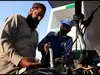
Pakistan cuts petrol prices by 80 rupees per litre amid Israel-Iran war
Pakistan will reduce petrol prices by 80 rupees per liter to 378 rupees. This cut comes from the government's petroleum levy. The decision follows a recent hike in diesel and petrol prices. Global oil price increases due to the Middle East conflict were cited for the earlier rise. This price adjustment offers relief to consumers.

Can oil hit $200? How the worst-case scenario could hurt D-Street and Indian economy
Escalating US-Iran tensions in the Gulf raise fears of a major oil supply disruption, potentially pushing prices to $200 a barrel. India, heavily reliant on oil imports, faces significant economic risks including a widening current account deficit, a weaker rupee, and increased inflation. Markets are already reacting negatively, with stock indices and oil marketing companies experiencing sharp declines.
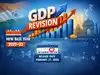
Fresh math for world's fastest growing economy: What's behind India's GDP revision and why it matters
India's new GDP revision is set to reflect new way of measuring the economy, shifting the base year for GDP to 2022–23. Authorities will also publish revised figures for earlier years to align them with the new benchmark. The goal is to make the numbers more realistic and responsive to today’s economy, including evolving spending patterns and the expansion of online and tech-driven activity.

Pakistan assures IMF not to allocate additional budget for China-Pakistan Economic Corridor
Pakistan government reassures IMF about no extra budget for Chinese power plants. Ministry of Energy faces criticism for electricity price hike. Circular debt from CPEC projects raises concerns. Violations of Energy Framework Agreement highlighted.

Fossil fuel subsidies hit $1.3 trillion despite government pledges to end them
A report by the International Monetary Fund studied both implicit and explicit subsidies for fossil fuels. This study was conducted across 170 countries.

Pakistan finance minister warns of default if fuel subsidies not abolished
Pakistan will default if the government does not abolish the subsidies on petroleum products, Finance Minister Miftah Ismail has said, warning that the cash-strapped country's economy could be in a similar position as that of Sri Lanka if tough decisions were not taken.
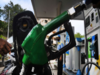
Pakistani stocks jump over 2% as government ends fuel price freeze
Fuel prices rose 20% on Friday, causing long lines to form at filling stations as the news spread. The new price of petrol will be 179.86 rupee per litre and diesel will be 174.15 rupee.

Pakistan hikes prices of petroleum products by Rs 30 per litre
After the increase, the price of petrol will be at Rs 179.85, diesel at Rs 174.15, kerosene at Rs 155.95 and light diesel at Rs 148.41.

IMF to discuss subsidies on petroleum products, electricity and gas on arrival in Pakistan
Apart from examining the federal government's plan regarding subsidies on petroleum products, electricity and gas, the IMF delegation will also review the taxes and duties collections in the next round of talks. They will hold talks about ending additional subsidies worth Rs 500 billion, sources added. In fact, the finance minister previously emphasised that the government would make all-out efforts to restore the Extended Fund Facility (EFF) programme with International Monetary Fund (IMF)

Cash-strapped Pakistan, IMF agree to extend stalled bailout package, increase loan size to $8bn
The Pakistan Tehreek-e-Insaf government and the IMF had signed a 39-month Extended Fund Facility (July 2019 to September 2022) with a total value of USD 6 billion. However, the previous government failed to fulfil its commitments and the program remained stalled for most of the time as USD 3 billion remained undisbursed. Before taking Pakistan's case to the IMF Board for approval, Islamabad would have to agree on the budget strategy for the next fiscal year 2022-23, the sources said.
IMF asked Pakistan to show how it would fund $1.5 bln subsidy package
The International Money Fund (IMF) had said it needed Pakistan to explain how it would fund a $1.5 billion subsidy package announced by Prime Minister Imran Khan, Finance Minister Shaukat Tarin said on Sunday.

IMF not endorsing UBI in India: Official
The IMF's observation was based on the results of a microsimulation analysis of a policy reform that replaces food and fuel subsidies in India with a UBI.

India could provide universal basic income of Rs 2,600 a year: IMF
The figure of Rs 2,600 per annum has been arrived at through simulation that replaces food and fuel subsidies in India with a UBI.

India back on fiscal consolidation due to less fuel subsidies and targeted social schemes: IMF
The IMF said, in India, the headline deficit is projected to decline modestly in fiscal year 2017/18, with continued delay in reaching the medium-term deficit target.
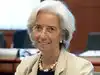
IMF applauds India for cutting fuel subsidy
Drop in oil prices provides a golden opportunity to cut energy subsidies and use the savings for more targeted transfers to protect the poor- Christine Lagarde

India should gradually reduce fiscal deficit: IMF official
The IMF has projected the Indian economy will expand 5.4% in the current financial year and pick up to 6.3% in the next fiscal.

Fuel subsidy benefiting the rich not the poor: IMF official
The massive amount of fuel subsidy, which is taking a toll on government expenditure, is mainly benefiting the rich and not the poor.

Rationalise fertiliser subsidy to improve fiscal health: IMF
The IMF in its annual report also welcomed government's move towards direct cash transfer of subsidies using the Unique Identification Authority of India (UIDAI).
Load More

