
HYPERSONIC WEAPONS
China's direct missile strike threat to Australia is 'growing': Report
China's missile power is increasing, posing a direct threat to Australia. Beijing is developing long-range and hypersonic weapons. This capability could reach Australia from ships, submarines, and new intermediate-range ballistic missiles. The threat is expected to grow over the next decade. Australia's public is not fully aware of this developing military risk.

Project Kusha will be a game-changer for India's security scenario: Rajnath Singh hails Indian air defence systems
Defence Minister Rajnath Singh praised Project Kusha, India's new air defence system. He called it a game-changer for national security. The system will protect against advanced threats. It is expected to be operational by 2028-2030. This development shows India's growing defence capabilities. The nation is building resilience and deterrence in a changing world.

190 vs 620: India has nuke edge over Pakistan but can it deter China?
China is rapidly expanding its nuclear arsenal, outpacing India in warhead numbers and technological advancements. India is enhancing its nuclear triad, focusing on a survivable second-strike capability. The expansion of India's submarine fleet and missile readiness are key developments. India's nuclear planning now emphasizes longer-range systems targeting China.
America fired 1,000 Patriot missiles but replaced only 172: Is the US missile stockpile crisis leaving Ukraine, Taiwan, and America vulnerable until 2029?
The US missile stockpile crisis is now exposing a deeper global defense weakness as America fired more than 1,000 Patriot interceptors but replaced only 172 during the Iran war. Pentagon missile reserves are shrinking fast. Patriot missile shortages are now affecting Ukraine and Taiwan at the same time. Defense experts warn some US missile defense systems may not recover before 2029.

Russia uses hypersonic Oreshnik missile in mass attack on Kyiv
Russia deployed the Oreshnik hypersonic missile in a large-scale drone and missile assault on Kyiv. The attack resulted in at least two fatalities and 83 injuries. Buildings across the Ukrainian capital sustained damage. This incident highlights Ukraine's air defense missile shortages. Russia claims the strike retaliated for Ukrainian attacks on its territory.

Russia flexes nuclear muscles as tensions rise with NATO
Russia is conducting large-scale nuclear drills involving thousands of personnel. These exercises include missile tests and the issuance of nuclear munitions to units. President Putin stated these weapons are an extreme measure of last resort. The drills occur amidst rising global tensions and concerns over drone activity in the Baltic region.
- Go To Page 1

How a broke, outgunned nation turned cheap drones into the most feared weapon on Earth
Drone warfare: Russia-Ukraine war has reached extreme intensity with nearly 10,000 drones used daily across frontlines. This rapid drone warfare Russia-Ukraine war shift shows how cheap FPV drones and loitering munitions now dominate real combat decisions. Every strike is faster, cheaper, and more precise than traditional weapons. The drone warfare Russia-Ukraine war has not simply added a new weapon to the battlefield. It has rewritten every rule about how wars are fought, who wins them, and what survival actually costs. What began in 2022 as a conventional land war has evolved into something the world had never seen at this scale

Future wars will be won by agility, integration, and indigenous tech: DRDO Scientist
India's military future depends on fast innovation and integrating national resources. Prateek Kishore highlights that warfare is changing, becoming domain agnostic. Speed is crucial for developing and upgrading systems in real time. A 'whole of nation approach' is needed to avoid resource duplication. Indigenous solutions are imperative for strategic independence in national security.

As chip industry chases AI, US national labs look to newcomers for supercomputers
America's nuclear weapons program faces a computing crunch. High-precision simulations for nuclear weapons are becoming difficult to power. This is because major chip makers are focusing on artificial intelligence. Sandia National Laboratories is now testing chips from new companies like NextSilicon. This ensures the nation's security mission can continue uninterrupted.

Most powerful missile system in the world: Putin hails "successful test" of Sarmat missile
Russia has successfully tested its Sarmat intercontinental ballistic missile. President Vladimir Putin called it the world's most powerful missile system. This advanced weapon is designed to penetrate any missile defense. The Sarmat is expected to be operational by the end of the year. Russia continues to develop its strategic deterrence capabilities with new weapons.
India tests 'Divyastra': How the new multiple-entry nuke missile will boost India's capability to reach any city in China or Pakistan
India successfully flight-tested an advanced Agni-5 missile with MIRV technology, capable of striking multiple targets simultaneously. This demonstration, dubbed 'Mission Divyastra', significantly enhances India's strategic deterrence and defence preparedness. The development positions India among nations with advanced intercontinental strike capabilities, bolstering its long-term security posture.
India restricts Bay of Bengal airspace from May 6–9 amid possible missile test buzz
In a significant strategic maneuver, India has imposed restrictions on its airspace over the Bay of Bengal, stirring discussions around a possible test of the Agni-6 intercontinental ballistic missile. With an anticipated range surpassing 10,000 kilometers and boasting advanced MIRV technology, this development underscores India's aspirations to fortify its position among the leading powers in missile technology worldwide.

The hypersonic missile America may unleash on Iran — everything you need to know about Dark Eagle
Dark Eagle hypersonic missile: The US military is reportedly considering deploying its advanced Dark Eagle hypersonic missile to the Middle East. This move comes amid concerns about Iranian missile launchers. If deployed, it would be the first operational use of a US hypersonic weapon.

Iran boasts having a 'mystery weapon' that can give US a heart attack; Trump waits for a Dark Eagle
Amidst rising tensions in the Middle East, the United States is weighing the advantages of positioning its cutting-edge Dark Eagle hypersonic missile in the region. This strategic contemplation comes on the heels of unsettling reports from Iran, where officials have alluded to a revolutionary weapon that could shift the dynamics of military power.
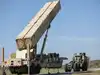
Dark Eagle: All about the US's secret Mach 5 hypersonic missile that Trump wants to use against Iran
America's Central Command wants to send its new Dark Eagle missile to the Middle East. This powerful weapon can strike deep into Iran. It is designed to hit heavily defended targets. The move aims to counter Iran's missile capabilities. This deployment would be the first operational use of the Dark Eagle. A final decision is still pending.

IAF seeks indigenous drone swarm radar system to boost surveillance in contested zones
The Indian Air Force is seeking domestic industry, academia, and startups to develop collaborative drone-based surveillance radar systems under the Mehar Baba Competition. This initiative aims to create a flexible, mobile swarm radar system capable of detecting and tracking aerial targets in contested environments, offering enhanced survivability over traditional fixed radars.

It's not just America; China's top scientists are dying mysteriously and nobody is talking
Unease grips China as several top scientists, many in sensitive defense fields, have died under mysterious circumstances. While official reports cite accidents or illness, the clustering of deaths, including a defense professor in a late-night crash, fuels speculation of a deeper pattern. The loss of these experts in critical areas raises significant global concerns.

US Navy arming warships with Patriot missiles to counter China's hypersonic threat
The U.S. Navy will integrate the Patriot missile into its Aegis combat system. This marks the first time the weapon will be fielded at sea. The move aims to counter China's hypersonic weapons. The PAC-3 MSE interceptors offer enhanced defense for Navy destroyers. Production of the Patriot missile is set to triple.

North Korea again tests cluster munitions in a launch observed by Kim Jong Un and his daughter Ju Ae
North Korea conducted its second ballistic missile test this month, featuring cluster bomb warheads, likely to enhance its ability to penetrate U.S. and South Korean defenses. Leader Kim Jong Un oversaw the launch of upgraded Hwasong-11 Ra missiles, expressing satisfaction with their high-density striking capability.

Indian Navy missile tracking capabilities get a boost with INS Dhruv amid rising global threats
India's INS Dhruv is a vital naval asset for tracking strategic missiles and collecting crucial telemetry data during test launches over oceanic regions. This specialized vessel, equipped with advanced radar and intelligence systems, also monitors Low Earth Orbit satellites, enhancing India's space surveillance and defense capabilities. Its operation involves a joint crew from the Navy, DRDO, and NTRO.

A P Singh flies USAF F-15EX during Indian Air Force chief’s US visit
Indian Air Force Chief Air Chief Marshal Amar Preet Singh experienced a flight in a US F-15EX Eagle II fighter jet at Nellis Air Force Base. This visit aimed to enhance interoperability and collaboration between the Indian and US Air Forces. Discussions focused on joint exercises and modernization efforts. The F-15EX is a key platform for Indo-Pacific defense.

Stealth destroyer to be home for 1st hypersonic weapon on US warship
The USS Zumwalt is being equipped with hypersonic weapons to increase its range and strike capability. This upgrade aims to transform an originally costly project into a valuable asset. Hypersonic missiles will allow the Navy to strike from great distances, providing an advantage in modern warfare. Testing is expected to begin by 2027 or 2028.

Japan, US move ahead in co-developing hypersonic weapons interceptor as regional threats grow
Japan and the United States collaborate on the Glide Sphere Interceptor missile defense system to counter the growing threat of hypersonic weapons from China, Russia, and North Korea. Japan's role includes developing key components for interceptors, with deployment planned on Aegis-class destroyers.
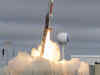
Race for fastest weapon heats up as US Air Force successfully tests hypersonic weapon in the Pacific
The US Air Force recently conducted a successful test of an air-launched hypersonic weapon in the Pacific Ocean, aiming to keep up in the hypersonic weapons race against China and Russia. This test, alongside North Korea's announcement of a successful test of a hypersonic missile engine, underscores the strategic significance of hypersonic technology in modern warfare. The test is seen as a signal to China of the US' commitment to maintaining its strategic posture in the Pacific region.

Stratolaunch conducts 'captive carry' test flight of hypersonic vehicle
Private U.S. company Stratolaunch conducted its second captive carry test flight of the reusable Talon-A, a hypersonic vehicle for hypersonic weapons systems. The payload craft, loaded with live propellant, was carried aloft by the Spirit of Mojave, a modified Boeing 747-400, over the Pacific Ocean. Talon-A's development is expected to be completed this year.

China leading in hypersonic weapons: US defence officials
China's hypersonic arsenal includes the DF-17, a medium-range ballistic missile with a hypersonic glide vehicle that has a range of 1,600 kilometers. It also has the DF-41 intercontinental ballistic missile, which also carries a hypersonic glide vehicle.

How hypersonic missiles work and the unique threats they pose - an aerospace engineer explains
A second important challenge stems from the fact that they operate in a different region of the atmosphere from other existing threats. The new hypersonic weapons fly much higher than slower subsonic missiles but much lower than intercontinental ballistic missiles. The US and its allies do not have good tracking coverage for this in-between region, nor does Russia or China.

Pentagon confirms failed test for hypersonic weapons development, initiated review
The spokesperson said the booster stack used in the test was not part of the hypersonic program and is not related to the Navy-designed Common Hypersonic Glide Body, which the Defense Department successfully tested on March 20, 2020.

US holds three tests to advance hypersonic weapon programs, Pentagon says
The Sandia National Laboratory ran the tests from NASA's Wallops Flight Facility in Virginia which will help "inform the development of the Navy's Conventional Prompt Strike (CPS) and the Army's Long Range Hypersonic Weapon (LRHW) offensive hypersonic strike," a statement said.
Load More

