
HISTORICAL ARTIFACTS PROTECTION
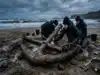
Buried Beneath Sand for Centuries, Archaeologists Just Found a Perfectly Preserved 2,000-Year-Old Anchor in the North Sea
A remarkably preserved 2,000-year-old Roman anchor was discovered in the North Sea during an offshore wind farm investigation. This rare find, made of iron and wood, offers a unique glimpse into Roman engineering and ancient maritime trade networks. Its exceptional preservation is attributed to a dense sand layer that protected it from decay.

AI in 2026 and beyond: The new admissions filter no one can afford to ignore
AI is transforming the job market. Universities are adapting admissions to assess AI readiness. Students need to demonstrate responsible AI use and agentic capabilities. This involves defining goals, using AI as a collaborator, and verifying outputs. Future employability hinges on proving you can leverage AI to handle routine tasks, freeing you for human-centric work.

Did Ancient Egyptian Doctors Use Breast Milk to Treat Eye Problems? A New Look at a 3,500-Year-Old Medical Mystery
Ancient Egyptian physicians documented treatments on papyrus, revealing a sophisticated medical system. While most eye treatments involved herbal or mineral compounds, some scholars theorize breast milk was used, possibly due to its symbolism of life and nourishment. This idea, though debated and lacking direct evidence, highlights the intricate blend of practical therapies and cultural beliefs in early Egyptian medicine.

What Was Hidden Beneath the Water Near Dor Beach? A Medieval Sword Appears
A medieval sword, lost for centuries, has resurfaced off Israel's coast. Discovered by a student, the Crusader-era weapon likely belonged to a knight from nearly a thousand years ago. CT scans revealed its European origins. This find highlights the importance of ancient sea routes and the secrets the Mediterranean still holds.

A Hidden Treasure From the Russian Revolution Was Just Discovered
Construction in Torzhok unearthed a remarkable hoard of 409 gold coins, dating from 1848 to 1911, hidden in a ceramic mug. Experts believe the treasure was concealed during the 1917 Russian Revolution, with its owner likely hoping to reclaim it later. The discovery highlights the importance of archaeological rescue excavations in preserving history.

Ancient coin once used for bus fare discovered to be over 2,000 years old
Unexpected discoveries sometimes reveal remarkable connections between everyday life and ancient history. In Leeds, England, a small coin that was once casually used to pay for a bus fare has turned out to be an artifact over 2,000 years old. The coin, originally minted by the Carthaginians in the Spanish city of Cadiz during the first century BC, eventually found its way into modern circulation before being recognized for its historical significance.

What Secrets Are Locked Beneath the Alps? New Cave Discovery Raises Big Questions
Explorers found a vast cave network in the Alps. It contains ancient stone tools and unique ice and limestone formations. These discoveries offer insights into early human survival in harsh environments. Scientists are studying the caves to understand past climates and human adaptation. The findings highlight human ingenuity and the Alps' hidden history.
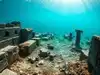
What Lies Beneath Taposiris Magna? Sunken Port Discovered by Archaeologists Could Reveal Cleopatra’s Tomb
A significant underwater discovery near Egypt's Taposiris Magna temple complex has been made. Archaeologists found a sunken port and a 4,300-foot tunnel. These findings, including coins and a carved head of Cleopatra, suggest the site's importance during her reign. The discoveries offer compelling evidence for Cleopatra's tomb possibly being located here, shedding new light on ancient Egyptian history and trade.
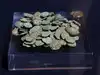
After 2,000 years, sunken city’s priceless artifacts finally see the light
Archaeologists have uncovered treasures from the sunken Egyptian city of Canopus, once a flourished as a hub of trade and religious near Alexandria. The excavations revealed statues, tools, and artifacts, also including a quartz sphinx connected to Ramses II and Roman-era. Thought to have been lost to earthquakes and tsunamis, the city’s rediscovery provides fresh insights into ancient civilizations while cautioning of modern coastal challenges like rising seas.
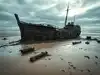
A 17th-century warship resurfaces from the deep as archaeologists fight to preserve its story
The HMS Northumberland, a 17th-century warship, resurfaced after being buried for centuries. The ship sank during the Great Storm of 1703. It rests on the Goodwin Sands near Kent. Archaeologists are racing to study the wreck. They are documenting artifacts like cannons and personal items. The team uses sonar and photography for digital preservation.

'Chhaava' starts a gold rush: How Vicky Kaushal's blockbuster triggered a treasure hunt in this sleepy Madhya Pradesh village
Treasure hunters flock to Asirgarh Fort in Madhya Pradesh after laborers uncover coins during highway construction. Villagers speculate valuable historical artifacts, prompting an urgent call for authorities to regulate excavation and protect the site’s archaeological heritage.

US hands over 297 antiquities smuggled out of India
India has successfully recovered 297 antiquities during PM Modi's recent visit to the US, bringing the total number of returned artefacts since 2014 to 640. The USA alone has returned 578 items. This achievement highlights India's efforts to reclaim its cultural heritage.
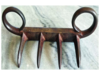
Victoria and Albert Museum agrees to loan Chhatrapati Shivaji Maharaj's iconic 'Tiger Claws' for 3 years
The Victoria and Albert Museum is set to sign a memorandum of understanding with the Maharashtra government, allowing India to showcase the 17th-century 'Tiger Claws' weapon for a period of 3 years in Mumbai. These claws were believed to have been used by the Maratha leader, Chhatrapati Shivaji Maharaj, in a historic battle. The exact history of the claws is unclear, but they are currently held at the Victoria and Albert Museum in London.

G20 Summit: World leaders and their spouses explore Delhi's heritage sites
As the G20 summit takes place in Delhi, many heads of states and their spouses are taking the opportunity to explore the city's historic sites, such as Qutub Minar and Humayun's Tomb. The first lady of Turkey, Emine Erdogan, visited Qutub Minar and expressed her appreciation for the site. Other notable visitors include the president of the European Council and the president of Argentina. The Union Ministry of Culture has organized a laser show at Qutub Minar to celebrate the summit.
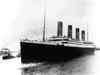
A new Titanic expedition is planned. The US is fighting it, says wreck is a grave site
The U.S. government is opposing a planned expedition by RMS Titanic Inc. to recover items from the sunken Titanic, stating that federal law and an international agreement treat the wreck as a gravesite. The government argues that entering the wreck or disturbing it would violate these regulations, potentially disturbing artifacts and human remains.
Bad luck stories can do a good turn
Custodians of historical sites should float superstitious tales as low-cost security.
'Apollo 11 lunar sample belongs to buyer, not NASA'
New York, Dec 17 (IANS) A mistakenly sold bag containing samples from the first manned mission to the moon belongs to the woman who bought it in a sale "conducted according to law", a US District Court judge has ruled.

US returns 200 artifacts worth $100 million to India
Speaking in Hindi, the Prime Minister said that in the last two years various countries have endeavoured to return India's stolen cultural heritage.

PM Modi's visit: US returns 200 artifacts worth $100 million to India
Items returned included religious statues, bronzes and terra cotta pieces, some dating back 2,000 years, looted from some of India's most treasured religious sites.
Load More


