
FLEX FUEL VEHICLES

Ethanol transition can shift to "Transport Energy Backbone" to shield India from oil shocks: KPMG
India's ethanol use is evolving beyond simple blending. It is set to become a key transport energy source. This will help manage fluctuating global fuel prices. An adaptive fuel system, varied distribution, and flex-fuel vehicles are crucial. This shift aims to enhance energy security and reduce reliance on external price volatility.
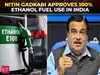
Signed file on 100 per cent ethanol fuel rules: Nitin Gadkari says multiple companies to adopt alternative blend
Union Minister Nitin Gadkari has approved 100 percent ethanol blend fuel. This move aims to significantly reduce India's import dependence on fossil fuels. Maruti Suzuki has launched a WagonR running on 100 percent ethanol. Other companies like Toyota, Suzuki, and Hyundai will soon follow. This initiative promises a viable alternative to petrol and diesel, boosting domestic production and economic growth.

Blending of E20+ petrol exempt from excise duty
The government has removed excise duty on blending over 20% ethanol with petrol. This move supports the use of more domestically produced ethanol. It aims to reduce reliance on imported crude oil. While this exemption is a step towards higher blends, extensive testing is still required. Most current vehicles are compatible with up to E20 blends.


Fueling Demand: Inside India’s ethanol mobility revolution in reverse
India is launching an ambitious green mobility initiative. The country is establishing E100 fuel stations nationwide before flex-fuel vehicles become common. This strategy aims to reduce oil imports and boost the rural economy. Major automakers are now introducing flex-fuel cars and motorcycles. This rapid development marks a significant shift in India's energy landscape.
- Go To Page 1

Ten reasons oil is still below $100 a barrel
Global oil prices remain surprisingly low despite the ongoing war in Iran. China's drastic cut in oil imports is a major factor. Demand destruction and increased production from other regions also contribute. Refineries show greater flexibility in processing and output. The market is also influenced by improved information flow and strategic reserve releases.

Petrol, Diesel price today changed amid excise duty relief on ethanol-blended fuel? Check latest rates in Delhi, Mumbai, Kolkata and other cities
Petrol, Diesel price today: Fuel prices remained stable across major Indian cities on June 11, 2026, despite the Centre's excise duty exemption on higher ethanol-blended petrol. This relief targets specific E22-E30 blends, not regular petrol, aiming to boost biofuel adoption and reduce crude oil imports. Consumers will not see immediate price drops for standard fuels.

E85 fuel to sell at Rs 20/litre discount to drive ethanol adoption: Oil Minister Hardeep Singh Puri
India is turning a new leaf in energy efficiency by rolling out E85 fuel, an environmentally friendly ethanol blend consisting of 85% ethanol, with a significant discount of Rs 20 per litre. This initiative is designed to not just lower fuel prices, but also to lessen India's dependence on imported fuels.

Petrol, Diesel prices hiked again on June 8 as crude oil surges? Check latest fuel rates in Delhi, Mumbai, Kolkata and other cities
Petrol, Diesel prices today: Global crude oil prices have surged amid Middle East tensions. However, Indian consumers are not feeling the pinch at the pump. Petrol and diesel prices remain steady across major cities. This stability is due to various factors influencing domestic fuel rates. India has also launched E85 petrol, a cleaner and cheaper alternative.

Market turns selective as earnings diverge; power, EVs and midcaps emerge as key bets: Siddhartha Khemka
Siddhartha Khemka believes Indian markets have become increasingly stock-specific as earnings trends diverge across sectors. He remains positive on power, cables and wires, cooling products, manufacturing, and electric vehicles, while favouring select mid- and small-cap companies that continue to deliver strong earnings growth despite broader macroeconomic challenges.
E85 vs Petrol: How much does it cost, why is it cheaper, and who can use it?
India has launched E85 ethanol-blended fuel in Delhi, priced significantly lower than standard petrol. This move aims to reduce crude oil dependence and promote cleaner mobility. While fuel efficiency may decrease, the cost savings and planned expansion of dispensing stations are expected to drive adoption of flex-fuel technology.
India to launch E85 fuel today in push for flex fuel mobility
India is launching E85 fuel on Friday. This is an 80-85% ethanol-blended petrol. The move aims to boost flex fuel mobility across the nation. Minister Hardeep Singh Puri will attend the launch event in New Delhi. Automakers like Maruti Suzuki and Hero MotoCorp are already introducing flex fuel vehicle variants.

Maruti rebounds with strong market share gains after six-year gap
Maruti Suzuki has regained substantial market share after a six-year gap. Strong sales in small cars and SUVs, coupled with new production capacity, have boosted performance. The company's market share rose significantly in recent months. With a healthy booking pipeline and upcoming launches, Maruti Suzuki anticipates further growth and market share gains.

LIC buys Maruti Suzuki shares worth Rs 68 crore, insurer's stake in automaker crosses 5%
Life Insurance Corporation of India (LIC) has increased its stake in Maruti Suzuki above the 5% threshold after purchasing 51,750 shares through a market transaction. The move comes amid a decline in Maruti Suzuki's stock this year and reflects LIC's continued investment activity despite market volatility.

Maruti Suzuki launches India's first flex-fuel car, bets on biofuels to boost energy security
Maruti Suzuki has launched India's first flex-fuel passenger car, the Wagon R. This move aims to significantly cut crude oil imports and lower carbon emissions. The technology supports farmers and rural communities, linking agriculture with clean mobility. This initiative is a key step towards India's energy security and self-reliance. The company is committed to cleaner mobility solutions.

Stocks in news: Tata Steel, ICICI Bank, Tata Motors, Vedanta, Maruti Suzuki
Indian markets traded cautiously on Thursday's weekly expiry, with analysts observing a continued tussle for direction in the Nifty. Key companies like Tata Steel, Tata Motors, ICICI Bank, Vedanta, and Maruti Suzuki are in focus due to significant business updates and regulatory developments.

India’s first choice for cars is going second-hand
India’s car market is shifting gears: why stretch for a new hatchback when a used SUV gets you further? A booming pre-owned market is redefining ownership, aspiration, and what “smart money” looks like on four wheels.

Government rolling out 100 ethanol fuel stations in Delhi-NCR, Maharashtra: Hardeep Singh Puri
India is expanding its network of ethanol fuel stations across Delhi-NCR, Pune, Mumbai, and Nagpur. This initiative aims to significantly reduce the country's reliance on imported fossil fuels. The government plans to increase the number of these stations to 500 by the end of 2026 and anticipates 5,000 by 2027. This move supports cleaner fuel alternatives and boosts farmer income.

Govt considering policy to support affordable adoption of E85 fuel: Hardeep Singh Puri
The Indian government is actively considering a policy to accelerate the affordable adoption of E85 fuel, a blend of 85% ethanol with petrol. This move follows the unveiling of India's first flex-fuel motorcycles compatible with E85, signaling a significant step in the nation's energy transition.

Petrol, diesel price hikes in India remain 'very minor' compared with global peers: Hardeep Singh Puri
India's fuel price hikes are minor globally, with the nation ranking second lowest. This stability stems from a focused energy strategy. The government balances energy security with affordability. India is promoting ethanol blending and flex-fuel vehicles. This transition is structural, accelerating cleaner energy adoption across millions of vehicles. Such moves align with India's long-term energy roadmap.

Maruti unveils India's first flex-fuel car: What is a flex fuel vehicle? How does it work? Will it cut your fuel bill? Here's all
Maruti Suzuki has introduced India's first flex-fuel passenger car. This technology allows vehicles to run on petrol or petrol-ethanol blends. It is seen as a significant step towards reducing crude oil imports. The move also aims to lower carbon emissions and enhance India's energy security. This innovation could unlock substantial benefits for the country.

'India to pilot hydrogen buses, trucks on 10 roads; Reliance, Tata, NTPC among partners,' says Nitin Gadkari
India is launching a pilot project for hydrogen-powered buses and trucks on ten roads. Major companies like Reliance and Tata are partnering in this initiative. The country aims to become an energy exporter, moving beyond imports. This marks a significant step in India's energy transition, with flex-fuel vehicles also set for expansion.

Hero MotoCorp shares rise 3% as firm unveils India's first 100cc flex-fuel motorcycles. Check details
Hero MotoCorp shares gained 3%, after launching India's first flex-fuel motorcycles, the Splendor+ and HF Deluxe, supporting sustainable mobility and India's transition to cleaner fuels. These 100cc bikes are compatible with E20 to E85 ethanol blends, aiming to reduce carbon footprint and crude oil imports. The company plans a phased nationwide rollout starting July 2026.

85% ethanol-ready bikes are here: Hero launches new Splendor+ and HF Deluxe; Check prices, specifications and features
Hero MotoCorp introduces India's first mass-market flex-fuel motorcycles. The Splendor+ Flex Fuel and HF Deluxe Flex Fuel can run on petrol blended with up to 85% ethanol. This launch supports India's clean mobility goals and reduces dependence on imported crude oil. These bikes will be available from July 2026, marking a significant step towards greener transportation for all.

Maruti Suzuki to fuel India's ethanol shift with first flex-fuel car that's coming soon
India's auto sector is set for a revolution with Maruti Suzuki launching the country's first mass-market flex-fuel passenger vehicle. This move supports green mobility and reduces oil imports. The vehicle can run on petrol and ethanol blends up to 100 percent. This initiative boosts the rural economy and promotes cleaner transport. The government is also expanding E100 fuel infrastructure nationwide.

EV sales in fast lane but Motown treads the middle path
Indian carmakers are not betting on electric vehicles alone. They are developing a mix of petrol, diesel, hybrid, CNG, and flex-fuel options. This strategy balances growth with risks. Automakers are preparing for various scenarios due to evolving regulations and consumer preferences. This approach requires significant investment across multiple technologies and manufacturing ecosystems.

Rs 10.9 lakh crore burden: Iran shock can take a load off India's back
Rising oil prices triggered by the Iran conflict are pushing India to accelerate its shift away from fossil fuels, with the government fast-tracking plans for ethanol adoption and commercial vehicle electrification to reduce dependence on imported crude and support the rupee. With crude imports estimated to cost Rs 10.9 lakh crore in FY26, policymakers are treating energy transition as an economic and strategic priority rather than only an environmental goal.

Ready to flex ethanol muscle, E100 gets road map to cut oil imports
India is set to boost E100 flex fuel availability with 5,000 dispensing stations planned within two years. This initiative aims to significantly cut crude oil imports. Automobile and oil companies are collaborating on this roadmap. The government's plan includes phased rollout of E100 pumps across major cities, paving the way for flex fuel vehicles.
Load More

