


Listen to this article in summarized format
×
Subscribe to

Unlock AI Briefing and Premium Content
New Year Offer 24 Hours Left
Subscribe NowAlready a member? Sign In
What's Included
- Exclusive Stories
- Daily ePaper Access
- Smart Market Tools
- Curated Investment Ideas
- Ad-lite Experience
Subscription

 iStock
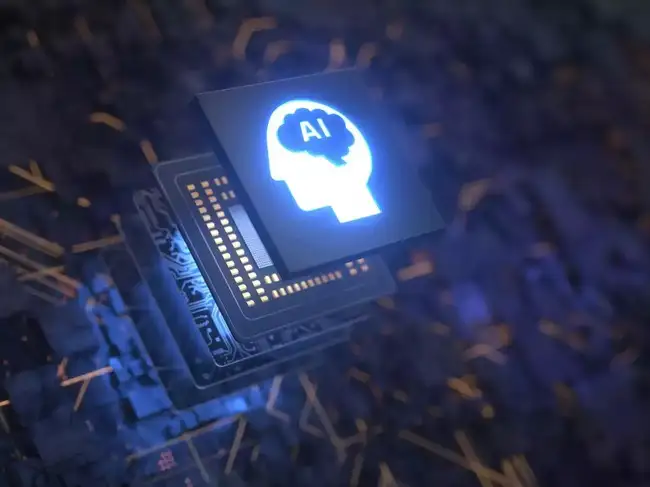
Sarvam and other homegrown artificial intelligence labs are in advanced discussions with the defence ministry to establish a Rs 300 crore Centre of Excellence (CoE) to develop indigenous AI capabilities for defence applications, said officials with knowledge of the matter.This is part of a rethink of India’s defence strategy to reduce dependence on foreign AI models and strengthen technological sovereignty in sensitive military domains. AI has been playing an increasingly critical role in battlefields ranging from Ukraine to Iran.
Several intelligence units to be set up under the CoE will be responsible for developing powerful AI systems trained on India’s unique operational environment, such as geographical terrain and climatic conditions.
These large-scale AI models will enable advanced surveillance, reconnaissance, and decision-support systems for the armed forces, said the people cited. Sarvam parent Axonwise Pvt. Ltd and the MoD did not respond to queries.
The world’s AI superpowers US and China have built selfsufficiency across the stack–from chips to large language models (LLMs)–which is worrisome from a geopolitical standpoint,
experts said.
AI has become an active battlefield participant. Anthropic's Claude model was used by the US military in the operation that killed Iran's Supreme Leader Ayatollah Ali Khamenei and 48 others.
The standoff between Anthropic and the Pentagon also points to how critical and central AI has become for national defence. Anthropic didn't want its AI to be used for autonomous weapons or mass surveillance at home.

"Nation states with the lead in AI technology will accelerate its use for geopolitical advantage," said lieutenant general Deependra Singh Hooda, former commander-in-chief of the Indian army's Northern Command.
"Export of technology is no longer an economic but a geopolitical advantage."
Founded by researchers Pratyush Kumar and Vivek Raghavan, Sarvam has been central to India's push to build a domestic AI stack.
The company is backed by leading investors including Lightspeed, Peak XV, and Khosla Ventures, and is reportedly in talks to raise a large new round that could value it at around $1.5 billion, with interest from companies such as Nvidia, Accel and HCLTech.
On the product side, Sarvam has sought to catch up in the global LLM race. At the AI Summit in New Delhi this February, it launched open-source models Sarvam-30B and Sarvam-105B, alongside a dozen other AI launches across speech, vision, and enterprise AI systems designed for Indian languages and contexts.
The startup has strong government backing. It has been selected to receive nearly ₹220 crore subsidy by the Ministry of Electronics and IT to build sovereign LLMs.
Military integration
China's vision for defence tech is exemplified by the Military-Civil Fusion (MCF) programme.
This is aimed at merging the defence industrial sector with civilian technology and academia to create the world's most advanced military by 2049. Overseen by President Xi Jinping, it focuses on acquiring, developing, and applying dual-use technologies such as AI, quantum computing, and aerospace.
From India's standpoint, the AI that matters most in warfare right now is not LLMs, it's computer vision and autonomous systems, said Pranay Kotasthane, deputy director of the Takshashila Institution, and author and researcher in semiconductor, geopolitics and policy.
The key factor is how AI is integrated into military networks. Modern warfare increasingly relies on C4ISR systems-command, control, communications, computers, intelligence, surveillance and reconnaissance-where AI can process large volumes of data and accelerate decision-making.
"The real military AI advantage comes from integration into kill chains and C4ISR systems, which is an engineering and doctrine problem," Kotasthane said. India has the opportunity to close the gap in AI much faster than in, for instance, jet engine manufacturing, he said.
Experts have called for more investments in defence R&D.
Several intelligence units to be set up under the CoE will be responsible for developing powerful AI systems trained on India’s unique operational environment, such as geographical terrain and climatic conditions.
These large-scale AI models will enable advanced surveillance, reconnaissance, and decision-support systems for the armed forces, said the people cited. Sarvam parent Axonwise Pvt. Ltd and the MoD did not respond to queries.
The world’s AI superpowers US and China have built selfsufficiency across the stack–from chips to large language models (LLMs)–which is worrisome from a geopolitical standpoint,
experts said.
AI has become an active battlefield participant. Anthropic's Claude model was used by the US military in the operation that killed Iran's Supreme Leader Ayatollah Ali Khamenei and 48 others.

The standoff between Anthropic and the Pentagon also points to how critical and central AI has become for national defence. Anthropic didn't want its AI to be used for autonomous weapons or mass surveillance at home.
Discover the stories of your interest






"Nation states with the lead in AI technology will accelerate its use for geopolitical advantage," said lieutenant general Deependra Singh Hooda, former commander-in-chief of the Indian army's Northern Command.
"Export of technology is no longer an economic but a geopolitical advantage."
Founded by researchers Pratyush Kumar and Vivek Raghavan, Sarvam has been central to India's push to build a domestic AI stack.
The company is backed by leading investors including Lightspeed, Peak XV, and Khosla Ventures, and is reportedly in talks to raise a large new round that could value it at around $1.5 billion, with interest from companies such as Nvidia, Accel and HCLTech.
On the product side, Sarvam has sought to catch up in the global LLM race. At the AI Summit in New Delhi this February, it launched open-source models Sarvam-30B and Sarvam-105B, alongside a dozen other AI launches across speech, vision, and enterprise AI systems designed for Indian languages and contexts.
The startup has strong government backing. It has been selected to receive nearly ₹220 crore subsidy by the Ministry of Electronics and IT to build sovereign LLMs.
Military integration
China's vision for defence tech is exemplified by the Military-Civil Fusion (MCF) programme.
This is aimed at merging the defence industrial sector with civilian technology and academia to create the world's most advanced military by 2049. Overseen by President Xi Jinping, it focuses on acquiring, developing, and applying dual-use technologies such as AI, quantum computing, and aerospace.
From India's standpoint, the AI that matters most in warfare right now is not LLMs, it's computer vision and autonomous systems, said Pranay Kotasthane, deputy director of the Takshashila Institution, and author and researcher in semiconductor, geopolitics and policy.
The key factor is how AI is integrated into military networks. Modern warfare increasingly relies on C4ISR systems-command, control, communications, computers, intelligence, surveillance and reconnaissance-where AI can process large volumes of data and accelerate decision-making.
"The real military AI advantage comes from integration into kill chains and C4ISR systems, which is an engineering and doctrine problem," Kotasthane said. India has the opportunity to close the gap in AI much faster than in, for instance, jet engine manufacturing, he said.
Experts have called for more investments in defence R&D.
Add  as a Reliable and Trusted News Source
as a Reliable and Trusted News Source Add Now!












 ETPrime Membership