



Listen to this article in summarized format
×
Subscribe to

Unlock AI Briefing and Premium Content
New Year Offer 24 Hours Left
Subscribe NowAlready a member? Sign In
What's Included
- Exclusive Stories
- Daily ePaper Access
- Smart Market Tools
- Curated Investment Ideas
- Ad-lite Experience
Subscription

 Agencies
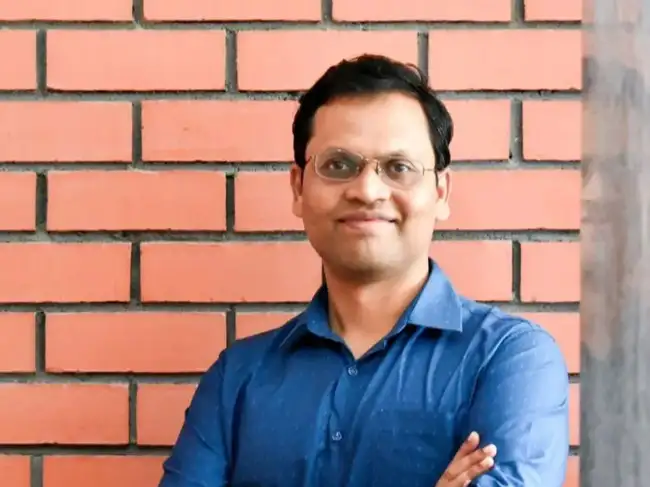
After last week's US government ban on Anthropic's frontier models citing security risks, Sarvam AI cofounder Pratyush Kumar said Indian AI firms and users have been operating under a dangerous illusion.
The Trump administration on Friday ordered Anthropic to cut off access to its two most advanced models, Fable 5 and Mythos 5, for all foreign nationals, whether inside or outside the United States. Anthropic complied by taking both models offline globally. This is the first time the US has issued an export control on an AI model, and the access was revoked with no warning.
"For AI users, it is clear that you should not confuse access with ownership, or adoption itself as advantage. And if the most significant tech differentiator you are leveraging has external control loops, then you have to accept you are vulnerable," he wrote in a post on X.
For AI researchers and engineers, he said the ban sets a precedent in which talent will increasingly be seen as aligned to national interests rather than the companies. For AI labs, Kumar argued the episode points toward a deliberate two-tier market: general-purpose models distributed freely to build adoption, with frontier models kept behind a gate. "Democratised AI sucks in all the data liquidity of the world which is locked in higher margin frontier offerings," he wrote.
Sovereign AI
Kumar said this is a good opportunity for Indian companies to turn to sovereign AI, with nations and companies building, running, and improving AI systems within their own borders, rather than depending on foreign labs that answer to foreign governments.

He added that its flagship model, Sarvam 105B, is described as India's first sovereign foundation model built from scratch. Larger models focussed on coding, agents, and security are in development.
"Bottomline, irrespective of hit jobs by foreign media or naysayers of various shades, India has the talent, the scale of the economy, the ambition amongst people for a better life, and a government that understands the imperative for technology innovation," he concluded in his post.
The Trump administration on Friday ordered Anthropic to cut off access to its two most advanced models, Fable 5 and Mythos 5, for all foreign nationals, whether inside or outside the United States. Anthropic complied by taking both models offline globally. This is the first time the US has issued an export control on an AI model, and the access was revoked with no warning.
"For AI users, it is clear that you should not confuse access with ownership, or adoption itself as advantage. And if the most significant tech differentiator you are leveraging has external control loops, then you have to accept you are vulnerable," he wrote in a post on X.
For AI researchers and engineers, he said the ban sets a precedent in which talent will increasingly be seen as aligned to national interests rather than the companies. For AI labs, Kumar argued the episode points toward a deliberate two-tier market: general-purpose models distributed freely to build adoption, with frontier models kept behind a gate. "Democratised AI sucks in all the data liquidity of the world which is locked in higher margin frontier offerings," he wrote.
Sovereign AI
Kumar said this is a good opportunity for Indian companies to turn to sovereign AI, with nations and companies building, running, and improving AI systems within their own borders, rather than depending on foreign labs that answer to foreign governments.

Discover the stories of your interest






He added that its flagship model, Sarvam 105B, is described as India's first sovereign foundation model built from scratch. Larger models focussed on coding, agents, and security are in development.
"Bottomline, irrespective of hit jobs by foreign media or naysayers of various shades, India has the talent, the scale of the economy, the ambition amongst people for a better life, and a government that understands the imperative for technology innovation," he concluded in his post.
Add  as a Reliable and Trusted News Source
as a Reliable and Trusted News Source Add Now!