

Listen to this article in summarized format
×
Subscribe to

Unlock AI Briefing and Premium Content
New Year Offer 24 Hours Left
Subscribe NowAlready a member? Sign In
What's Included
- Exclusive Stories
- Daily ePaper Access
- Smart Market Tools
- Curated Investment Ideas
- Ad-lite Experience
Subscription

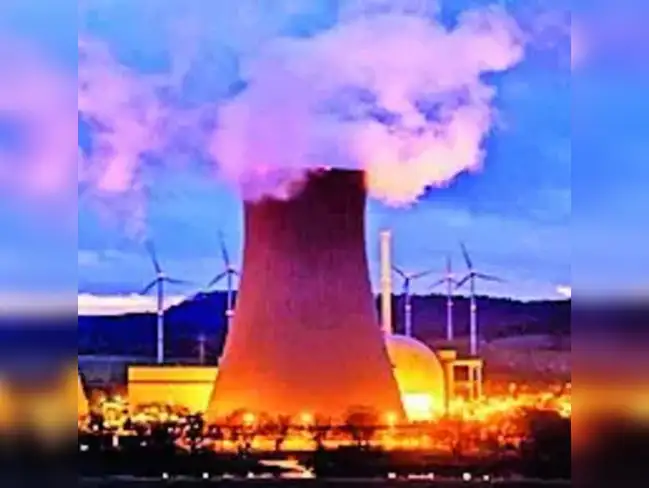
India is serious about small modular reactors (SMRs) as part of its clean energy portfolio. This signals that the country's commitment to transitioning from fossil fuels is about action over rhetoric. With rising electrification needs, the challenge lies in balancing construction costs, timelines, land availability, fuel security and supply stability.
At ₹30 cr per MW, SMRs are not cheap. The average cost of power over a plant's lifetime ranges between ₹6 and ₹12 per unit. While the tech is nascent, GoI has factored in a 6-8-yr trajectory. Historically, India's nuclear projects have faced time and cost overruns. But SMR assessments project construction times of just 2-3 yrs. While RE with storage is currently more cost-effective, SMRs excel in land efficiency and reliability. As land acquisition becomes a bottleneck for RE and intermittency persists, SMRs offer a stable alternative.
Also Read: India targets over ten-fold expansion in nuclear power capacity from 8.8 GW to 100 GW by 2047: CEA Chairperson
India's energy demand is rising at a compound rate of more than 6%. Commercial consumption is expected to quadruple. Industry requires reliable power, and SMRs can provide this, potentially replacing coal as a baseload source. SMRs and renewables are complementary, providing the baseload to support intermittent RE. Together, they offer strategic depth to India's energy systems. Rather than a mass-market option, SMRs are better deployed as captive power to decarbonise hard-to-abate industries like steel, cement and aluminium - offering a solution to the CBAM (Carbon Border Adjustment Mechanism) conundrum. They can also power green hydrogen production, high-skill manufacturing, and enhance India's 'great-power' legitimacy. India should move ahead with SMRs, using a rigorous cost-benefit framework to make necessary calibrations.
At ₹30 cr per MW, SMRs are not cheap. The average cost of power over a plant's lifetime ranges between ₹6 and ₹12 per unit. While the tech is nascent, GoI has factored in a 6-8-yr trajectory. Historically, India's nuclear projects have faced time and cost overruns. But SMR assessments project construction times of just 2-3 yrs. While RE with storage is currently more cost-effective, SMRs excel in land efficiency and reliability. As land acquisition becomes a bottleneck for RE and intermittency persists, SMRs offer a stable alternative.
Also Read: India targets over ten-fold expansion in nuclear power capacity from 8.8 GW to 100 GW by 2047: CEA Chairperson
India's energy demand is rising at a compound rate of more than 6%. Commercial consumption is expected to quadruple. Industry requires reliable power, and SMRs can provide this, potentially replacing coal as a baseload source. SMRs and renewables are complementary, providing the baseload to support intermittent RE. Together, they offer strategic depth to India's energy systems. Rather than a mass-market option, SMRs are better deployed as captive power to decarbonise hard-to-abate industries like steel, cement and aluminium - offering a solution to the CBAM (Carbon Border Adjustment Mechanism) conundrum. They can also power green hydrogen production, high-skill manufacturing, and enhance India's 'great-power' legitimacy. India should move ahead with SMRs, using a rigorous cost-benefit framework to make necessary calibrations.
Add  as a Reliable and Trusted News Source
as a Reliable and Trusted News Source Add Now!
(Catch all the Business News, Breaking News, and Latest News Updates on The Economic Times.)
Subscribe to The Economic Times Prime and read the ET ePaper online.
Read More News on
(Catch all the Business News, Breaking News, and Latest News Updates on The Economic Times.)
Subscribe to The Economic Times Prime and read the ET ePaper online.











 ETPrime Membership