

Amit Bardhan
Amit Bardhan is professor, Faculty of Management Studies, University of Delhi
Airfares are easy to compare. A quick online search reveals the lowest base fare across airlines. But the final price is often much higher. Thanks to unbundled pricing, airlines separate cost of transportation from a menu of optional extras: checked baggage, priority boarding, lounge access, onboard meals and seat selection.
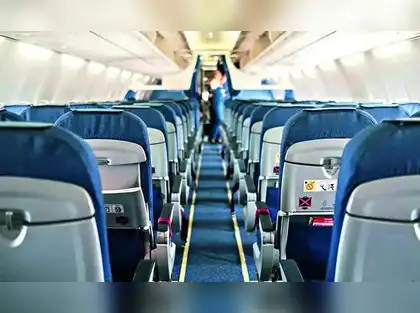
On most Indian carriers, about 20% of seats can be selected without an additional fee. Preferred positions like window seats, front rows, and exit rows with extra legroom carry charges between ₹200 and ₹2,100. Passengers have long resented these add-ons.
Last month, Directorate General of Civil Aviation (DGCA) had directed domestic airlines to make at least 60% of seats on every flight available free of charge, along with requiring passengers on the same booking to be seated together wherever possible. The intent was fairness, ensuring that ordinary passengers are not forced to pay extra to choose their seats.
GoI has now placed this directive in abeyance pending a more comprehensive review. This pause is welcome. It creates space for a more careful consideration of passenger interests, regulatory priorities and financial health of the aviation sector. The decision also comes amid broader pressures, including recent measures to limit sharp increases in ATF prices following global disruptions.
Airline operations remain notoriously capital-intensive, with low margins and high fixed costs - fuel, leasing, maintenance and airport charges, which are largely beyond management control. To survive and invest in expansion, carriers have turned to product innovation and unbundled pricing to generate additional revenue.
Global numbers make this clear. In 2024, ancillary revenue reportedly hit a record $148.4 bn. This represents nearly 15% of total airline revenue, a significant increase from around 9% in 2016. Ultra-low-cost carriers derive 50-60% of revenue from such fees, while even network carriers now count on 10-20%.
In India, the share remains below global average, but is growing quickly. IndiGo, market leader with about 64% of domestic capacity, has expanded its ancillary revenues at double-digit annual rates. In March 2025 quarter, ancillary revenues of ₹21,525 mn represented about 11% of ticket revenue. Air India Express has been more aggressive, pushing ancillary contribution higher with explicit ambitions to increase it further. Ancillary earnings help balance low yields while financing fleet and network expansion.
The now-paused directive targeted one of the most visible of these revenue streams. Airlines had warned that restricting seat-selection fees would likely lead to higher base fares. This concern is economically well-founded. While assigning a seat has negligible marginal cost, revenues from such charges cross-subsidise lower ticket prices. For price-sensitive travellers, higher base fares are a worse outcome than the optional seat fees they could choose not to pay.
At the same time, the underlying passenger concern is real. Few travellers like being charged for something as basic as choosing where to sit. That concern deserves a policy response, but one that preserves choice rather than eliminates it.
The US and the EU have focused not on removing seat fees but on mandating transparency, clear disclosure and prohibiting genuinely deceptive practices, such as pre-ticked boxes, rather than outlawing the fees themselves. The distinction matters. A passenger who can see the full cost of a journey before clicking 'book' can make an informed choice. A passenger facing a higher base fare from which no opt-out is possible has no such choice.
There is a related, more serious concern DGCA should address: unregulated dynamic pricing. Airlines now use sophisticated algorithms to estimate individual willingness-to-pay and adjust fares in real time. In February, a Supreme Court bench described steep fare hikes during peak periods as 'exploitation' and sought a government response on regulating ancillary charges.
Dynamic pricing of base fares, often opaque and increasingly personalised, poses a far greater long-term risk to consumers than a transparent seat-selection fee. GoI and DGCA would achieve more by mandating clear disclosure of how fares are constructed and updated, than by micromanaging individual ancillary components.
The writer is professor, Faculty of Management Studies, University of Delhi.
On most Indian carriers, about 20% of seats can be selected without an additional fee. Preferred positions like window seats, front rows, and exit rows with extra legroom carry charges between ₹200 and ₹2,100. Passengers have long resented these add-ons.
Last month, Directorate General of Civil Aviation (DGCA) had directed domestic airlines to make at least 60% of seats on every flight available free of charge, along with requiring passengers on the same booking to be seated together wherever possible. The intent was fairness, ensuring that ordinary passengers are not forced to pay extra to choose their seats.
GoI has now placed this directive in abeyance pending a more comprehensive review. This pause is welcome. It creates space for a more careful consideration of passenger interests, regulatory priorities and financial health of the aviation sector. The decision also comes amid broader pressures, including recent measures to limit sharp increases in ATF prices following global disruptions.
Airline operations remain notoriously capital-intensive, with low margins and high fixed costs - fuel, leasing, maintenance and airport charges, which are largely beyond management control. To survive and invest in expansion, carriers have turned to product innovation and unbundled pricing to generate additional revenue.

Global numbers make this clear. In 2024, ancillary revenue reportedly hit a record $148.4 bn. This represents nearly 15% of total airline revenue, a significant increase from around 9% in 2016. Ultra-low-cost carriers derive 50-60% of revenue from such fees, while even network carriers now count on 10-20%.
In India, the share remains below global average, but is growing quickly. IndiGo, market leader with about 64% of domestic capacity, has expanded its ancillary revenues at double-digit annual rates. In March 2025 quarter, ancillary revenues of ₹21,525 mn represented about 11% of ticket revenue. Air India Express has been more aggressive, pushing ancillary contribution higher with explicit ambitions to increase it further. Ancillary earnings help balance low yields while financing fleet and network expansion.
The now-paused directive targeted one of the most visible of these revenue streams. Airlines had warned that restricting seat-selection fees would likely lead to higher base fares. This concern is economically well-founded. While assigning a seat has negligible marginal cost, revenues from such charges cross-subsidise lower ticket prices. For price-sensitive travellers, higher base fares are a worse outcome than the optional seat fees they could choose not to pay.
At the same time, the underlying passenger concern is real. Few travellers like being charged for something as basic as choosing where to sit. That concern deserves a policy response, but one that preserves choice rather than eliminates it.
The US and the EU have focused not on removing seat fees but on mandating transparency, clear disclosure and prohibiting genuinely deceptive practices, such as pre-ticked boxes, rather than outlawing the fees themselves. The distinction matters. A passenger who can see the full cost of a journey before clicking 'book' can make an informed choice. A passenger facing a higher base fare from which no opt-out is possible has no such choice.
There is a related, more serious concern DGCA should address: unregulated dynamic pricing. Airlines now use sophisticated algorithms to estimate individual willingness-to-pay and adjust fares in real time. In February, a Supreme Court bench described steep fare hikes during peak periods as 'exploitation' and sought a government response on regulating ancillary charges.
Dynamic pricing of base fares, often opaque and increasingly personalised, poses a far greater long-term risk to consumers than a transparent seat-selection fee. GoI and DGCA would achieve more by mandating clear disclosure of how fares are constructed and updated, than by micromanaging individual ancillary components.
The writer is professor, Faculty of Management Studies, University of Delhi.
Add  as a Reliable and Trusted News Source
as a Reliable and Trusted News Source Add Now!
(Disclaimer: The opinions expressed in this column are that of the writer. The facts and opinions expressed here do not reflect the views of www.economictimes.com.)
(Catch all the Business News, Breaking News, and Latest News Updates on The Economic Times.)
Subscribe to The Economic Times Prime and read the ET ePaper online.
Read More News on
(Catch all the Business News, Breaking News, and Latest News Updates on The Economic Times.)
Subscribe to The Economic Times Prime and read the ET ePaper online.











 ETPrime Membership