

Listen to this article in summarized format
×
Subscribe to

Unlock AI Briefing and Premium Content
New Year Offer 24 Hours Left
Subscribe NowAlready a member? Sign In
What's Included
- Exclusive Stories
- Daily ePaper Access
- Smart Market Tools
- Curated Investment Ideas
- Ad-lite Experience
Subscription

Change the contours

Dhiraj Nayyar
The writer is chief economist, Vedanta
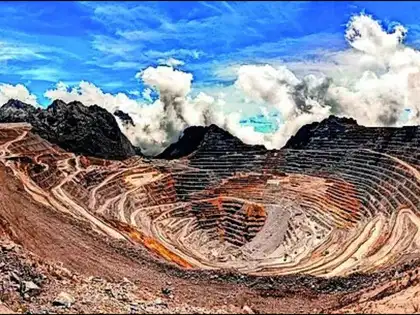
For all its many strengths, the Indian economy has a chronic Achilles heel: massive import dependence. Nowhere is this more acute than in oil, gas and other minerals, which together account for 50% of total imports, necessary for most economic activity.
India has suffered macroeconomic consequences of oil shocks earlier. The 1991 balance of payment crisis was precipitated by the First Gulf War. But in the Trumpian world, dependency is much worse. Economics is now weaponised. Countries openly exploit and target weakness. Look at the US dictating terms to India on Russian oil. Or China dictating terms to the US on rare earths.
The new resource nationalism unleashed by Trump means that tiny Zimbabwe can hold China to ransom by suspending exports of lithium. India needs to address this vulnerability on a war footing.
The fundamental problem lies in the policy paradigm that governs the natural resources sector. Foundation for the current paradigm was laid in Modi 1.0. In essence, it was a reactive policy framework, a response to alleged corruption in allocation of natural resources in the previous administration.
The underlying logic was this: a discretionary allocation of mines/oilfields/spectrum is prone to corruption. So, auctions are the way forward to end corruption and bring transparency in natural resources. The primary objective of the policy was to root out corruption.
An auction regime was additionally attractive because it would generate more revenue for GoI. Increasing production and ending import dependency were never the guiding principle behind the policy framework.
Unsurprisingly, the major success of this government has been attracting good premiums for GoI - and without scams. However, import dependency has not come down. For oil, it has increased marginally. For gold and copper, it's 99.5% and 95% respectively. Even coal and iron ore, in which India is more than abundant, are imported.
The new world (dis)order is the perfect moment to rethink and recalibrate the policy framework for below-the-ground resources. It's time that production takes centre stage without compromising on transparency. Three things are required: deregulation, greater private participation, particularly in existing but under-producing assets, and a new exploration policy for minerals.
Importance of eliminating cumbersome processes and extensive bureaucracy cannot be overstated. In oil and gas, GoI has introduced reformed laws, which are globally benchmarked. Despite this, global majors are choosing geographies like Libya, Trinidad and Namibia over India. The missing piece for India is in ease of doing business. The maze of permissions and rules needs to be eliminated. The best way forward is self-certification. GoI creates a rulebook with which investors must comply. An audit can always be conducted to verify compliance.
To enhance production in the short term, GoI should consider inviting private participation in many of its underperforming mining companies. Hindustan Copper, which owns 40% of India's copper reserves, reached a production peak in 2018-19, and has seen a 16% decline in production since then, despite record copper prices.
In Karnataka's Hutti gold mines, India's only active gold mine, production has been stagnant for a decade at around 1.5 tonnes a year. India's demand is 700-800 tonnes a year.
In mining, a radical change in exploration policy is also required. For resources where exploration has been done by state agencies and there are proven reserves, auctions can stay. The goal should not be to maximise revenue but to incentivise rapid production.
For resources that are not explored (currently, 70% of India's geological potential), auctions cannot work. It's impossible to put a price on something unknown. Global practice is to allow specialist exploration companies to undertake their activities in places of their choosing (the government publishes a menu).
If they fail to find anything, the loss is theirs. But if they make a discovery, the reward is theirs - they must be allowed to sell it to the highest bidder. There is no room for corruption here. The existing system, which requires explorers to submit their discovery to GoI for a fee, will not attract investors.
GoI must act quickly for energy and mineral security. It's imperative for macroeconomic stability, strategic autonomy, jobs and growth.
India has suffered macroeconomic consequences of oil shocks earlier. The 1991 balance of payment crisis was precipitated by the First Gulf War. But in the Trumpian world, dependency is much worse. Economics is now weaponised. Countries openly exploit and target weakness. Look at the US dictating terms to India on Russian oil. Or China dictating terms to the US on rare earths.
The new resource nationalism unleashed by Trump means that tiny Zimbabwe can hold China to ransom by suspending exports of lithium. India needs to address this vulnerability on a war footing.
The fundamental problem lies in the policy paradigm that governs the natural resources sector. Foundation for the current paradigm was laid in Modi 1.0. In essence, it was a reactive policy framework, a response to alleged corruption in allocation of natural resources in the previous administration.
The underlying logic was this: a discretionary allocation of mines/oilfields/spectrum is prone to corruption. So, auctions are the way forward to end corruption and bring transparency in natural resources. The primary objective of the policy was to root out corruption.

An auction regime was additionally attractive because it would generate more revenue for GoI. Increasing production and ending import dependency were never the guiding principle behind the policy framework.
Unsurprisingly, the major success of this government has been attracting good premiums for GoI - and without scams. However, import dependency has not come down. For oil, it has increased marginally. For gold and copper, it's 99.5% and 95% respectively. Even coal and iron ore, in which India is more than abundant, are imported.
The new world (dis)order is the perfect moment to rethink and recalibrate the policy framework for below-the-ground resources. It's time that production takes centre stage without compromising on transparency. Three things are required: deregulation, greater private participation, particularly in existing but under-producing assets, and a new exploration policy for minerals.
Importance of eliminating cumbersome processes and extensive bureaucracy cannot be overstated. In oil and gas, GoI has introduced reformed laws, which are globally benchmarked. Despite this, global majors are choosing geographies like Libya, Trinidad and Namibia over India. The missing piece for India is in ease of doing business. The maze of permissions and rules needs to be eliminated. The best way forward is self-certification. GoI creates a rulebook with which investors must comply. An audit can always be conducted to verify compliance.
To enhance production in the short term, GoI should consider inviting private participation in many of its underperforming mining companies. Hindustan Copper, which owns 40% of India's copper reserves, reached a production peak in 2018-19, and has seen a 16% decline in production since then, despite record copper prices.
In Karnataka's Hutti gold mines, India's only active gold mine, production has been stagnant for a decade at around 1.5 tonnes a year. India's demand is 700-800 tonnes a year.
In mining, a radical change in exploration policy is also required. For resources where exploration has been done by state agencies and there are proven reserves, auctions can stay. The goal should not be to maximise revenue but to incentivise rapid production.
For resources that are not explored (currently, 70% of India's geological potential), auctions cannot work. It's impossible to put a price on something unknown. Global practice is to allow specialist exploration companies to undertake their activities in places of their choosing (the government publishes a menu).
If they fail to find anything, the loss is theirs. But if they make a discovery, the reward is theirs - they must be allowed to sell it to the highest bidder. There is no room for corruption here. The existing system, which requires explorers to submit their discovery to GoI for a fee, will not attract investors.
GoI must act quickly for energy and mineral security. It's imperative for macroeconomic stability, strategic autonomy, jobs and growth.
Add  as a Reliable and Trusted News Source
as a Reliable and Trusted News Source Add Now!
(Disclaimer: The opinions expressed in this column are that of the writer. The facts and opinions expressed here do not reflect the views of www.economictimes.com.)
(Catch all the Business News, Breaking News, and Latest News Updates on The Economic Times.)
Subscribe to The Economic Times Prime and read the ET ePaper online.
Read More News on
(Catch all the Business News, Breaking News, and Latest News Updates on The Economic Times.)
Subscribe to The Economic Times Prime and read the ET ePaper online.











 ETPrime Membership