

Listen to this article in summarized format
×
Subscribe to

Unlock AI Briefing and Premium Content
New Year Offer 24 Hours Left
Subscribe NowAlready a member? Sign In
What's Included
- Exclusive Stories
- Daily ePaper Access
- Smart Market Tools
- Curated Investment Ideas
- Ad-lite Experience
Subscription

 Agencies
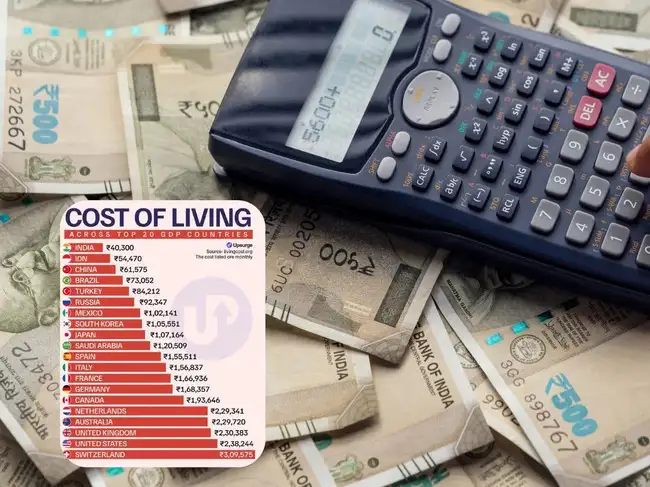
A striking comparison of living costs across G20 economies is fuelling a fierce online debate, with many questioning whether ₹40,300 a month in India can really offer a lifestyle similar to earning over ₹3 lakh in Switzerland. The discussion began after a social media post shared a simple bar chart ranking monthly living expenses across major economies. At one end of the scale was India, with an estimated monthly cost of ₹40,300. At the other extreme stood Switzerland, where the same standard of living was pegged at more than ₹3 lakh. Countries like the US and the UK were also placed far higher.
Also Read: 'Salary growing, wealth shrinking': CA explains ‘India's silent middle-class crisis’, says Rs 1.5 lakh salary is same as 10-yr-old pay
Some users backed the comparison, pointing to purchasing power differences. They argued that everyday essentials, rent, groceries, transport, cost far less in India, allowing households to maintain a comfortable lifestyle at lower income levels. A few even shared personal experiences of spending multiples more abroad for what they described as a similar standard of living.
However, many others were unconvinced. Critics said the comparison oversimplifies reality by ignoring key differences in quality of life. Access to public services, healthcare systems, infrastructure, and social security benefits vary widely between countries, they noted. For them, equating lifestyles purely on spending power misses the bigger picture.
Others pointed out that such charts rely on broad averages, which may not reflect real-world experiences across cities or income groups. Living in Mumbai or Delhi, for instance, can feel drastically different from smaller towns, just as life in Zurich differs from other parts of Switzerland.
Also Read: From Rs 6.8 lakh to Rs 4.5 lakh: Redditor explains how to save Rs 2.3 lakh in income tax in a year legally
Despite the disagreements, the post has clearly struck a chord. It has reopened a familiar conversation about how Indians perceive income, affordability, and global comparisons. For some, the chart highlights the advantage of lower costs at home. For others, it underscores the gap in earnings and public services between India and developed economies.
As the debate continues online, one thing stands out, numbers alone may not settle the argument. The idea of a “comparable lifestyle” remains deeply subjective, shaped as much by expectations and experiences as by the price of everyday essentials.
(You can now subscribe to our Economic Times WhatsApp channel)
Cost of Living Comparison
The claim was straightforward: adjust for cost of living, and a modest income in India could stretch as far as a significantly higher salary in some of the world’s richest nations. But that idea quickly divided opinion.Also Read: 'Salary growing, wealth shrinking': CA explains ‘India's silent middle-class crisis’, says Rs 1.5 lakh salary is same as 10-yr-old pay
Some users backed the comparison, pointing to purchasing power differences. They argued that everyday essentials, rent, groceries, transport, cost far less in India, allowing households to maintain a comfortable lifestyle at lower income levels. A few even shared personal experiences of spending multiples more abroad for what they described as a similar standard of living.
However, many others were unconvinced. Critics said the comparison oversimplifies reality by ignoring key differences in quality of life. Access to public services, healthcare systems, infrastructure, and social security benefits vary widely between countries, they noted. For them, equating lifestyles purely on spending power misses the bigger picture.

Same Lifestyle Became a Topic of Debate
The phrase “same lifestyle” itself became a flashpoint. What counts as a comparable life in two vastly different economies? In India, domestic help, affordable street food, and lower schooling costs shape daily life. In countries like Switzerland, higher wages often come with structured benefits, stronger public services, and higher living standards, but also far steeper expenses.Others pointed out that such charts rely on broad averages, which may not reflect real-world experiences across cities or income groups. Living in Mumbai or Delhi, for instance, can feel drastically different from smaller towns, just as life in Zurich differs from other parts of Switzerland.
Also Read: From Rs 6.8 lakh to Rs 4.5 lakh: Redditor explains how to save Rs 2.3 lakh in income tax in a year legally
Despite the disagreements, the post has clearly struck a chord. It has reopened a familiar conversation about how Indians perceive income, affordability, and global comparisons. For some, the chart highlights the advantage of lower costs at home. For others, it underscores the gap in earnings and public services between India and developed economies.
As the debate continues online, one thing stands out, numbers alone may not settle the argument. The idea of a “comparable lifestyle” remains deeply subjective, shaped as much by expectations and experiences as by the price of everyday essentials.
Add  as a Reliable and Trusted News Source
as a Reliable and Trusted News Source Add Now!
(You can now subscribe to our Economic Times WhatsApp channel)












 ETPrime Membership