


Listen to this article in summarized format
×
Subscribe to

Unlock AI Briefing and Premium Content
New Year Offer 24 Hours Left
Subscribe NowAlready a member? Sign In
What's Included
- Exclusive Stories
- Daily ePaper Access
- Smart Market Tools
- Curated Investment Ideas
- Ad-lite Experience
Subscription

 Agencies
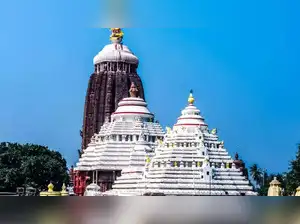
An anciety city has been found beneath Odisha's temple town Puri. According to reports, the city was found during a Ground Penetrating Radar (GPR) survey. As per the reports, scientists have also found another structure which is suspected to be a secret tunnel linking the iconic Jagannath Temple to the sea. Jagannath Temple was built in the 12th century
The high-tech survey was ordered after workers stumbled upon lion sculptures, believed to date back to the powerful Ganga dynasty, during the Srimandir Parikrama Project. What followed has left experts intrigued.
According to the findings, the underground remains are not confined to the temple complex. Instead, they appear to stretch across Puri, with as many as 43 potential heritage sites detected at key locations, including Emar Math, Nrusingha Temple, Budhi Maa Temple, and along the road leading to the shrine.
Even more intriguing, experts say they have identified what appears to be a tunnel-like structure — possibly running from the temple all the way to the sea.
The scans also revealed buried pottery, metal objects, and everyday artefacts, suggesting that a once-thriving settlement may be hidden beneath the modern town.
Meanwhile, similar discoveries in the region have added to the historical buzz. Last year, a survey team from the Odisha chapter of the Indian National Trust for Art and Cultural Heritage (INTACH) uncovered the ruins of an ancient temple dating back to the 6th–7th century CE near Pipili, about 40 km north of Puri.
The four-member team documented the site at Biropurusottampur while conducting a detailed survey of the Ratnachira valley and its monuments. According to project coordinator Anil Dhir, the structure — identified as the 1,400-year-old Swapneswar Mahadev temple — lies near the medieval-era Gateswar temple.
INTACH also noted that the Ratnachira river, now largely dry, is steeped in mythology. Legend has it that Lord Rama created the river to quench Sita’s thirst, using her pearl ring to trace its course. Once rich in heritage along its banks, the river today survives mostly in fragments — but continues to hold stories from a distant past.
(You can now subscribe to our Economic Times WhatsApp channel)
The high-tech survey was ordered after workers stumbled upon lion sculptures, believed to date back to the powerful Ganga dynasty, during the Srimandir Parikrama Project. What followed has left experts intrigued.
According to the findings, the underground remains are not confined to the temple complex. Instead, they appear to stretch across Puri, with as many as 43 potential heritage sites detected at key locations, including Emar Math, Nrusingha Temple, Budhi Maa Temple, and along the road leading to the shrine.
Even more intriguing, experts say they have identified what appears to be a tunnel-like structure — possibly running from the temple all the way to the sea.
The scans also revealed buried pottery, metal objects, and everyday artefacts, suggesting that a once-thriving settlement may be hidden beneath the modern town.

Meanwhile, similar discoveries in the region have added to the historical buzz. Last year, a survey team from the Odisha chapter of the Indian National Trust for Art and Cultural Heritage (INTACH) uncovered the ruins of an ancient temple dating back to the 6th–7th century CE near Pipili, about 40 km north of Puri.
The four-member team documented the site at Biropurusottampur while conducting a detailed survey of the Ratnachira valley and its monuments. According to project coordinator Anil Dhir, the structure — identified as the 1,400-year-old Swapneswar Mahadev temple — lies near the medieval-era Gateswar temple.
INTACH also noted that the Ratnachira river, now largely dry, is steeped in mythology. Legend has it that Lord Rama created the river to quench Sita’s thirst, using her pearl ring to trace its course. Once rich in heritage along its banks, the river today survives mostly in fragments — but continues to hold stories from a distant past.
Add  as a Reliable and Trusted News Source
as a Reliable and Trusted News Source Add Now!
(You can now subscribe to our Economic Times WhatsApp channel)












 ETPrime Membership