

Listen to this article in summarized format
×
Subscribe to

Unlock AI Briefing and Premium Content
New Year Offer 24 Hours Left
Subscribe NowAlready a member? Sign In
What's Included
- Exclusive Stories
- Daily ePaper Access
- Smart Market Tools
- Curated Investment Ideas
- Ad-lite Experience
Subscription

 AP
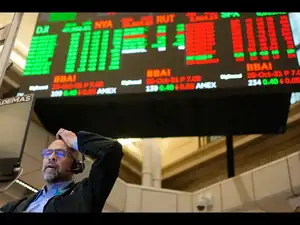
APThe S&P 500 index closed lower and around $420 billion in market value was wiped out in one day after fresh tensions between the US and Iran. The main trigger was that Iran made a “final decision” to skip important talks with the US in Pakistan, as per The Kobeissi Letter posted on X. Iran informed the US through Pakistani mediators that it will not attend the meeting scheduled for Wednesday.
Iran said a Pakistan-brokered “10-point ceasefire plan” was proposed, but it had serious issues. Iranian officials believe the plan has weak enforcement, meaning rules may not be followed properly. Iran also said the plan is being hurt by ongoing maritime pressure, adding to tensions. Iran believes talks are “pointless” because of the US blockade of the Strait of Hormuz, a key oil route. Because of Iran backing out, US Vice President JD Vance cancelled his trip to Pakistan for the talks, as per AP News.
Market expert Brian Mulberry said building trust between the US and Iran is very difficult due to long history and tensions, as stated by CNBC TV18. He also said Iran’s leadership is divided, which makes it harder to follow any peace deal properly. However, he still believes the issue around the Strait of Hormuz may get resolved by the end of the week.
Despite the current fall, experts say the overall market outlook is still positive. Strong Q1 earnings and revenue growth are supporting stocks in the bigger picture, as per Brian Mulberry via CNBC TV18. Some stocks still performed well — UnitedHealth Group shares jumped over 8% after strong results. The company also raised its future earnings outlook, boosting investor confidence.
The market fell because Iran skipped US talks, raising fears that the ceasefire may end without a peace deal.
Q2. How is the US Iran tension affecting oil prices?
Oil prices are rising because traders fear supply problems if tensions between the US and Iran increase.
(You can now subscribe to our Economic Times WhatsApp channel)
Iran said a Pakistan-brokered “10-point ceasefire plan” was proposed, but it had serious issues. Iranian officials believe the plan has weak enforcement, meaning rules may not be followed properly. Iran also said the plan is being hurt by ongoing maritime pressure, adding to tensions. Iran believes talks are “pointless” because of the US blockade of the Strait of Hormuz, a key oil route. Because of Iran backing out, US Vice President JD Vance cancelled his trip to Pakistan for the talks, as per AP News.
Markets fall as US Iran tension grows
Markets reacted quickly as investors got worried that a peace deal between the US and Iran may not happen before the ceasefire ends. The ceasefire between the US and Iran is set to expire on Wednesday, increasing fear of fresh conflict. On Tuesday, major US stock indexes fell — the S&P 500 dropped 0.6%, the Nasdaq also fell 0.6%, and the Dow Jones lost 293 points, as noted by CNBC TV18.
US Iran deal doubt grows
Investor nervousness increased after reports said JD Vance paused his trip due to lack of commitment from Iran, as per The New York Times & Axios via CNBC TV18. US President Donald Trump said he still expects a “great deal” with Iran, showing some optimism. At the same time, Trump warned that the US military is ready to bomb Iran if a deal is not signed before the deadline. He also said he does not want to extend the ceasefire deadline, increasing pressure. Earlier, Trump claimed on social media that Iran had violated the ceasefire many times.Oil prices go up again
Oil prices went up again after falling earlier, because hopes of a deal are now weaker. US oil (WTI) rose 2.81% to $92.13 per barrel, showing market reaction. Brent oil also increased 3.14% to $98.48 per barrel, nearing the $100 mark again.Market expert Brian Mulberry said building trust between the US and Iran is very difficult due to long history and tensions, as stated by CNBC TV18. He also said Iran’s leadership is divided, which makes it harder to follow any peace deal properly. However, he still believes the issue around the Strait of Hormuz may get resolved by the end of the week.
Markets were strong before
Markets were already weak on Monday as traders were nervous about the ceasefire ending soon. The Nasdaq also ended its 13-day winning streak, which was its longest since 1992. Before this tension, markets were actually strong, with the S&P 500 and Nasdaq hitting record highs last week due to hopes of peace. The S&P 500 had even crossed 7,100 for the first time ever recently.Despite the current fall, experts say the overall market outlook is still positive. Strong Q1 earnings and revenue growth are supporting stocks in the bigger picture, as per Brian Mulberry via CNBC TV18. Some stocks still performed well — UnitedHealth Group shares jumped over 8% after strong results. The company also raised its future earnings outlook, boosting investor confidence.
What investors should do now
Market expert Sarat Sethi warned investors not to try to time the market based on Iran news. He said if a deal happens, markets may have already adjusted for it, so quick trading may not help, as noted by CNBC. He advised investors to stick to defensive stocks like healthcare and consumer staples, which are safer during global tensions.FAQs
Q1. Why did the S&P 500 fall and lose $420 billion?The market fell because Iran skipped US talks, raising fears that the ceasefire may end without a peace deal.
Q2. How is the US Iran tension affecting oil prices?
Oil prices are rising because traders fear supply problems if tensions between the US and Iran increase.
Add  as a Reliable and Trusted News Source
as a Reliable and Trusted News Source Add Now!
(You can now subscribe to our Economic Times WhatsApp channel)
(Catch all the US News, UK News, Canada News, International Breaking News Events, and Latest News Updates on The Economic Times.)
Download The Economic Times News App to get Daily International News Updates.
Read More News on
(Catch all the US News, UK News, Canada News, International Breaking News Events, and Latest News Updates on The Economic Times.)
Download The Economic Times News App to get Daily International News Updates.