


Listen to this article in summarized format
×
Subscribe to

Unlock AI Briefing and Premium Content
New Year Offer 24 Hours Left
Subscribe NowAlready a member? Sign In
What's Included
- Exclusive Stories
- Daily ePaper Access
- Smart Market Tools
- Curated Investment Ideas
- Ad-lite Experience
Subscription

 AP
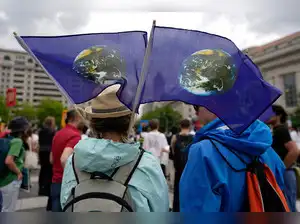
APEvery year on April 22, billions of people across the world observe Earth Day, a civic movement that began in 1970 to demand stronger protections for the planet’s air, water, soil, and ecosystems. What started as mass environmental teach-ins has evolved into one of the world’s largest days of public participation, inspiring communities to take practical, local action for environmental protection.
The first Earth Day on April 22, 1970 mobilized millions to protest unchecked pollution and ecological degradation, catalyzing modern environmental policy and a culture of conservation. Across Canadian cities and towns, that responsibility is taking visible shape.
In Canada, Earth Day 2026 is being marked not only by awareness campaigns but by hands-on cleanups, student climate storytelling, municipal volunteer drives, and even national conversations about sustainable living and degrowth.
In Saint-Alban, residents are gathering for a Great Spring Cleanup on April 22, 2026 at 12:00 PM at 241 Main Street (G0A 3B0). First launched in 2022 by local resident Luc Savard, the initiative has become an Earth Day tradition focused on more than beautification.
Organizers stress the danger litter poses to wildlife. Guidance from Leave No Trace Canada highlights how plastics, aluminum packaging, and cigarette butts release toxins and microplastics into soil and water, threatening animals through ingestion, entanglement, and chemical exposure.
At Kootenay Lake in British Columbia, a relaxed, community-driven Dog Walk Beach Clean-Up will take place on April 26, 2026 at 10:00 AM along the Lakeside Dog Walk, beginning at the airport entrance.
Organized by Friends of Kootenay Lake, the event invites residents to stroll the shoreline trail together while collecting litter, a “low effort, high impact” activity that helps keep the lake ecosystem healthy. Shoreline waste is a known threat to aquatic life, as plastics and small debris can break down into microplastics that enter freshwater systems and harm fish and bird species.
In Winnipeg, Earth Day celebrations continue on April 26, 2026 at 11:30 AM at FortWhyte Alive. Hosted by Climate Change Connection in partnership with CBC Manitoba, the 3.5-hour event features student climate films, interactive booths, a photobooth, and family activities.
With free popcorn, learning stations, and prizes, the event blends education with engagement, making climate awareness accessible and hopeful for families and young people.
The city of Prince Albert is extending Earth Day into a Community Clean-Up Week beginning May 13, 2026 at 2:00 PM at East: 6th Ave E & 10th Street E (1100 6 Ave E).
Volunteers commit to three-hour shifts, coordinated by city councillors, to clean parks, streets, and public spaces across multiple locations, demonstrating how Earth Day can spark longer-term civic participation.
On April 22, 2026 at 12:00 PM, a public virtual webinar titled “The Hypothesis of Degrowth for Sustainable Health” invites Canadians to rethink the relationship between economic growth, environmental sustainability, and human well-being.
The session presents research showing that environmental and socioeconomic conditions account for nearly 60% of factors influencing health, compared with about 25% linked to healthcare services, as per earthday.org. By connecting Earth Day to public health and economic models, the event reframes environmental care as central to how societies measure progress.
Earth Day’s purpose remains clear more than five decades later, protecting the planet is a daily responsibility, carried out one community at a time.
(You can now subscribe to our Economic Times WhatsApp channel)
The first Earth Day on April 22, 1970 mobilized millions to protest unchecked pollution and ecological degradation, catalyzing modern environmental policy and a culture of conservation. Across Canadian cities and towns, that responsibility is taking visible shape.
In Canada, Earth Day 2026 is being marked not only by awareness campaigns but by hands-on cleanups, student climate storytelling, municipal volunteer drives, and even national conversations about sustainable living and degrowth.
Saint-Alban, Quebec: Great Spring Cleanup to Protect Wildlife
In Saint-Alban, residents are gathering for a Great Spring Cleanup on April 22, 2026 at 12:00 PM at 241 Main Street (G0A 3B0). First launched in 2022 by local resident Luc Savard, the initiative has become an Earth Day tradition focused on more than beautification.
Organizers stress the danger litter poses to wildlife. Guidance from Leave No Trace Canada highlights how plastics, aluminum packaging, and cigarette butts release toxins and microplastics into soil and water, threatening animals through ingestion, entanglement, and chemical exposure.

Kootenay Lake, British Columbia: Dog Walk Beach Clean-Up Along the Shoreline
At Kootenay Lake in British Columbia, a relaxed, community-driven Dog Walk Beach Clean-Up will take place on April 26, 2026 at 10:00 AM along the Lakeside Dog Walk, beginning at the airport entrance.
Organized by Friends of Kootenay Lake, the event invites residents to stroll the shoreline trail together while collecting litter, a “low effort, high impact” activity that helps keep the lake ecosystem healthy. Shoreline waste is a known threat to aquatic life, as plastics and small debris can break down into microplastics that enter freshwater systems and harm fish and bird species.
Winnipeg, Manitoba: Student Films and Climate Learning at FortWhyte Alive
In Winnipeg, Earth Day celebrations continue on April 26, 2026 at 11:30 AM at FortWhyte Alive. Hosted by Climate Change Connection in partnership with CBC Manitoba, the 3.5-hour event features student climate films, interactive booths, a photobooth, and family activities.
With free popcorn, learning stations, and prizes, the event blends education with engagement, making climate awareness accessible and hopeful for families and young people.
Prince Albert, Saskatchewan: Community Clean-Up Week
The city of Prince Albert is extending Earth Day into a Community Clean-Up Week beginning May 13, 2026 at 2:00 PM at East: 6th Ave E & 10th Street E (1100 6 Ave E).
Volunteers commit to three-hour shifts, coordinated by city councillors, to clean parks, streets, and public spaces across multiple locations, demonstrating how Earth Day can spark longer-term civic participation.
A National Conversation: Degrowth, Environment and Public Health (Virtual Webinar)
On April 22, 2026 at 12:00 PM, a public virtual webinar titled “The Hypothesis of Degrowth for Sustainable Health” invites Canadians to rethink the relationship between economic growth, environmental sustainability, and human well-being.
The session presents research showing that environmental and socioeconomic conditions account for nearly 60% of factors influencing health, compared with about 25% linked to healthcare services, as per earthday.org. By connecting Earth Day to public health and economic models, the event reframes environmental care as central to how societies measure progress.
Earth Day’s purpose remains clear more than five decades later, protecting the planet is a daily responsibility, carried out one community at a time.
Add  as a Reliable and Trusted News Source
as a Reliable and Trusted News Source Add Now!
(You can now subscribe to our Economic Times WhatsApp channel)