

Listen to this article in summarized format
×
Subscribe to

Unlock AI Briefing and Premium Content
New Year Offer 24 Hours Left
Subscribe NowAlready a member? Sign In
What's Included
- Exclusive Stories
- Daily ePaper Access
- Smart Market Tools
- Curated Investment Ideas
- Ad-lite Experience
Subscription

 iStock
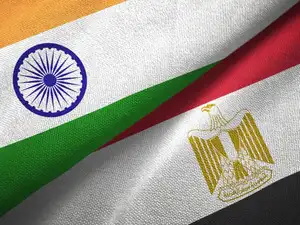
Amid the war in Iran while considerable focus has been devoted to the Gulf states which faced retaliatory attacks from Tehran in response to strikes against the Persian Gulf state, one country which is not dominating the headlines but whose role remains critical to stability in West Asia is Egypt.
While New Delhi has engaged widely with the six Gulf states over the past month eyeing to ensure energy security and welfare of its 10 million diaspora, wider engagement with Egypt, that has strongest military among the Arab states and a factor of stability in North Africa and Horn, is only imperative to further India’s interests in the current circumstances.
Both India and Egypt face similar challenges amid the current war with a big diaspora, energy requirements and business interests in the Gulf states. Bilateral coordination therefore would contribute each other’s interests in the region that has been engulfed with war and subsequent disruption in the supply chain. Needless to say, that India and Egypt are both civilizational states with deep sense of history and culture developed over centuries. Egypt remains a key state in the Arab world and pillar of stability and is expected to play a significant role in addressing the current impasse in West Asia.
India and Egypt partnership have been steadily expanding. During the State Visit of PM Narendra Modi in June 2023, an agreement was signed upgrading bilateral relations to Strategic Partnership. During the visit, PM Modi was also conferred with the ‘Order of the Nile’ - the highest civilian award of Egypt. President. The Egyptian President has been a regular visitor to India over the past decade. After the new government led by President Abdel Fattah Sisi took over in June 2014, President Sisi visited India for the third India-Africa Forum Summit in New Delhi in October 2015. President Sisi also paid a State visit to India in September 2016. President Sisi paid his 2nd State Visit to India in January 2023; he was invited as the Chief Guest of India’s 74th Republic Day celebrations. President Sisi visited India again in September 2023 to participate in G20 Leaders’ Summit. The Egyptian President is known to take deep interest in widening strategic and economic partnership with India.
Egypt and India enjoy growing defence relations. After a brief hiatus due to Covid pandemic, numerous defense delegations (including aircraft and naval ship transits) have visited Egypt since June 2021. Chief of Air Staff, Air Chief Marshal VR Chaudhari, visited Egypt November 2021 which was reciprocated by the visit of an Egyptian delegation led by Commander of Air Force (equivalent to our Chief) Air Marshal Abbas Helmy in July 2022.
Egypt continues to be a major transit hub for Indian aircrafts and naval vessels enroute/returning from overhauls as well as military exercises in European region and Atlantic. In past few years, a number of Indian Air Force air-crafts and Indian Navy ships have visited/transited through Egypt, which is an appropriate candidate for IMEC. Cairo remains an important state to keep Suez Canal open for trade. The counter-terror partnership and deradicalization initiative are growing in salience. Recognizing shared threats, both countries are strengthening intelligence sharing and cooperation in combating terrorism, particularly with the 4th Joint Working Group on Counter-Terrorism meeting in 2025
During Defence Minister Rajnath Singh’s visit to Egypt in 2022, MoU on Defence Cooperation was also signed during the visit, which is a milestone in bilateral ties. In May 2023, Chief of Army Staff General Manoj Pande also visited Egypt. Secretary (Defence Production) visited Egypt in April 2025, along with Heads of HAL (Hindustan Aeronautics Limited), BDL (Bharat Dynamics Limited) and Bharat Electronics Limited (BEL) to take forward bilateral defence industrial collaboration.
Egypt has traditionally been one of India’s most important trading partners in the African continent. Over 55 Indian companies are active in various sectors with a combined investment exceeding US$ 4 bn. Overall, these companies contribute to Egyptian exports upwards of US$ 1 billion every year. The year 2023-24 has witnessed a surge in Indian investments in Egypt with five Indian companies having invested around US$ 175 million in the Suez Canal Economic Zone.
500 Indian companies are present in a range of sectors like apparel, agriculture, chemicals, energy, automobiles, retail, and others. Overall, these companies provide direct and indirect employment to approximately 38,000 Egyptians and are responsible for Egyptian exports of upwards of US$ 1 billion every year.
Major Indian investments in Egypt include TCI Sanmar (with a value of US$ 1.6 bn), Alexandria Carbon Black, Kirloskar, Dabur India, Flex P Films, SCIB Paints, Godrej, Mahindra and Monginis among others. Detailed list is attached.
Another Indian conglomerate ‘INDORAMA’ is investing in a greenfield fertilizer plant in Suez Canal Economic Zone with an estimated investment of US$ 600 million for production of fertilizers. With this, India’s total investments in Egypt would cross US$ 4.5 billion mark.
Renewable energy is an important area of interest for Indian companies in Egypt. Two large Indian companies (Renew and OCIOR) have signed MOUs and binding ‘Framework Agreement’ with Egyptian authorities to produce Green Hydrogen with an investment commitment of US$ 12 bn.
(You can now subscribe to our Economic Times WhatsApp channel)
While New Delhi has engaged widely with the six Gulf states over the past month eyeing to ensure energy security and welfare of its 10 million diaspora, wider engagement with Egypt, that has strongest military among the Arab states and a factor of stability in North Africa and Horn, is only imperative to further India’s interests in the current circumstances.
Both India and Egypt face similar challenges amid the current war with a big diaspora, energy requirements and business interests in the Gulf states. Bilateral coordination therefore would contribute each other’s interests in the region that has been engulfed with war and subsequent disruption in the supply chain. Needless to say, that India and Egypt are both civilizational states with deep sense of history and culture developed over centuries. Egypt remains a key state in the Arab world and pillar of stability and is expected to play a significant role in addressing the current impasse in West Asia.
India and Egypt partnership have been steadily expanding. During the State Visit of PM Narendra Modi in June 2023, an agreement was signed upgrading bilateral relations to Strategic Partnership. During the visit, PM Modi was also conferred with the ‘Order of the Nile’ - the highest civilian award of Egypt. President. The Egyptian President has been a regular visitor to India over the past decade. After the new government led by President Abdel Fattah Sisi took over in June 2014, President Sisi visited India for the third India-Africa Forum Summit in New Delhi in October 2015. President Sisi also paid a State visit to India in September 2016. President Sisi paid his 2nd State Visit to India in January 2023; he was invited as the Chief Guest of India’s 74th Republic Day celebrations. President Sisi visited India again in September 2023 to participate in G20 Leaders’ Summit. The Egyptian President is known to take deep interest in widening strategic and economic partnership with India.
Egypt and India enjoy growing defence relations. After a brief hiatus due to Covid pandemic, numerous defense delegations (including aircraft and naval ship transits) have visited Egypt since June 2021. Chief of Air Staff, Air Chief Marshal VR Chaudhari, visited Egypt November 2021 which was reciprocated by the visit of an Egyptian delegation led by Commander of Air Force (equivalent to our Chief) Air Marshal Abbas Helmy in July 2022.

Egypt continues to be a major transit hub for Indian aircrafts and naval vessels enroute/returning from overhauls as well as military exercises in European region and Atlantic. In past few years, a number of Indian Air Force air-crafts and Indian Navy ships have visited/transited through Egypt, which is an appropriate candidate for IMEC. Cairo remains an important state to keep Suez Canal open for trade. The counter-terror partnership and deradicalization initiative are growing in salience. Recognizing shared threats, both countries are strengthening intelligence sharing and cooperation in combating terrorism, particularly with the 4th Joint Working Group on Counter-Terrorism meeting in 2025
During Defence Minister Rajnath Singh’s visit to Egypt in 2022, MoU on Defence Cooperation was also signed during the visit, which is a milestone in bilateral ties. In May 2023, Chief of Army Staff General Manoj Pande also visited Egypt. Secretary (Defence Production) visited Egypt in April 2025, along with Heads of HAL (Hindustan Aeronautics Limited), BDL (Bharat Dynamics Limited) and Bharat Electronics Limited (BEL) to take forward bilateral defence industrial collaboration.
Egypt has traditionally been one of India’s most important trading partners in the African continent. Over 55 Indian companies are active in various sectors with a combined investment exceeding US$ 4 bn. Overall, these companies contribute to Egyptian exports upwards of US$ 1 billion every year. The year 2023-24 has witnessed a surge in Indian investments in Egypt with five Indian companies having invested around US$ 175 million in the Suez Canal Economic Zone.
500 Indian companies are present in a range of sectors like apparel, agriculture, chemicals, energy, automobiles, retail, and others. Overall, these companies provide direct and indirect employment to approximately 38,000 Egyptians and are responsible for Egyptian exports of upwards of US$ 1 billion every year.
Major Indian investments in Egypt include TCI Sanmar (with a value of US$ 1.6 bn), Alexandria Carbon Black, Kirloskar, Dabur India, Flex P Films, SCIB Paints, Godrej, Mahindra and Monginis among others. Detailed list is attached.
Another Indian conglomerate ‘INDORAMA’ is investing in a greenfield fertilizer plant in Suez Canal Economic Zone with an estimated investment of US$ 600 million for production of fertilizers. With this, India’s total investments in Egypt would cross US$ 4.5 billion mark.
Renewable energy is an important area of interest for Indian companies in Egypt. Two large Indian companies (Renew and OCIOR) have signed MOUs and binding ‘Framework Agreement’ with Egyptian authorities to produce Green Hydrogen with an investment commitment of US$ 12 bn.
Add  as a Reliable and Trusted News Source
as a Reliable and Trusted News Source Add Now!
(You can now subscribe to our Economic Times WhatsApp channel)











 ETPrime Membership