Listen to this article in summarized format
×
Subscribe to

Unlock AI Briefing and Premium Content
New Year Offer 24 Hours Left
Subscribe NowAlready a member? Sign In
What's Included
- Exclusive Stories
- Daily ePaper Access
- Smart Market Tools
- Curated Investment Ideas
- Ad-lite Experience
Subscription

 ANI
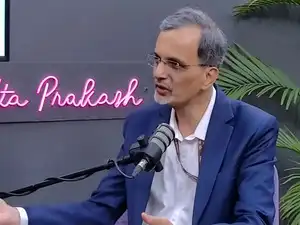
ANINew Delhi: Noting that a welfare society is an obligation of a democratic government, Chief Economic Adviser V Anantha Nageswaran has said that the question is always affordability for the governments and whether it is coming at the cost of other expenditure which will benefit the people even more than what is being given as a freebie.
In an interview with ANI, Nageswaran said the issue should be looked at sensibly rather than on an emotional plane and the question that needs to be asked is if it is helping people or it could have been done differently.
He said if societal benefit happens through "freebies" brought about by design, then it is "a contract between the government and the society".
Nageswaran said welfare expenditure is there in developed countries also and they're also battling with certain questions.
"They have given promises on pension, unemployment insurance, health benefits...G7 countries, they are also grappling with it. They also made these promises. I think in general a welfare society is an obligation of a democratic government. So to that extent you cannot say there should not be any welfare benefits from the government," he said.
"But the question is always affordability for the governments and whether it is coming at the cost of other expenditure you can incur, which will benefit the people even more than what you are giving as a freebie. So it should be broken down into these kinds of sensible questions rather than on an emotional plane. Are you really helping the people with this? Or could you have helped them differently? That is the question you need to ask," he said.
The CEA said certain segment of population needs support but benefits can be linked to improvement in some parameters such as education and skilling.
"Do you want to limit these benefits to a certain segment of the population that deserves this? Without this, they will not be able to survive. You have to get them to a particular level where they can compete...Can you actually support them through other expenditure other than through freebies? Should you make it universal? And should you also make it open-ended? Should you attach some conditions?" he asked.
"Not because they need to pay you back in some way, but conditions which will actually be good for themselves. Like, for example, you need to show some improvement in your children's education. You have to put them through the schooling. Then I'll give you this. You have to be, by the end of next year, you should show me some diploma in some skill. Then I will give you this. Are you at least attaching some conditions which enhance the overall quality of the population? These are all the questions. I think that is the question we need to be asking and that is the direction in which we should be going," he added.
He said the question of welfare should not be strictly looked at from the point of view of who is paying taxes as it is a universal concept.
"In many countries, horizontal devolution has happened. I mean, take Switzerland, one of the richest countries in the world. There are some cantons which are not as rich as the other cantons. And there is a transfer mechanism that happens. And labour force comes from those states into these richer states. Somebody looked at the model of which states are richer, which states are poorer. And then those are also populated states," he said.
Nageswaran said that when free midday noon meal scheme was introduced in Tamil Nadu in the eighties, there were concerns but eventually it also contributed a lot of benefits in terms of children who came to school because there was a meal available.
He said it helped address problem of malnourishment besides some other benefits and the model got transported to other parts of the world not only within India.
"My point is that happened by accident, not by design. We need to make some of these things happen by design with respect to the freebies. Then it's no longer a freebie. It's a contract between the government and the society. That's the way it should be," he said. (ANI)
(You can now subscribe to our Economic Times WhatsApp channel)
In an interview with ANI, Nageswaran said the issue should be looked at sensibly rather than on an emotional plane and the question that needs to be asked is if it is helping people or it could have been done differently.
He said if societal benefit happens through "freebies" brought about by design, then it is "a contract between the government and the society".
Nageswaran said welfare expenditure is there in developed countries also and they're also battling with certain questions.
"They have given promises on pension, unemployment insurance, health benefits...G7 countries, they are also grappling with it. They also made these promises. I think in general a welfare society is an obligation of a democratic government. So to that extent you cannot say there should not be any welfare benefits from the government," he said.

"But the question is always affordability for the governments and whether it is coming at the cost of other expenditure you can incur, which will benefit the people even more than what you are giving as a freebie. So it should be broken down into these kinds of sensible questions rather than on an emotional plane. Are you really helping the people with this? Or could you have helped them differently? That is the question you need to ask," he said.
The CEA said certain segment of population needs support but benefits can be linked to improvement in some parameters such as education and skilling.
"Do you want to limit these benefits to a certain segment of the population that deserves this? Without this, they will not be able to survive. You have to get them to a particular level where they can compete...Can you actually support them through other expenditure other than through freebies? Should you make it universal? And should you also make it open-ended? Should you attach some conditions?" he asked.
"Not because they need to pay you back in some way, but conditions which will actually be good for themselves. Like, for example, you need to show some improvement in your children's education. You have to put them through the schooling. Then I'll give you this. You have to be, by the end of next year, you should show me some diploma in some skill. Then I will give you this. Are you at least attaching some conditions which enhance the overall quality of the population? These are all the questions. I think that is the question we need to be asking and that is the direction in which we should be going," he added.
He said the question of welfare should not be strictly looked at from the point of view of who is paying taxes as it is a universal concept.
"In many countries, horizontal devolution has happened. I mean, take Switzerland, one of the richest countries in the world. There are some cantons which are not as rich as the other cantons. And there is a transfer mechanism that happens. And labour force comes from those states into these richer states. Somebody looked at the model of which states are richer, which states are poorer. And then those are also populated states," he said.
Nageswaran said that when free midday noon meal scheme was introduced in Tamil Nadu in the eighties, there were concerns but eventually it also contributed a lot of benefits in terms of children who came to school because there was a meal available.
He said it helped address problem of malnourishment besides some other benefits and the model got transported to other parts of the world not only within India.
"My point is that happened by accident, not by design. We need to make some of these things happen by design with respect to the freebies. Then it's no longer a freebie. It's a contract between the government and the society. That's the way it should be," he said. (ANI)
Add  as a Reliable and Trusted News Source
as a Reliable and Trusted News Source Add Now!
(You can now subscribe to our Economic Times WhatsApp channel)