Worker protests over minimum wages are escalating in Noida and Manesar. This unrest, following a significant wage hike in Haryana, is increasing costs for companies already burdened by rising input and energy prices. Apparel exporters face potential order delays and financial strain. The situation highlights broader labor issues and potential impacts on India's blue-collar workforce and export sector.
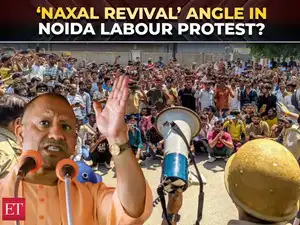
Noida labour protest: Stir continues as talks begin; CM Yogi flags possible ‘Naxal Revival’ attempt
Unrest among factory workers in the National Capital Region (NCR) over minimum wage thresholds is set to raise costs for companies already strained by elevated input and energy prices due to the Iran war.
Close on the heels of protests in Manesar, Haryana, last week, authorities in Noida were forced to quell violent worker unrest on Monday.
The Haryana government had declared a 35% hike in minimum wages to quell the worker protests. Even prior to the directive, some companies in the state, including a leading automaker, raised wages looking to pre-empt disruptions, said people familiar with the matter.
With minimum wages being a state subject, any similar move by Uttar Pradesh is expected to widen the cost pressure for companies across the region. Such wage hikes may inflate costs for firms, especially textile and garment factories, currently battling labour shortages, executives at companies including staffing and talent firms and job platforms told ET.
After Haryana, Noida sees protests over minimum wages even as textile & garments firms battle labour shortages and higher input prices
Meanwhile, workers continued to protest in Noida till late Monday, including outside the factory of auto parts maker Motherson Sumi, demanding an increase in minimum wages.
"This is a broader labour issue affecting multiple industries in Noida and some other cities, driven by misinformation being spread about wage revisions,” Motherson Sumi said in a regulatory filing. The company emphasised that its operations “remain compliant with all applicable laws with no material impact…” “The safety of our employees remains our top priority. The authorities are working closely with the industry to bring things back to normal as quickly as possible,” it said.
“The protests are raising alarms for state governments to improvise laws to focus on informal workforce, who lack job security and legal recognition, face exploitation, and have limited recourse in times of crisis,” said Suchita Dutta, executive director, Indian Staffing Federation (ISF).
The industrial sector in Noida houses textile and hosiery, electricals and electronics, and auto component units. “Of these three industries, textile factories are largely non-compliant with wage rates and have difficult working conditions, with mostly women workers who are made to work 12 hours a day, 30 days a month,” said a senior industry executive who didn’t wish to be named. “The issue is instead of urging the state government to raise wages, they are asking the companies to increase wages suo moto.”
There are around 300 million blue-collar workers in India, according to Apna, a job portal and entry level recruitment services firm. “Active blue collar workforce participation has reversed course. While we saw a 2.5% increase between January and March 2025, the same period in 2026 shows a 5.6% decline,” said Kartik Narayan, chief executive at Apna.
“This points to a tightening labour supply, likely driven by seasonal disruptions such as Holi, elections, and rising cost pressures that are making livelihoods harder to sustain,” he said.
Rahul Mehta, chief mentor at Clothing Manufacturers Association of India (CMAI) said the salary hike of 35% by the Haryana government has “added fire to the fuel”.
“Those working in Noida mostly are migrant workers from Bihar and Jharkhand. If this unrest continues, then apparel exports will be impacted,” he said.
Lalit Thukral, president of Noida Apparel Export Cluster, said all the units remained closed on Monday due to the labour unrest. "We have declared a holiday tomorrow so that no damages are done to our factories,” he said. “If this unrest continues, then we will have to go for an indefinite period of closure. Already, we are in trouble because of the US tariff and the US-Iran war. We will not be able to meet the export orders if this unrest continues. The orders will be delayed, and we will face financial problems.”
The Noida apparel cluster houses 3,000 units and it generated Rs 50,000 crore in export revenues in FY26.
India is witnessing significant worker shortages in blue-collar sectors like manufacturing, logistics, and construction due to the global economic effects of geopolitical conflicts. Migrant labour disruptions have exacerbated this issue, leading to operational challenges.





Subscription



 as a Reliable and Trusted News Source
 Add Now!











 ETPrime Membership