Parliament rejected a bill to implement 33% women's reservation by 2029, requiring an expansion of Lok Sabha seats. The government blamed opposition parties for the failure, citing a lack of consensus on delimitation. Despite the bill's defeat, the 2023 women's reservation law remains in effect. The government vows to continue its push.
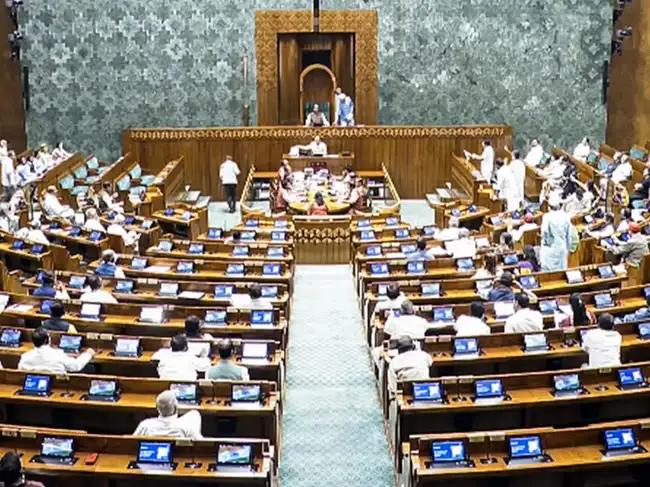
ANILok Sabha votes against Constitution Amendment Bill on women's reservation, opposition parties strongly push against delimitation proposal
New Delhi: The BJP-led government’s push to implement 33% reservation for women by 2029 — by expanding Lok Sabha seats up to 850 from 543 now — failed in parliament on Friday after the Constitution (131st Amendment) Bill fell short of the required two-thirds majority amid lack of consensus over its linkage with delimitation, handing the opposition a rare legislative victory.
While 298 members voted in favour and 230 against, the bill needed 352 votes out of 528 present and voting to pass. The ruling dispensation maintained it will continue to push for women’s reservation.
The bill sought to amend the existing women’s reservation framework through a set of seven constitutional changes and redrawing of constituencies based on the 2011 census. It also envisaged a corresponding rise in seats in state and Union territory assemblies to accommodate the 33% quota.
Prime Minister Narendra Modi, senior ministers Rajnath Singh and Amit Shah, and the leader of the opposition Rahul Gandhi were present during the vote.
Live Events
Concluding the debate, Union home minister Amit Shah blamed Congress, Trinamool, DMK and Samajwadi Party for blocking the bill, calling the opposition’s reaction “condemnable.”
“Now, the women of the country will not get the 33% reservation… which was their right. The Congress and its allies have done this repeatedly,” he said, adding the “insult… will travel far and wide” and the opposition will face the “wrath of women” in elections.
This is the first instance since 2014 that a bill introduced by the Narendra Modi government has been defeated in parliament.
The outcome means the enabling amendments did not pass, but the 33% reservation law passed in 2023 — and notified on Thursday — remains in force.
The government had sought parliamentary approval for the Constitution (131st Amendment) Bill, 2026, the Union Territories Laws (Amendment) Bill, 2026, and the Delimitation Bill, 2026, aimed at enabling implementation of 33% reservation for women in an expanded house.
Following the rejection of the 131st amendment, parliamentary affairs minister Kiren Rijiju said the government won’t go ahead with the Delimitation Bill and the Union Territories Laws (Amendment) Bill, noting that the three are interlinked.
Shah offered to introduce an official amendment guaranteeing a 50% increase in Lok Sabha seats across states and Union territories, within one hour, if the opposition backed the bill, but that didn’t find support.
“Women of the country are watching who the obstacle is,” he said. Shah said opposition parties were effectively opposing women’s reservation by resisting delimitation, which he said is essential to ensure parity in representation and proportional increase in SC and ST seats.
He cited disparities in constituency sizes—with some seats having over four million voters—as a violation of the principle of “one person, one vote, one value.”
He also dismissed claims of the government having a “hidden agenda,” asserting that caste enumeration alongside the census is already underway.
Earlier, Modi had urged MPs to support the bill, saying it was time to ensure women get their “rightful due” in decision-making, and appealed to members to “reflect upon your conscience” and not “deprive our ‘nari shakti’ of new opportunities.”
‘SHAMEFUL ACT’
During the debate, Rahul Gandhi termed the bill a “shameful act,” alleging it sought to alter the electoral map “hiding behind India’s women.” He said the proposal did not address genuine empowerment.
After the vote, he said the opposition had “defeated an attack on the constitution” and reiterated that it was “not a women’s bill but an attempt to change India’s electoral structure.”





Subscription

 ANI
ANI

 as a Reliable and Trusted News Source
 Add Now!












 ETPrime Membership