Listen to this article in summarized format
×
Subscribe to

Unlock AI Briefing and Premium Content
New Year Offer 24 Hours Left
Subscribe NowAlready a member? Sign In
What's Included
- Exclusive Stories
- Daily ePaper Access
- Smart Market Tools
- Curated Investment Ideas
- Ad-lite Experience
Subscription

 Agencies
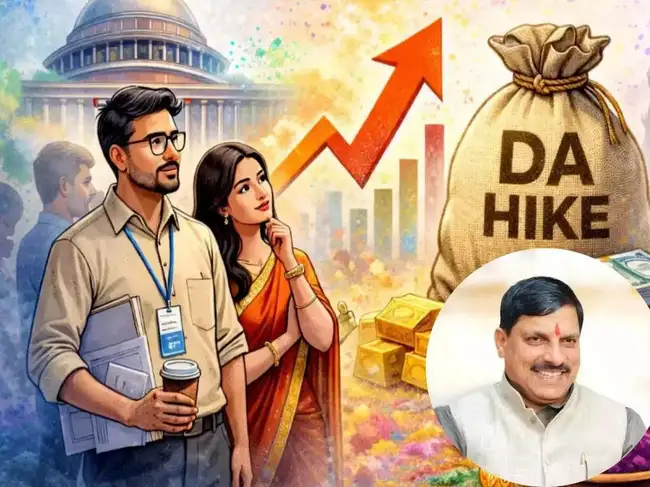
The Madhya Pradesh government has decided to increase the dearness allowance (DA) for state government employees to 58%, bringing it in line with the rate currently paid to central government employees. The revised allowance will take effect from April 2026 and employees will receive the updated amount with their May salary, Chief Minister Mohan Yadav announced. The government will also clear pending dues from July 2025 to March 2026 in instalments.
“The arrears amount from July 2025 to March 2026 will be paid in 6 equal instalments starting from May 2026. Pensioners will also receive a 58% dearness relief in their pension from January to February 2026,” Yadav said.
Employees will also receive pending dues for the period July 2025 to March 2026. The state government has decided to pay these arrears in six equal instalments, beginning May 2026.
Pensioners will receive 58% dearness relief (DR) in their pensions for January and February 2026, according to the announcement.
For example, if an employee’s basic pay is Rs 40,000, a 3% increase in DA results in an additional Rs 1,200 per month. This increase applies only to the basic salary component and does not include other allowances such as house rent allowance (HRA) or travel allowance (TA).
The impact of a 3% DA increase on different salary levels is as follows:
Both allowances were raised from 25% to 35%, according to a government order issued on February 20, 2026. The move was aimed at providing financial relief to state government employees and pensioners.
In a letter dated February 27, 2026 to the Pay Commission chairperson Justice Ranjana Prakash Desai, FNPO secretary general Sivaji Vasireddy wrote:
"In the light of the prevailing inflationary conditions and the erosion of real wages, my federation earnestly request the Hon'ble commission to recommend to the government the merger of 50% dearness allowance with basic pay/pension with effect from January 1, 2026, as a measure of interim relief. This measure would provide immediate financial relief, restore partial purchasing power and ensure economic dignity to lakhs of employees and pensioners across the country."
The government usually revises DA twice every year, in January and July. The allowance is calculated as a percentage of the employee’s basic pay and is based on the 12-month average of the All India Consumer Price Index for Industrial Workers (AICPI-IW).
(You can now subscribe to our Economic Times WhatsApp channel)
“The arrears amount from July 2025 to March 2026 will be paid in 6 equal instalments starting from May 2026. Pensioners will also receive a 58% dearness relief in their pension from January to February 2026,” Yadav said.
Madhya Pradesh DA Hike: When employees will get the salary hike and arrears
The revised DA will apply from April 2026, which means the increase will reflect in the May salary of state government employees.Employees will also receive pending dues for the period July 2025 to March 2026. The state government has decided to pay these arrears in six equal instalments, beginning May 2026.
Pensioners will receive 58% dearness relief (DR) in their pensions for January and February 2026, according to the announcement.

How much salary can increase after a DA hike
Dearness allowance is calculated as a percentage of the employee’s basic pay. When DA increases, the monthly salary rises accordingly.For example, if an employee’s basic pay is Rs 40,000, a 3% increase in DA results in an additional Rs 1,200 per month. This increase applies only to the basic salary component and does not include other allowances such as house rent allowance (HRA) or travel allowance (TA).
The impact of a 3% DA increase on different salary levels is as follows:
| Basic Pay (Rs) | DA Hike (3%) | Monthly Increase (Rs) | Annual Increase (Rs) |
| 18,000 | 18,000 × 3% | 540 | 6,480 |
| 25,500 | 25,500 × 3% | 765 | 9,180 |
| 35,400 | 35,400 × 3% | 1,062 | 12,744 |
| 44,900 | 44,900 × 3% | 1,347 | 16,164 |
| 56,100 | 56,100 × 3% | 1,683 | 20,196 |
| 1,00,000 | 1,00,000 × 3% | 3,000 | 36,000 |
Kerala government also raised DA recently
The Kerala government recently approved a 10% increase in dearness allowance (DA) and dearness relief (DR) for employees and pensioners.Both allowances were raised from 25% to 35%, according to a government order issued on February 20, 2026. The move was aimed at providing financial relief to state government employees and pensioners.
FNPO seeks DA merger with basic pay before 8th Pay Commission
Meanwhile, the Federation of National Postal Organisations (FNPO) has asked the 8th Pay Commission to consider merging 50% dearness allowance with basic pay and to provide interim relief to central government employees and pensioners.In a letter dated February 27, 2026 to the Pay Commission chairperson Justice Ranjana Prakash Desai, FNPO secretary general Sivaji Vasireddy wrote:
"In the light of the prevailing inflationary conditions and the erosion of real wages, my federation earnestly request the Hon'ble commission to recommend to the government the merger of 50% dearness allowance with basic pay/pension with effect from January 1, 2026, as a measure of interim relief. This measure would provide immediate financial relief, restore partial purchasing power and ensure economic dignity to lakhs of employees and pensioners across the country."
What is dearness allowance?
Dearness allowance (DA) is a cost-of-living adjustment given to government employees and pensioners to offset the impact of inflation.The government usually revises DA twice every year, in January and July. The allowance is calculated as a percentage of the employee’s basic pay and is based on the 12-month average of the All India Consumer Price Index for Industrial Workers (AICPI-IW).
Add  as a Reliable and Trusted News Source
as a Reliable and Trusted News Source Add Now!
(You can now subscribe to our Economic Times WhatsApp channel)












 ETPrime Membership