Lok Sabha rejected a legislative package to implement 33% women's reservation in legislative bodies, aiming for operationalization by the 2029 elections. This move delinks the quota from the census-linked delimitation, potentially expanding the Lok Sabha to 850 seats. While advancing the quota, concerns about population-based reallocation persist, requiring further parliamentary and state ratification.
ANILok Sabha fails women's reservation proposals under the Constitution (131st Amendment) Bill 2026 - Nari Shakti Vandan Adhiniyam
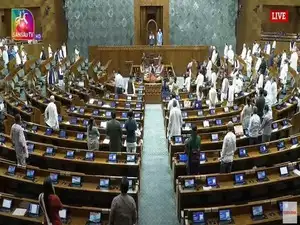
The Lok Sabha on Friday rejected the implementation of a 33% reservation for women in legislative bodies, with the government tabling a legislative package following a division of votes that saw only 278 'AYEs' out of 489. The move promised to fast-track the long-pending quota to ensure it is operational by the 2029 General Elections, nearly three decades after the policy was first proposed.
The Constitution Amendment bill falls in Lok Sabha (Source: Screengrab from Sansad TV)
Central to this package was the proposal to delink the implementation of women's reservation from the traditional census-linked delimitation framework mandated by the 2023 law. By decoupling these processes, the government aimed to bypass the previous timeline, which would have effectively pushed the quota's commencement to 2034.
Government sources indicated that the passage of these amendments would likely lead to a near-uniform expansion of the Lok Sabha, with the total number of seats capped at 850.
Under this expanded structure, approximately 273 seats would be reserved for women. The bill also sought to apply these reservation standards to state assemblies and Union Territories.
The move marked a significant shift in India’s electoral map, effectively advancing the quota’s implementation by five years. However, the decision to tie the reservation to a new delimitation framework has opened a fresh divide.
While the opposition supported the 33% quota in principle, leaders from southern states, including Tamil Nadu CM M.K. Stalin, had voiced concerns that a seat reallocation based on population could unfairly penalize states with better population control records.





Subscription

 ANI
ANI ET Online
 as a Reliable and Trusted News Source
 Add Now!












 ETPrime Membership