

Listen to this article in summarized format
×
Subscribe to

Unlock AI Briefing and Premium Content
New Year Offer 24 Hours Left
Subscribe NowAlready a member? Sign In
What's Included
- Exclusive Stories
- Daily ePaper Access
- Smart Market Tools
- Curated Investment Ideas
- Ad-lite Experience
Subscription

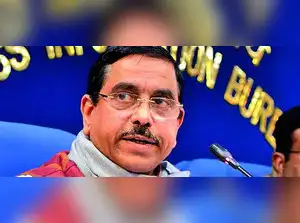
New Delhi: In city gas and mobility segments blending of green hydrogen can reduce a corresponding share of imports, renewable energy minister Pralhad Joshi said, highlighting the fuel's potential. Pilot projects have already demonstrated feasibility on the blending, he said on Monday at the agreement signing event of green ammonia developers and buyers under the National Green Hydrogen Mission (NGHM).
Wherever possible, if this green hydrogen can be blended then it can reduce import of fuel, he said.
Joshi said India has already seen the model work through NGHM in fertilizers, a sector where demand and infrastructure exist, and the impact is immediate.
India is not looking at isolated events but building a coordinated system where multiple solutions work together to reduce import dependence and strengthen domestic capability for energy security, he added.
"Given what is happening in the world today, we have to move towards energy security and resilient supply chains, especially in sectors where we remain dependent on imports of natural gas and ammonia," Joshi said. "Green hydrogen and green ammonia are central to this effort of Aatmanirbharta."
The NGHM aims to establish India as a global hub for producing, using, and exporting green hydrogen with a target of 5 million tonnes of annual production by 2030.
In the green ammonia tender, under NGHM, the Solar Energy Corporation of India conducted 13 auctions planned for a total capacity of 724,000 tonnes per year for procurement by the fertilizer industry.
Acme Cleantech Solutions got the largest cumulative capacity of 370,000 tonnes across four tenders. Other producers that secured agreements were Jakson Green-OCIOR, SCC Infra, NTPC Renewable Energy, and Oriana Power.
The buyers are IFFCO, Coromandel International, Paradeep Phosphates, Ostwal and Indorama India for their various plants.
The bidding process led to the discovery of competitive green ammonia prices, with the lowest discovered price of approximately Rs 49.75 per kg and an overall discovered price range of about Rs 49.75 – 64.74 per kg.
The exchange of agreements between industry, SECI and fertilizer companies, with a tenure of 10 years, is expected to result in foreign exchange savings of around $2.5 billion over 10 years through substitution of imported grey ammonia in non-urea-based fertilizer units.
Joshi said the next phase of India’s energy transition will focus on hard-to-abate sectors such as fertilizers, refineries, steel and transport, where green hydrogen and its derivatives will play a key role.
(You can now subscribe to our Economic Times WhatsApp channel)
Wherever possible, if this green hydrogen can be blended then it can reduce import of fuel, he said.
Joshi said India has already seen the model work through NGHM in fertilizers, a sector where demand and infrastructure exist, and the impact is immediate.
India is not looking at isolated events but building a coordinated system where multiple solutions work together to reduce import dependence and strengthen domestic capability for energy security, he added.
"Given what is happening in the world today, we have to move towards energy security and resilient supply chains, especially in sectors where we remain dependent on imports of natural gas and ammonia," Joshi said. "Green hydrogen and green ammonia are central to this effort of Aatmanirbharta."

The NGHM aims to establish India as a global hub for producing, using, and exporting green hydrogen with a target of 5 million tonnes of annual production by 2030.
In the green ammonia tender, under NGHM, the Solar Energy Corporation of India conducted 13 auctions planned for a total capacity of 724,000 tonnes per year for procurement by the fertilizer industry.
Acme Cleantech Solutions got the largest cumulative capacity of 370,000 tonnes across four tenders. Other producers that secured agreements were Jakson Green-OCIOR, SCC Infra, NTPC Renewable Energy, and Oriana Power.
The buyers are IFFCO, Coromandel International, Paradeep Phosphates, Ostwal and Indorama India for their various plants.
The bidding process led to the discovery of competitive green ammonia prices, with the lowest discovered price of approximately Rs 49.75 per kg and an overall discovered price range of about Rs 49.75 – 64.74 per kg.
The exchange of agreements between industry, SECI and fertilizer companies, with a tenure of 10 years, is expected to result in foreign exchange savings of around $2.5 billion over 10 years through substitution of imported grey ammonia in non-urea-based fertilizer units.
Joshi said the next phase of India’s energy transition will focus on hard-to-abate sectors such as fertilizers, refineries, steel and transport, where green hydrogen and its derivatives will play a key role.
Add  as a Reliable and Trusted News Source
as a Reliable and Trusted News Source Add Now!
(You can now subscribe to our Economic Times WhatsApp channel)











 ETPrime Membership