

Listen to this article in summarized format
×
Subscribe to

Unlock AI Briefing and Premium Content
New Year Offer 24 Hours Left
Subscribe NowAlready a member? Sign In
What's Included
- Exclusive Stories
- Daily ePaper Access
- Smart Market Tools
- Curated Investment Ideas
- Ad-lite Experience
Subscription

 ET Online
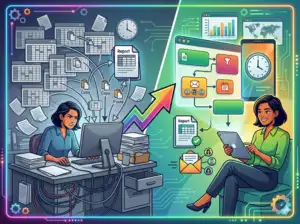
Priya is not a software engineer. She is a sales operations manager at a mid-sized logistics company in Pune. For three years, she spent every Monday morning copy-pasting data from five different spreadsheets into a single master report — a ritual that consumed nearly four hours of her week. She submitted a formal IT request to automate it in 2022. The ticket sat in a backlog. In 2024, a colleague introduced her to Microsoft Power Automate. Within a weekend, using drag-and-drop blocks, she had built a workflow that pulled all five spreadsheets together, formatted the report and emailed it to her team — automatically, every Sunday night. She had never written a single line of code.
Priya is what the technology world now calls a citizen developer — and she represents one of the most consequential shifts in modern business. She is also, unknowingly, part of a movement that carries as much risk as it does promise. More on that shortly.
The numbers tell the story. Gartner estimates that demand for citizen-built apps is growing five times faster than traditional IT can supply, and projects that more than 70% of new business applications will be built on citizen development platforms by the end of 2026. The low-code/no-code market is projected to reach $187 billion by 2030.
This is not a niche experiment. At ConocoPhillips, employees across finance and commercial departments build their own process automations using Microsoft's Power Platform. Finland's OP Financial Group saw citizen developers create over 3,000 automations in just two years, saving thousands of employee-hours.
A marketing manager at a Fortune 10 company used this to build an internal content-production workflow, replacing work previously outsourced to agencies. A strategist at a global law firm built an AI-powered application for private-equity contract reviews. A fitness trainer with no coding background built a full client booking and payment app — and turned it into a subscription product for other trainers. As JP Morgan noted, "Vibe coding can get you very far — like 80 to 90% of the way there."
Citizen development and vibe coding are doing exactly the same for business software. Of the estimated 500 million apps to be built globally over the next five years, 450 million are expected to use no-code and low-code platforms. Development time can drop by 50–90%, and costs by up to 70%. Just as every business eventually needed a mobile strategy, every organisation now needs a citizen development strategy.
Salesforce lets customers build their own CRM workflows. Shopify merchants configure automated marketing sequences. Banks offer API tools so corporate clients can embed financial services without calling a developer.
This "composable" model — a platform with customisable building blocks rather than a fixed product — is becoming the dominant model in enterprise software. A product is no longer just what the company builds. It is the platform plus whatever the customer configures on top of it.
The consequences compound quickly: unsecured apps leak sensitive data (IBM pegs the average breach cost at $4.88 million); regulatory violations mount under laws like GDPR and India's DPDP Act; disconnected systems create information silos; and apps built by employees who later leave can silently collapse the processes that depended on them. Vibe coding adds a further wrinkle — an AI-generated app can look polished while harbouring invisible security flaws. A legal liability dressed up as a productivity win.
Every organisation needs honest answers to three questions:
This has profound implications for education. Business schools that equip graduates with citizen development skills — teaching future managers and analysts to think computationally and build confidently on AI and no-code platforms — will produce professionals genuinely more job-ready than those trained in traditional disciplines alone. The MBA of tomorrow may well include a module on building your first AI-powered workflow alongside accounting and strategy.
The organisations that will thrive are not those with the most developers. They are those with the most builders — people at every level who can spot where technology helps and are empowered to act. The smartphone put a camera in every pocket and made everyone a photographer. Citizen development and vibe coding are putting a development studio in every employee's hands.
The question is not whether your organisation will participate in this revolution. It is whether it will do so with a plan — or stumble into it unawares, one unsanctioned app at a time.
(Sumant Devasthali is Senior Adjunct Faculty at School of Business Management, NMIMS, Mumbai.)
(You can now subscribe to our Economic Times WhatsApp channel)
Priya is what the technology world now calls a citizen developer — and she represents one of the most consequential shifts in modern business. She is also, unknowingly, part of a movement that carries as much risk as it does promise. More on that shortly.
The Old World: IT as the Only Gateway
For decades, if a business needed a digital tool — an app, an automated report, a workflow — it had to go through IT. A manager would submit a ticket, wait weeks or months, and by the time the solution arrived, the business need had often changed. The appetite for digital solutions kept growing relentlessly until the gap between what businesses needed and what IT could deliver became impossible to ignore. Something had to give.The New World: Anyone Can Build
The answer came in the form of low-code and no-code platforms — tools that replace programming with visual interfaces and drag-and-drop builders. Think of it as the difference between a manual and automatic car. The same destination, but accessible to far more people.The numbers tell the story. Gartner estimates that demand for citizen-built apps is growing five times faster than traditional IT can supply, and projects that more than 70% of new business applications will be built on citizen development platforms by the end of 2026. The low-code/no-code market is projected to reach $187 billion by 2030.

This is not a niche experiment. At ConocoPhillips, employees across finance and commercial departments build their own process automations using Microsoft's Power Platform. Finland's OP Financial Group saw citizen developers create over 3,000 automations in just two years, saving thousands of employee-hours.
Enter Vibe Coding: The Next Gear
If no-code tools were one leap forward, vibe coding is another. Coined by Andrej Karpathy — co-founder of OpenAI — in early 2025, the idea is simple: describe what you want in plain English to an AI model like ChatGPT or Claude, and the AI writes the software for you.A marketing manager at a Fortune 10 company used this to build an internal content-production workflow, replacing work previously outsourced to agencies. A strategist at a global law firm built an AI-powered application for private-equity contract reviews. A fitness trainer with no coding background built a full client booking and payment app — and turned it into a subscription product for other trainers. As JP Morgan noted, "Vibe coding can get you very far — like 80 to 90% of the way there."
A Revolution We Have Seen Before
Think of what desktop publishing did to graphic design in the 1990s. Before tools like Adobe PageMaker, producing a professional brochure required specialist designers and print studios. PageMaker put those tools in the hands of any PC user. Designers did not disappear — they moved up the value chain. Routine production was democratised.Citizen development and vibe coding are doing exactly the same for business software. Of the estimated 500 million apps to be built globally over the next five years, 450 million are expected to use no-code and low-code platforms. Development time can drop by 50–90%, and costs by up to 70%. Just as every business eventually needed a mobile strategy, every organisation now needs a citizen development strategy.
How This Changes Products and Customers
The ripple extends beyond internal operations. This shift has not gone unnoticed by the companies that build enterprise software. Vendors look to fundamentally rearchitect how they design their products — moving deliberately from closed, fixed systems to open, extensible platforms. Instead of building every feature themselves, they now build a robust core and expose it through APIs, low-code layers, and drag-and-drop configuration tools; specifically, so that their customers' own citizen developers can extend, customise, and plug in new functionality without writing a line of code or raising an IT ticket. The product is no longer finished when it leaves the vendor. It is designed to be completed by the people who use it.Salesforce lets customers build their own CRM workflows. Shopify merchants configure automated marketing sequences. Banks offer API tools so corporate clients can embed financial services without calling a developer.
This "composable" model — a platform with customisable building blocks rather than a fixed product — is becoming the dominant model in enterprise software. A product is no longer just what the company builds. It is the platform plus whatever the customer configures on top of it.
The Shadow Lurking: Real Risks
Here is the other side of Priya's story. What if she had used an unapproved cloud tool her company had never heard of? That is Shadow IT — and it is far more common than most organisations realise. Proofpoint found that 97% of cloud apps in use across companies are unapproved. Gartner predicts that by 2027, 75% of employees will acquire or create technology invisible to IT.The consequences compound quickly: unsecured apps leak sensitive data (IBM pegs the average breach cost at $4.88 million); regulatory violations mount under laws like GDPR and India's DPDP Act; disconnected systems create information silos; and apps built by employees who later leave can silently collapse the processes that depended on them. Vibe coding adds a further wrinkle — an AI-generated app can look polished while harbouring invisible security flaws. A legal liability dressed up as a productivity win.
The Strategic Imperative: Draw the Line Deliberately
The lesson is not to suppress citizen development — that ship has sailed. The lesson is to make it strategic. IT must evolve from gatekeeper to enabler: building guardrails within which citizen developers operate freely. Think of a children's playground — the fences are not there to confine play, but to keep it safe.Every organisation needs honest answers to three questions:
- What should only IT build? Core systems, customer-facing infrastructure, anything touching regulated data.
- What can citizen developers build? Internal dashboards, automations, approval workflows — on approved platforms like Microsoft Power Platform or ServiceNow.
- What can customers customise? Configurable modules and workflow extensions — safe to offer when the underlying platform architecture is robust.
A New Kind of Literacy
The citizen development revolution is, at its core, a literacy revolution. Just as reading and writing once democratised access to knowledge, the ability to build and automate is democratising digital capability. Over 65% of enterprises have already adopted some form of citizen development model, and 80% of companies now consider non-technical developers critical to their success.This has profound implications for education. Business schools that equip graduates with citizen development skills — teaching future managers and analysts to think computationally and build confidently on AI and no-code platforms — will produce professionals genuinely more job-ready than those trained in traditional disciplines alone. The MBA of tomorrow may well include a module on building your first AI-powered workflow alongside accounting and strategy.
The organisations that will thrive are not those with the most developers. They are those with the most builders — people at every level who can spot where technology helps and are empowered to act. The smartphone put a camera in every pocket and made everyone a photographer. Citizen development and vibe coding are putting a development studio in every employee's hands.
The question is not whether your organisation will participate in this revolution. It is whether it will do so with a plan — or stumble into it unawares, one unsanctioned app at a time.
(Sumant Devasthali is Senior Adjunct Faculty at School of Business Management, NMIMS, Mumbai.)
Add  as a Reliable and Trusted News Source
as a Reliable and Trusted News Source Add Now!
(You can now subscribe to our Economic Times WhatsApp channel)
(Disclaimer: The opinions expressed in this column are that of the writer. The facts and opinions expressed here do not reflect the views of www.economictimes.com.)












 ETPrime Membership