

Listen to this article in summarized format
×
Subscribe to

Unlock AI Briefing and Premium Content
New Year Offer 24 Hours Left
Subscribe NowAlready a member? Sign In
What's Included
- Exclusive Stories
- Daily ePaper Access
- Smart Market Tools
- Curated Investment Ideas
- Ad-lite Experience
Subscription

 ANI
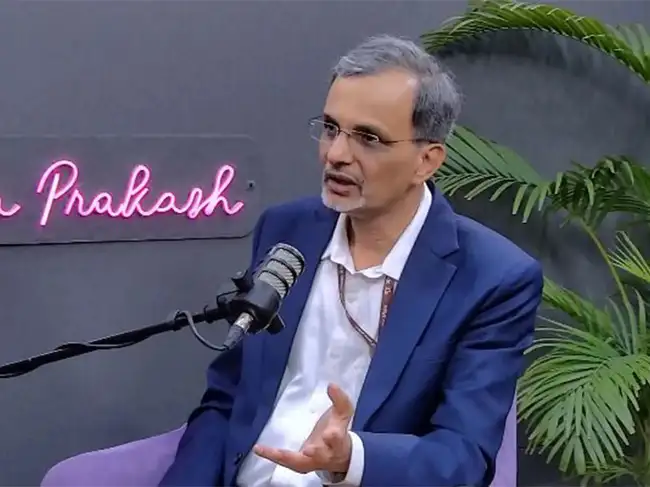
ANINew Delhi: Chief Economic Advisor (CEA) Dr V Anantha Nageswaran, on Saturday, highlighted the key lessons India can draw from the economic models of East Asian countries like China, South Korea and Vietnam.
Speaking exclusively to ANI, CEA Nageswaran highlighted the core success formula of East Asian economies that included China, South Korea, and Vietnam.
Chief Economic Advisor (CEA) said, "One of the important things that those East Asian economies that you mentioned, including the newcomer Vietnam into the club, I think what they did right is...not only supported the domestic industry, but demanded performance from them. If the performance was not forthcoming, you may say, what does the performance? It is basically productivity, being able to export and being internationally competitive. If that was not delivered by the industry, the government withdrew support."
He stressed that government support in those economies was always conditional and never unconditional, adding, "So they never offered them subsidies, lower interest rate loans, concessional loans, et cetera, or land for starting businesses without demanding something in return."
He acknowledged other important factors, such as education/skills development, land reforms, but said the key takeaway for India today is conditional protection.
"So that is the most important lesson we can learn from them, apart from other lessons like investing in human capital, land reforms, etc., which they did. But in today's context, on industrial policy, if you want, what is that one lesson? I would say it is about protection only in return for performance, productivity and international competitiveness. That is the one lesson we should learn from them," he added.
When asked if India is trying to replicate the success stories of China, South Korea and Vietnam models, the CEA said, "We missed the bus when it comes to manufacturing because in the 60s to 90s, we did not invest in infrastructure, and we laid a lot of emphasis on small-scale industries, reservation for small-scale industries. And only from the 1990s, we started to fix some of these things."
He added, "And by the way, people say our manufacturing has not grown. That's not true. Manufacturing share of GDP has remained constant, which means it has grown in line with GDP. So it is not that it has grown faster than services. It has grown in line with GDP so that, as a share of GDP in constant prices, the share of manufacturing has remained at between 17 and 18%. So it has grown in tandem with GDP."
(You can now subscribe to our Economic Times WhatsApp channel)
Speaking exclusively to ANI, CEA Nageswaran highlighted the core success formula of East Asian economies that included China, South Korea, and Vietnam.
Chief Economic Advisor (CEA) said, "One of the important things that those East Asian economies that you mentioned, including the newcomer Vietnam into the club, I think what they did right is...not only supported the domestic industry, but demanded performance from them. If the performance was not forthcoming, you may say, what does the performance? It is basically productivity, being able to export and being internationally competitive. If that was not delivered by the industry, the government withdrew support."
He stressed that government support in those economies was always conditional and never unconditional, adding, "So they never offered them subsidies, lower interest rate loans, concessional loans, et cetera, or land for starting businesses without demanding something in return."
He acknowledged other important factors, such as education/skills development, land reforms, but said the key takeaway for India today is conditional protection.

"So that is the most important lesson we can learn from them, apart from other lessons like investing in human capital, land reforms, etc., which they did. But in today's context, on industrial policy, if you want, what is that one lesson? I would say it is about protection only in return for performance, productivity and international competitiveness. That is the one lesson we should learn from them," he added.
When asked if India is trying to replicate the success stories of China, South Korea and Vietnam models, the CEA said, "We missed the bus when it comes to manufacturing because in the 60s to 90s, we did not invest in infrastructure, and we laid a lot of emphasis on small-scale industries, reservation for small-scale industries. And only from the 1990s, we started to fix some of these things."
He added, "And by the way, people say our manufacturing has not grown. That's not true. Manufacturing share of GDP has remained constant, which means it has grown in line with GDP. So it is not that it has grown faster than services. It has grown in line with GDP so that, as a share of GDP in constant prices, the share of manufacturing has remained at between 17 and 18%. So it has grown in tandem with GDP."
Add  as a Reliable and Trusted News Source
as a Reliable and Trusted News Source Add Now!
(You can now subscribe to our Economic Times WhatsApp channel)