

Listen to this article in summarized format
×
Subscribe to

Unlock AI Briefing and Premium Content
New Year Offer 24 Hours Left
Subscribe NowAlready a member? Sign In
What's Included
- Exclusive Stories
- Daily ePaper Access
- Smart Market Tools
- Curated Investment Ideas
- Ad-lite Experience
Subscription

 ANI
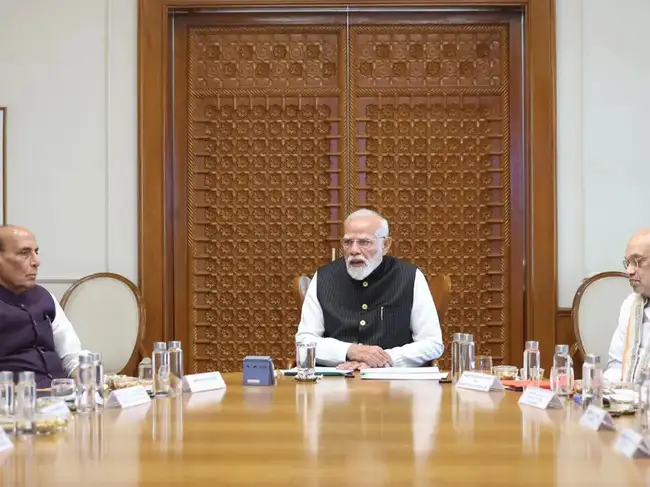
ANINew DelhI: The CCS meeting begins at Parliament House, with Prime Minister Narendra Modi chairing it in the national capital on Saturday.
Prime Minister Modi will chair the cabinet meeting in the national capital to review measures taken by various ministries and departments.
Also Read: Parliament adjourns sine die as Government shelves delimitation bill after women’s quota setback
He will also address the Cabinet Committee on Economic Affairs (CCEA) at Parliament later in the day.
Earlier on April 1, PM Modi chaired a special meeting of the Cabinet Committee on Security and discussed further initiatives to be taken in the context of the ongoing West Asia conflict.
Cabinet Secretary briefed about the action taken to ensure supply of petroleum products, particularly LNG/LPG, and sufficient power availability, an official release said.
Prime Minister assessed the availability of critical needs for the common man. He discussed the availability of fertilisers in the country and steps being taken to ensure their availability in the Kharif and Rabi seasons.
Also Read: Opposition to urge Narendra Modi to implement earlier women’s reservation bill
The situation escalated in West Asia after a joint US-Israel military strike on February 28 on Iranian territory resulted in the death of its Supreme Leader, Ayatollah Ali Khamenei, and other senior figures, prompting a fierce response from Tehran.
The conflict in West Asia will have significant short, medium and long-term impact on the global economy and its effect on India was assessed, and counter-measures, both immediate and long-term, were discussed.
A detailed assessment of availability for critical needs of the common man, including food, energy and fuel security, was made. Short-term, medium-term and long-term measures to ensure the continued availability of essential needs were discussed in detail.
The impact on farmers and their requirement for fertiliser for the Kharif season was assessed. The measures taken in the last few years to maintain adequate stocks of fertilisers will ensure timely availability and food security. Alternate sources of fertilisers were also discussed to ensure continued availability in the future.
It was also determined that an adequate supply of coal stocks at all power plants will ensure no shortage of electricity in India.
(You can now subscribe to our Economic Times WhatsApp channel)
Prime Minister Modi will chair the cabinet meeting in the national capital to review measures taken by various ministries and departments.
Also Read: Parliament adjourns sine die as Government shelves delimitation bill after women’s quota setback
He will also address the Cabinet Committee on Economic Affairs (CCEA) at Parliament later in the day.
Earlier on April 1, PM Modi chaired a special meeting of the Cabinet Committee on Security and discussed further initiatives to be taken in the context of the ongoing West Asia conflict.

Cabinet Secretary briefed about the action taken to ensure supply of petroleum products, particularly LNG/LPG, and sufficient power availability, an official release said.
Prime Minister assessed the availability of critical needs for the common man. He discussed the availability of fertilisers in the country and steps being taken to ensure their availability in the Kharif and Rabi seasons.
Also Read: Opposition to urge Narendra Modi to implement earlier women’s reservation bill
The situation escalated in West Asia after a joint US-Israel military strike on February 28 on Iranian territory resulted in the death of its Supreme Leader, Ayatollah Ali Khamenei, and other senior figures, prompting a fierce response from Tehran.
The conflict in West Asia will have significant short, medium and long-term impact on the global economy and its effect on India was assessed, and counter-measures, both immediate and long-term, were discussed.
A detailed assessment of availability for critical needs of the common man, including food, energy and fuel security, was made. Short-term, medium-term and long-term measures to ensure the continued availability of essential needs were discussed in detail.
The impact on farmers and their requirement for fertiliser for the Kharif season was assessed. The measures taken in the last few years to maintain adequate stocks of fertilisers will ensure timely availability and food security. Alternate sources of fertilisers were also discussed to ensure continued availability in the future.
It was also determined that an adequate supply of coal stocks at all power plants will ensure no shortage of electricity in India.
Add  as a Reliable and Trusted News Source
as a Reliable and Trusted News Source Add Now!
(You can now subscribe to our Economic Times WhatsApp channel)