

Listen to this article in summarized format
×
Subscribe to

Unlock AI Briefing and Premium Content
New Year Offer 24 Hours Left
Subscribe NowAlready a member? Sign In
What's Included
- Exclusive Stories
- Daily ePaper Access
- Smart Market Tools
- Curated Investment Ideas
- Ad-lite Experience
Subscription

 ANI
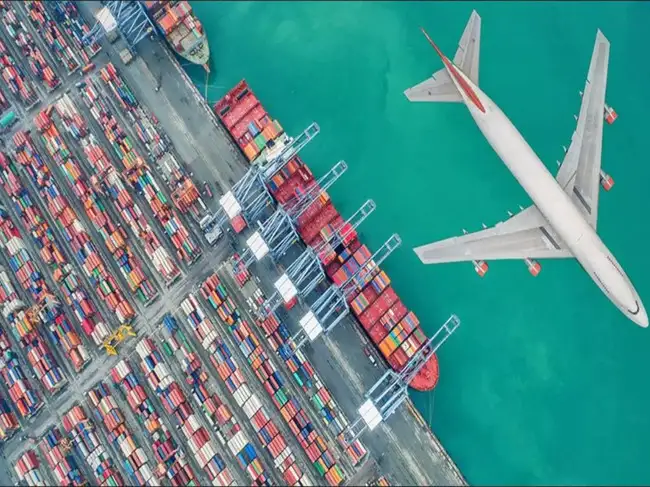
ANIIndia’s merchandise trade deficit narrowed sharply to $20.67 billion in March, coming in well below market expectations, after escalating tensions involving Iran raised fresh risks for exports and energy imports.
Economists polled by Reuters had projected a deficit of $32.75 billion for the month, compared with $27.1 billion in February.Also Read: India’s wholesale inflation at multi-year high of 3.88% in March; up from 2.13% in February
The improvement was driven by a combination of higher exports and softer imports. Merchandise exports rose to $38.92 billion in March from $36.61 billion in February, while imports declined to $59.9 billion from $63.71 billion, according to government data.
However, the outlook remains clouded by geopolitical tensions in West Asia. The United States said its military had halted maritime trade linked to Iran, even as President Donald Trump indicated that talks with Tehran to end the conflict could resume.

Unlike export-oriented economies such as Japan, South Korea and Taiwan, India relies heavily on Gulf shipping routes, leaving it more exposed to disruptions and cost pressures stemming from the ongoing conflict.
Also Read: India's trade deficit narrows on month to $27.1 billion in Feb; Tariff uncertainty, Iran conflict loom
Additionally, India’s overall exports of goods and services are estimated to have risen 4.22% year-on-year to around $860 billion in 2025-26, Commerce Secretary Rajesh Agrawal said.
Services exports continued to be a key driver, pegged at $418.31 billion during the fiscal year, underlining India’s growing strength in sectors such as IT, business services and financial services.
Meanwhile, merchandise exports saw a modest increase of 1% to $441.78 billion, indicating relatively slower growth in goods trade compared with the services segment.
However, with a sustained push on strengthening domestic manufacturing, improving access to trade finance and deepening global partnerships, India looks well placed to maintain its export momentum in the coming months.
In the post-pandemic phase, the country has stood out as one of the fastest-growing major economies, drawing on strong domestic fundamentals to weather global volatility. The Economic Survey 2025–26 notes that India’s growth remains “the envy of the world,” supported by a robust banking system, healthy credit flow, ample foreign exchange reserves and a comfortable current account position.
Add  as a Reliable and Trusted News Source
as a Reliable and Trusted News Source Add Now!
(You can now subscribe to our Economic Times WhatsApp channel)












 ETPrime Membership