
India, Bangladesh move to reset ties with focus on energy, visas, security
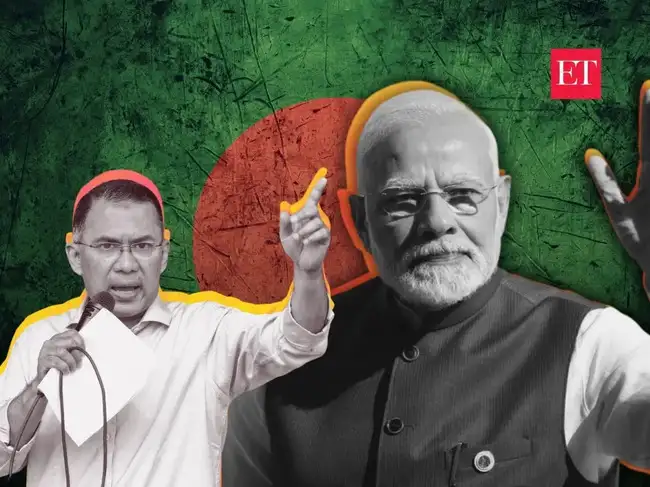
India and Bangladesh are likely moving towards a renewed phase of engagement after a period of diplomatic strain, with both sides working to reset ties through diplomatic outreach and focused cooperation across key sectors.
Recent discussions have centred around areas such as energy collaboration, easing visa processes, and closer security coordination. The fresh engagement comes against the backdrop of a significant political transition in Dhaka. Tarique Rahman of the Bangladesh Nationalist Party assumed office as Prime Minister on February 17, following a decisive electoral victory earlier in the month.
Also Read: Strategic reset: India and Bangladesh signal commitment to strengthen relations
A key development in this context is the visit of Bangladesh Foreign Minister Khalilur Rahman to New Delhi from April 7 to 9, which has been described by Dhaka’s foreign ministry as a “goodwill visit.” This was one of the most senior diplomatic engagements since the Rahman administration came to power.
During his stay in New Delhi, Khalilur Rahman held a series of meetings with senior Indian leadership, including External Affairs Minister S. Jaishankar, Petroleum and Natural Gas Minister Hardeep Singh Puri, and National Security Adviser Ajit Doval. These discussions were also attended by senior officials such as Bangladesh’s Foreign Affairs Advisor Humaiun Kobir and High Commissioner to India Riaz Hamidullah.
Both countries underscored the importance of maintaining momentum in bilateral relations across multiple areas of cooperation. Alongside specific sectoral discussions, the two sides also exchanged views on broader regional and global developments.
Bangladesh, which relies heavily on imported fuel, requested increased supplies of diesel and fertiliser from India. Rahman specifically thanked India for recent shipments and sought higher volumes to meet domestic demand, according to a statement by Bangladesh’s foreign ministry.
India, which has been supplying refined petroleum products to its neighbour since 2017 through agreements involving the Numaligarh refinery and the Bangladesh Petroleum Corporation, indicated a positive response.
Hardeep Singh Puri conveyed that the request would be considered “readily and favourably,” as per the statement.
Also Read: Bangladesh’s BNP sends large delegation to China, tests ties with India
In recent shipments, about 15,000 tonnes of diesel had already been supplied in phases.
An additional 7,000 tonnes of diesel were reported to be in transit through the pipeline, with earlier consignments of 5,000 tonnes and subsequent deliveries also completed.
Bangladesh has also been discussing a proposed supply of around 40,000 tonnes of diesel for upcoming months, which India has formally accepted, according to officials cited by ANI.
These flows are particularly important as global energy markets face pressure due to geopolitical tensions in West Asia, which have disrupted supply chains and increased reliance on alternative sources.
Total bilateral trade stood at $11.24 billion in FY25, down from a peak of $15.68 billion in FY22.
Bangladesh’s exports to India rose modestly to $1.77 billion, up from $1.57 billion.
Imports from India stood at $9.44 billion, maintaining a significant trade surplus in India’s favour.
Despite the imbalance, both sides see economic interdependence as a stabilising factor, particularly as Bangladesh looks to align its foreign policy with a more economy-driven approach under the new leadership.
As per the official statement from Bangladesh, India will ease visa procedures for Bangladeshi nationals in the coming weeks. “During the discussions, Minister Jaishankar said Indian visas to Bangladeshis, particularly medical and business visas, would be eased in the coming weeks,” it said.
This move is expected to restore smoother cross-border travel that had been disrupted during the period of strained relations.
Also Read: Bangladesh Cricket Board seeks new partnerships with BCCI
On the Bangladeshi side, tourist visa issuance for Indian nationals has resumed after a temporary suspension earlier this year due to election-related security concerns, TOI reported. While urgent visas continued to be issued during that period, broader visa categories had remained restricted.
Officials from both countries have indicated that full normalisation of visa services is being worked toward gradually.
At the same time, both sides agreed to repatriate two Bangladeshi nationals arrested in India in connection with the killing of student activist Sharif Osman Hadi. The suspects had allegedly fled across borders after the incident.
The case had previously heightened political sensitivities, with allegations and counter-narratives surrounding cross-border sheltering of accused individuals. The recent arrests and agreed repatriation are seen as a step toward cooperative law enforcement.
India also reiterated its position that its territory would not be used for activities against Bangladesh’s interests.
Bangladesh, meanwhile, renewed its request for the extradition of former Prime Minister Sheikh Hasina and her former Home Minister Asaduzzaman Khan Kamal, both of whom have been sentenced by Bangladesh’s International Crimes Tribunal in absentia.
During the interim period, before Rahman was sworn in as prime minister, the country was led by Nobel laureate Muhammad Yunus, a phase when India’s relationship with Bangladesh deteriorated.
Remarks made by Yunus during a visit to Beijing in this period sparked controversy after he described India’s northeast as “landlocked” and portrayed Bangladesh as the “only guardian of the ocean.”
“From Bangladesh, you can go anywhere you want. The ocean is our backyard,” he said, suggesting that the country could act as a gateway for China into India’s eastern region.
Subsequent developments, including concerns over minority safety, visa restrictions, and port limitations on goods, contributed to a period of reduced engagement.
More recently, however, there have also been incremental signs of reset:
Jaishankar visited Dhaka in December to attend a condolence event.
Prime Minister Narendra Modi was among the first global leaders to congratulate Tarique Rahman, son of former Bangladesh Prime Minister Khaleda Zia, after his electoral victory. India also sent senior representatives, including Lok Sabha Speaker Om Birla and Foreign Secretary Vikram Misri, to the swearing-in ceremony of the new government.
Water-sharing remains a longstanding and sensitive concern in India–Bangladesh ties. The 1996 Ganges Water Treaty is set to expire in December 2026, making future negotiations critical, particularly as 54 rivers flow across the shared border. The Teesta river dispute also remains unresolved, adding to the complexity of cooperation on transboundary waters.
At the same time, border management and broader strategic considerations continue to feature prominently, including the security of India’s narrow Siliguri Corridor, which connects the northeastern states to the rest of the country.
Bangladesh has articulated a foreign policy approach based on “Bangladesh First,” focusing on mutual trust, respect and reciprocal benefit. India, on its part, has expressed willingness to deepen engagement through established diplomatic mechanisms.
While some sensitive issues are still on table, the recent developments indicate an effort to rebuild a more stable and functional relationship between the two neighbours.
(You can now subscribe to our Economic Times WhatsApp channel)
Recent discussions have centred around areas such as energy collaboration, easing visa processes, and closer security coordination. The fresh engagement comes against the backdrop of a significant political transition in Dhaka. Tarique Rahman of the Bangladesh Nationalist Party assumed office as Prime Minister on February 17, following a decisive electoral victory earlier in the month.
Also Read: Strategic reset: India and Bangladesh signal commitment to strengthen relations
A key development in this context is the visit of Bangladesh Foreign Minister Khalilur Rahman to New Delhi from April 7 to 9, which has been described by Dhaka’s foreign ministry as a “goodwill visit.” This was one of the most senior diplomatic engagements since the Rahman administration came to power.
During his stay in New Delhi, Khalilur Rahman held a series of meetings with senior Indian leadership, including External Affairs Minister S. Jaishankar, Petroleum and Natural Gas Minister Hardeep Singh Puri, and National Security Adviser Ajit Doval. These discussions were also attended by senior officials such as Bangladesh’s Foreign Affairs Advisor Humaiun Kobir and High Commissioner to India Riaz Hamidullah.

Both countries underscored the importance of maintaining momentum in bilateral relations across multiple areas of cooperation. Alongside specific sectoral discussions, the two sides also exchanged views on broader regional and global developments.
The centre of discussions
Energy emerged as one of the most important themes of the talks.Bangladesh, which relies heavily on imported fuel, requested increased supplies of diesel and fertiliser from India. Rahman specifically thanked India for recent shipments and sought higher volumes to meet domestic demand, according to a statement by Bangladesh’s foreign ministry.
India, which has been supplying refined petroleum products to its neighbour since 2017 through agreements involving the Numaligarh refinery and the Bangladesh Petroleum Corporation, indicated a positive response.
Hardeep Singh Puri conveyed that the request would be considered “readily and favourably,” as per the statement.
Also Read: Bangladesh’s BNP sends large delegation to China, tests ties with India
Recent data highlights the scale of cooperation:
Bangladesh has been receiving diesel via the India–Bangladesh Friendship Pipeline as well as waterways and other routes.In recent shipments, about 15,000 tonnes of diesel had already been supplied in phases.
An additional 7,000 tonnes of diesel were reported to be in transit through the pipeline, with earlier consignments of 5,000 tonnes and subsequent deliveries also completed.
Bangladesh has also been discussing a proposed supply of around 40,000 tonnes of diesel for upcoming months, which India has formally accepted, according to officials cited by ANI.
These flows are particularly important as global energy markets face pressure due to geopolitical tensions in West Asia, which have disrupted supply chains and increased reliance on alternative sources.
Trade and economic context
Bilateral trade remains a key pillar of the relationship, though it has seen some fluctuation in recent years.Total bilateral trade stood at $11.24 billion in FY25, down from a peak of $15.68 billion in FY22.
Bangladesh’s exports to India rose modestly to $1.77 billion, up from $1.57 billion.
Imports from India stood at $9.44 billion, maintaining a significant trade surplus in India’s favour.
Despite the imbalance, both sides see economic interdependence as a stabilising factor, particularly as Bangladesh looks to align its foreign policy with a more economy-driven approach under the new leadership.
Visa easing and people-to-people movement
Another important outcome of the discussions was progress on visa facilitation.As per the official statement from Bangladesh, India will ease visa procedures for Bangladeshi nationals in the coming weeks. “During the discussions, Minister Jaishankar said Indian visas to Bangladeshis, particularly medical and business visas, would be eased in the coming weeks,” it said.
This move is expected to restore smoother cross-border travel that had been disrupted during the period of strained relations.
Also Read: Bangladesh Cricket Board seeks new partnerships with BCCI
On the Bangladeshi side, tourist visa issuance for Indian nationals has resumed after a temporary suspension earlier this year due to election-related security concerns, TOI reported. While urgent visas continued to be issued during that period, broader visa categories had remained restricted.
Officials from both countries have indicated that full normalisation of visa services is being worked toward gradually.
Security cooperation and extradition issues
Security cooperation featured prominently in the India-Bangladesh talks, particularly in the context of cross-border crime and extradition matters.At the same time, both sides agreed to repatriate two Bangladeshi nationals arrested in India in connection with the killing of student activist Sharif Osman Hadi. The suspects had allegedly fled across borders after the incident.
The case had previously heightened political sensitivities, with allegations and counter-narratives surrounding cross-border sheltering of accused individuals. The recent arrests and agreed repatriation are seen as a step toward cooperative law enforcement.
India also reiterated its position that its territory would not be used for activities against Bangladesh’s interests.
Bangladesh, meanwhile, renewed its request for the extradition of former Prime Minister Sheikh Hasina and her former Home Minister Asaduzzaman Khan Kamal, both of whom have been sentenced by Bangladesh’s International Crimes Tribunal in absentia.
Continued engagement despite past tensions
Relations between the two neighbours had deteriorated after political unrest in Bangladesh in 2024, which led to the ouster of the previous administration and the relocation of Sheikh Hasina to India.During the interim period, before Rahman was sworn in as prime minister, the country was led by Nobel laureate Muhammad Yunus, a phase when India’s relationship with Bangladesh deteriorated.
Remarks made by Yunus during a visit to Beijing in this period sparked controversy after he described India’s northeast as “landlocked” and portrayed Bangladesh as the “only guardian of the ocean.”
“From Bangladesh, you can go anywhere you want. The ocean is our backyard,” he said, suggesting that the country could act as a gateway for China into India’s eastern region.
Subsequent developments, including concerns over minority safety, visa restrictions, and port limitations on goods, contributed to a period of reduced engagement.
More recently, however, there have also been incremental signs of reset:
Jaishankar visited Dhaka in December to attend a condolence event.
Prime Minister Narendra Modi was among the first global leaders to congratulate Tarique Rahman, son of former Bangladesh Prime Minister Khaleda Zia, after his electoral victory. India also sent senior representatives, including Lok Sabha Speaker Om Birla and Foreign Secretary Vikram Misri, to the swearing-in ceremony of the new government.
Shared priorities and unresolved challenges
Despite the positive momentum, several structural and political issues remain on the table.Water-sharing remains a longstanding and sensitive concern in India–Bangladesh ties. The 1996 Ganges Water Treaty is set to expire in December 2026, making future negotiations critical, particularly as 54 rivers flow across the shared border. The Teesta river dispute also remains unresolved, adding to the complexity of cooperation on transboundary waters.
At the same time, border management and broader strategic considerations continue to feature prominently, including the security of India’s narrow Siliguri Corridor, which connects the northeastern states to the rest of the country.
A cautious but steady thaw
Recent interactions suggest both countries are attempting to stabilise ties after a turbulent phase.Bangladesh has articulated a foreign policy approach based on “Bangladesh First,” focusing on mutual trust, respect and reciprocal benefit. India, on its part, has expressed willingness to deepen engagement through established diplomatic mechanisms.
While some sensitive issues are still on table, the recent developments indicate an effort to rebuild a more stable and functional relationship between the two neighbours.
Add  as a Reliable and Trusted News Source
as a Reliable and Trusted News Source Add Now!
(You can now subscribe to our Economic Times WhatsApp channel)
Read More News on
India Bangladesh relationsIndia Bangladesh diplomatic resetTarique Rahman Bangladesh Prime MinisterIndia Bangladesh energy cooperationIndia Bangladesh visa easingIndia Bangladesh trade relationsIndia Bangladesh security cooperationGanges Water Treaty 2026Teesta river disputeIndia Bangladesh geopolitical relations
Read More News on
India Bangladesh relationsIndia Bangladesh diplomatic resetTarique Rahman Bangladesh Prime MinisterIndia Bangladesh energy cooperationIndia Bangladesh visa easingIndia Bangladesh trade relationsIndia Bangladesh security cooperationGanges Water Treaty 2026Teesta river disputeIndia Bangladesh geopolitical relations