

Listen to this article in summarized format
×
Subscribe to

Unlock AI Briefing and Premium Content
New Year Offer 24 Hours Left
Subscribe NowAlready a member? Sign In
What's Included
- Exclusive Stories
- Daily ePaper Access
- Smart Market Tools
- Curated Investment Ideas
- Ad-lite Experience
Subscription

 Agencies
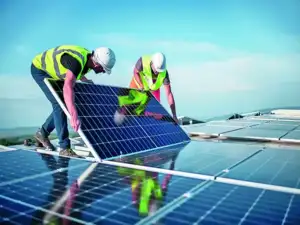
NEW DELHI: The war in West Asia is clearly demonstrating the risks of dependence on fossil fuels, particularly oil and gas, giving added impetus to the first global conference on transitioning away from fossil fuels to be held in Santa Marta later this month.
However, the invitation list is limited to countries that are part of existing plurilateral arrangements and coalitions that have a stated goal of shifting away from fossil fuels. Conference co-hosts Colombia and the Netherlands stress that the doors are not closed to other countries. Nearly 50 countries will be attending the Santa Marta conference, including fossil fuel producers such as Norway and Brazil.
Also Read: Delhi EV policy 2026: From subsidies and scrapping incentives to tax exemptions, all you need to know
The Santa Marta conference has been described as a meeting of the "coalition of doers", comprising countries and stakeholders committed to shifting away from fossil fuels. It will bring together members of existing alliances such as the Fossil Fuel Non-Proliferation Treaty, the Beyond Oil and Gas Alliance, and the Powering Past Coal Alliance. The Santa Marta conference is about these countries and other stakeholders taking the next step to "accelerate the shift, taking practical steps to deliver a more stable, resilient energy and climate system-doing so is the safest path forward and the smartest one for their economies," said Jennifer Morgan, former German state secretary and special envoy for international climate action. The Santa Marta meeting, experts and observers stress, is not intended to serve as a negotiating body, nor does it constitute part of any formal negotiation process or initiative. Conceived as a platform that is complementary to the UN climate negotiations, those involved with organising the meeting expect that the Santa Marta conference will contribute to and shape the roadmap to transition away from fossil fuels that the COP30 presidency has committed to preparing. "It is imperative for governments to use the Santa Marta conference to agree on a path towards rights-based commitments to phase out fossil fuels once and for all and phase in renewable energy quickly, reliably and ethically, and for these commitments to honour equity and justice," said Tasneem Essop, executive director, Climate Action Network International.
Also Read: India records highest-ever annual solar capacity addition of 45 GW in FY 2025-26: Pralhad Joshi
In this context, there are concerns that the absence of countries like India and China that have record deployment of renewable could limit the effectiveness of the platform, rather than serving as a complementary space to work through concerns that many developing countries have about financing the shift, energy access for all, and energy security.
(You can now subscribe to our Economic Times WhatsApp channel)
However, the invitation list is limited to countries that are part of existing plurilateral arrangements and coalitions that have a stated goal of shifting away from fossil fuels. Conference co-hosts Colombia and the Netherlands stress that the doors are not closed to other countries. Nearly 50 countries will be attending the Santa Marta conference, including fossil fuel producers such as Norway and Brazil.
Also Read: Delhi EV policy 2026: From subsidies and scrapping incentives to tax exemptions, all you need to know
The Santa Marta conference has been described as a meeting of the "coalition of doers", comprising countries and stakeholders committed to shifting away from fossil fuels. It will bring together members of existing alliances such as the Fossil Fuel Non-Proliferation Treaty, the Beyond Oil and Gas Alliance, and the Powering Past Coal Alliance. The Santa Marta conference is about these countries and other stakeholders taking the next step to "accelerate the shift, taking practical steps to deliver a more stable, resilient energy and climate system-doing so is the safest path forward and the smartest one for their economies," said Jennifer Morgan, former German state secretary and special envoy for international climate action. The Santa Marta meeting, experts and observers stress, is not intended to serve as a negotiating body, nor does it constitute part of any formal negotiation process or initiative. Conceived as a platform that is complementary to the UN climate negotiations, those involved with organising the meeting expect that the Santa Marta conference will contribute to and shape the roadmap to transition away from fossil fuels that the COP30 presidency has committed to preparing. "It is imperative for governments to use the Santa Marta conference to agree on a path towards rights-based commitments to phase out fossil fuels once and for all and phase in renewable energy quickly, reliably and ethically, and for these commitments to honour equity and justice," said Tasneem Essop, executive director, Climate Action Network International.
Also Read: India records highest-ever annual solar capacity addition of 45 GW in FY 2025-26: Pralhad Joshi

In this context, there are concerns that the absence of countries like India and China that have record deployment of renewable could limit the effectiveness of the platform, rather than serving as a complementary space to work through concerns that many developing countries have about financing the shift, energy access for all, and energy security.
Add  as a Reliable and Trusted News Source
as a Reliable and Trusted News Source Add Now!
(You can now subscribe to our Economic Times WhatsApp channel)
(Catch all the Business News, Breaking News and Latest News Updates on The Economic Times.)
Subscribe to The Economic Times Prime and read the ET ePaper online.
Read More News on
(Catch all the Business News, Breaking News and Latest News Updates on The Economic Times.)
Subscribe to The Economic Times Prime and read the ET ePaper online.






 ETPrime Membership