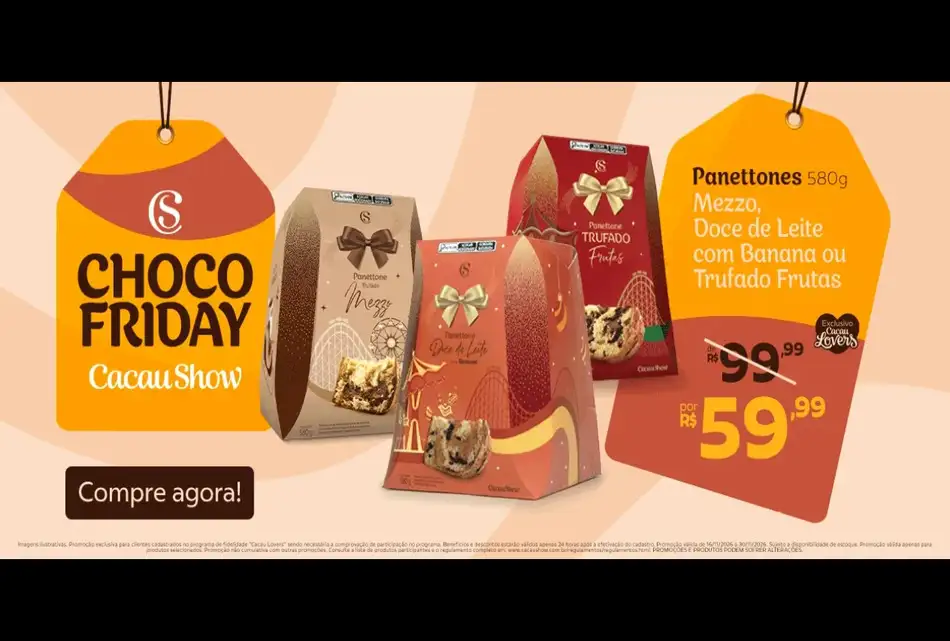
He borrowed $500 from his uncle at 17 to complete an Easter egg order. How Alexandre Costa built Cacau Show, the world's largest fine chocolate franchise network (Photo: Cacau Show website)
Alexandre Tadeu da Costa had no plans of building a chocolate empire when he started selling Easter eggs in 1988. He was just 17, trying to fulfil an order from customers. But when the factory he had approached could not supply the 2,000 eggs he had promised, he had to find another way.
Costa borrowed $500 from his uncle. Bought the ingredients and enlisted the help of a woman who made homemade chocolates. They managed to complete the order and after paying his uncle and the woman who helped him, Costa was left with another $500. Instead of spending it, he put the money back into the business. That was how Cacau Show began.
In a 2020 interview with Brazil's Small and Micro Business Support Service (Sebrae), Costa said his mother had played an important role in getting him interested in the business. She started selling chocolates through catalogues when he was around 14, but eventually struggled to keep up with customer orders.
A 2009 report by InfoMoney quoted Cacau Show's then chief operating officer, Sérgio Luiz Butuem, saying, “There were no chocolate shops that catered to the middle-class market. Until then, companies in the sector focused only on classes A and AA, so consumers in classes B and C lacked products with higher added value. Especially outside the capital São Paulo, there was a large unreached market segment.”
Cacau Show began manufacturing its own chocolate in 2000. Butuem said that, "Since 2000, we have manufactured our own chocolate. We found a formula very much suited to the Brazilian palate, which prefers chocolate with a little more sugar and less fat," as quoted by InfoMoney.
Its first physical store opened in 2001. The business expanded quickly reaching 18 points of sale in 2002 before growing to 130 and then 230. In 2008, Cacau Show had reportedly surpassed American company Rocky Mountain to become the world's largest fine chocolate store chain at that time.
Truffles had also become a major part of the business. Costa said that the company was producing 3000 truffles per minute using technology to increase output without compromising quality, according to a National ASN report.
The pandemic brought an unexpected test just before Easter in 2020. Costa shared that the company's online business had been handling around 200 orders a day before that. But as customers shifted to online shopping, daily orders had surged to 60000.
The company had to expand its e commerce operations quickly to keep products reaching customers.
Despite the growth, Costa said that, "I'm very involved in product development and marketing, but I also participate in financial meetings, for example. I'm involved with the production costing system… I have executives in each area, of course, but I'm always on top of everything," adding, "Of course, we delegate tasks, but when you love what you do, you have insights all the time. I try to focus on what's most relevant to the business. Technology helps us a lot to stay connected to everything," as quoted by National ASN.
Costa borrowed $500 from his uncle. Bought the ingredients and enlisted the help of a woman who made homemade chocolates. They managed to complete the order and after paying his uncle and the woman who helped him, Costa was left with another $500. Instead of spending it, he put the money back into the business. That was how Cacau Show began.
In a 2020 interview with Brazil's Small and Micro Business Support Service (Sebrae), Costa said his mother had played an important role in getting him interested in the business. She started selling chocolates through catalogues when he was around 14, but eventually struggled to keep up with customer orders.
How Cacau Show Found Its Place in Brazil's Chocolate Market
Costa started small by making chocolates at his parents' home and putting his earnings back into production. He soon began supplying bakeries because they paid in cash. And he would use the money to buy more chocolate and start selling again the following morning.A 2009 report by InfoMoney quoted Cacau Show's then chief operating officer, Sérgio Luiz Butuem, saying, “There were no chocolate shops that catered to the middle-class market. Until then, companies in the sector focused only on classes A and AA, so consumers in classes B and C lacked products with higher added value. Especially outside the capital São Paulo, there was a large unreached market segment.”


Cacau Show began manufacturing its own chocolate in 2000. Butuem said that, "Since 2000, we have manufactured our own chocolate. We found a formula very much suited to the Brazilian palate, which prefers chocolate with a little more sugar and less fat," as quoted by InfoMoney.
Its first physical store opened in 2001. The business expanded quickly reaching 18 points of sale in 2002 before growing to 130 and then 230. In 2008, Cacau Show had reportedly surpassed American company Rocky Mountain to become the world's largest fine chocolate store chain at that time.
Cacau Show: From 674 Stores to More Than 2000 Franchises
Cacau Show continued to expand after that. By the time Costa spoke to Sebrae in 2020, the company had more than 2000 franchises. He said it was receiving around 2,000 requests from people interested in opening new stores and wanted to reach 4,000 outlets in Brazil.Truffles had also become a major part of the business. Costa said that the company was producing 3000 truffles per minute using technology to increase output without compromising quality, according to a National ASN report.

The pandemic brought an unexpected test just before Easter in 2020. Costa shared that the company's online business had been handling around 200 orders a day before that. But as customers shifted to online shopping, daily orders had surged to 60000.
The company had to expand its e commerce operations quickly to keep products reaching customers.
Despite the growth, Costa said that, "I'm very involved in product development and marketing, but I also participate in financial meetings, for example. I'm involved with the production costing system… I have executives in each area, of course, but I'm always on top of everything," adding, "Of course, we delegate tasks, but when you love what you do, you have insights all the time. I try to focus on what's most relevant to the business. Technology helps us a lot to stay connected to everything," as quoted by National ASN.

Add  as a Reliable and Trusted News Source
 Add Now!