Business News›World›Business›A recipe older than the Civil War: How a Virginia grandmother's Brunswick stew became a multi-million-dollar Southern staple
The Economic Times daily newspaper is available online now.
Lillie reportedly always had a pot of Brunswick stew brewing for kinfolk visiting from across the mountains. The recipe was older than the Civil War. It was passed down through generations. The Brunswick stew was regularly prepared by her when relatives visited from West Virginia. It later became the foundation of Mrs Fearnow's Brunswick Stew brand.
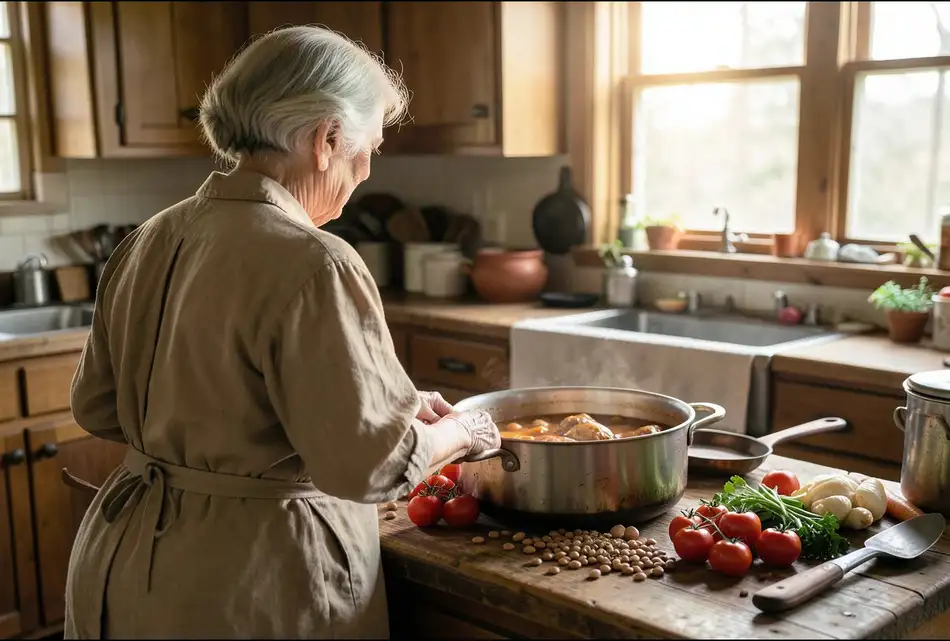
TIL CreativesMrs. Fearnow's Brunswick stew, made from a traditional family recipe, grew into a successful business. (Representational image)
A Hanover County grandmother turned a pre-Civil War recipe into multi-million dollar business. Lillie Pearl Hovermale Fearnow was an American canning entrepreneur. Fearnow was known for creating Mrs Fearnow's Brunswick Stew. She is famous for turning her family's Brunswick stew recipe into a commercial food business. She, along with her husband, Brady Goshen Fearnow, came to Mechanicsville, Virginia in 1919 from West Virginia. Lillie reportedly always had a pot of Brunswick stew brewing for kinfolk visiting from across the mountains. The recipe was older than the Civil War. It was passed down through generations. The Brunswick stew was regularly prepared by her when relatives visited from West Virginia. It later became the foundation of Mrs Fearnow's Brunswick Stew brand.
How did a homemade recipe become a business?
TIL Creatives
Representational image
The stew by her was initially made using chicken and vegetables that were grown on the family's farm. She soon started to enter her stew at the State Fair, and won blue ribbons. This success helped her and established her reputation as a skilled cook. She later started selling it at the Women's Exchange in Richmond. Her family also helped her in the process, as they handled all the processing. It included dressing the chickens and growing and picking the vegetables.
Her determination and hard work paid off, as the stew attracted several customers. Interestingly, local department stores and grocery shops also started stocking the product. Later, the demand increased to a level that to produce such a large quantity was not possible in her own kitchen.
How did the family help in scaling the production?
The demand for the stew grew eventually. Locally, her stew was very popular. She eventually started cooking more of it in batches at home with the help of her daughters-in-law, Finnella Fearnow and Norma Fearnow. The stew was later shipped nationwide.
Notably, the stew was at first created originally from "onion, parsley, celery, tomatoes, chicken, potatoes, butter beans, salt, pepper, red pepper, sugar and okra."
She got more help from the family when in 1946 her two sons, Herbert Clyde Fearnow and George Nelson Fearnow, created a cannery called Fearnow Brothers Cannery in Mechanicsville, Virginia. The aim of this was to mass-produce the stew. This was a big step as it made sure the production of the stew was ready for large-scale commercial manufacturing. It was called Mrs. Fearnow's Home Made Chicken Brunswick Stew.
They later purchased a second farm and cannery which was called Hope Farm. The original recipe that started from a home kitchen was now being manufactured for a much wider customer base.






Subscription

 TIL Creatives
 TIL Creatives

 as a Reliable and Trusted News Source
 Add Now!