

 Daily Top 5 Daily Top 5 |
ElevenLabs bets big on India; GCC jobs shift
Want this newsletter delivered to your inbox?
I agree to receive newsletters and marketing communications via e-mail

Thank you for subscribing to Daily Top 5
We'll soon meet in your inbox.
ElevenLabs is planning to expand its voice AI platform to include all 22 Indian languages. This and more in today’s ETtech Top 5.
Also in the letter:
■ Irdai caps face pushback
■ Chip firms seek gas rules
■ Honasa shares jump 8%
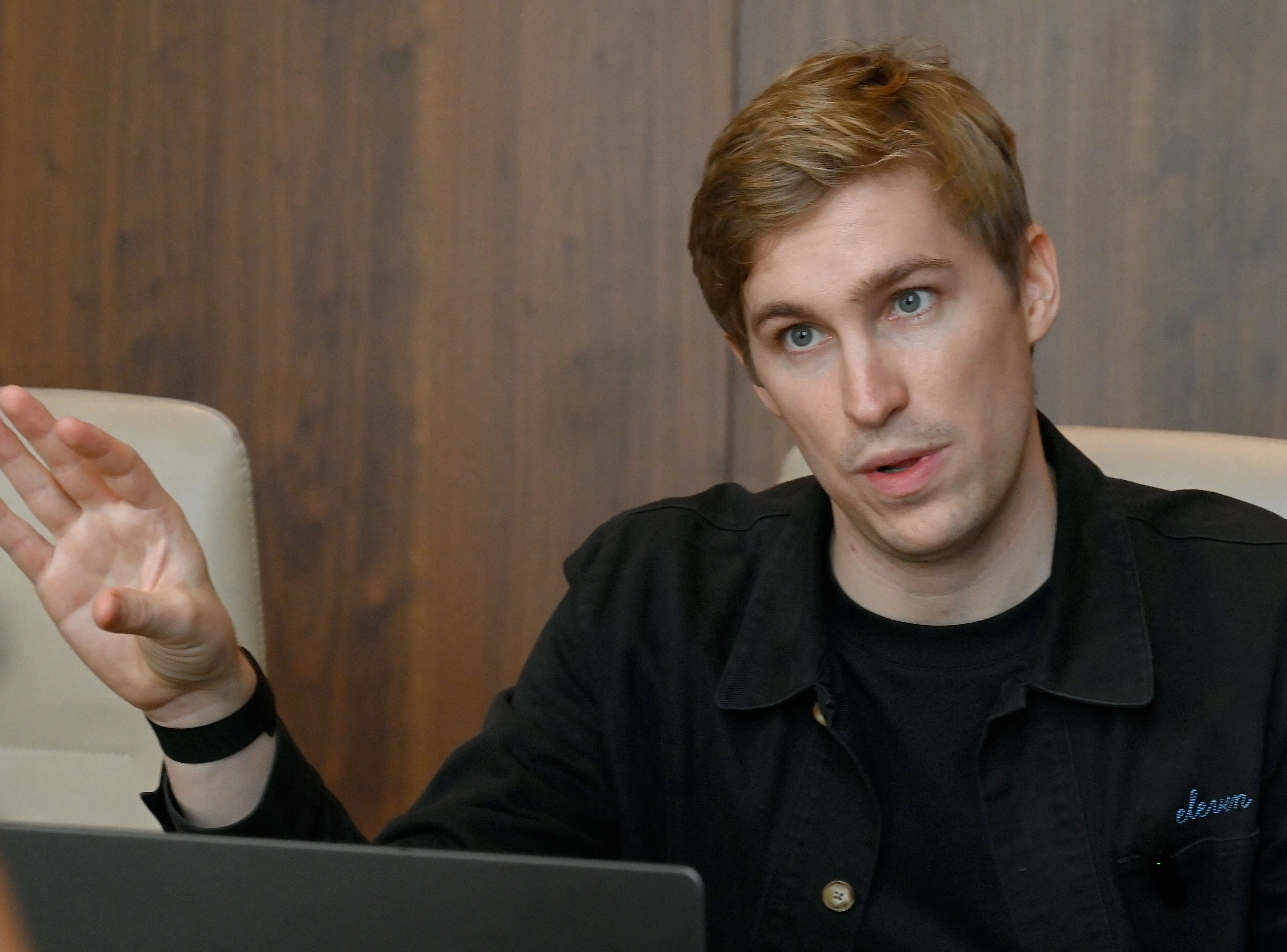 Mati Staniszewski, cofounder and CEO of ElevenLabs
ElevenLabs plans to expand its AI voice technology to all 22 officially recognised Indian languages in the coming months, as the London-based company looks to deepen its presence in what it calls its biggest market outside the US.
Language push: The company currently supports 14 Indian languages on its latest text-to-speech (TTS) model, Eleven V4, which was launched last week, Mati Staniszewski, cofounder and CEO of ElevenLabs, said at the company’s Bengaluru Summit on October 6.
Key market: India has been a key market for ElevenLabs from its early days, with JioStar among its first customers in the country.
Beyond voice: The company is pushing its Eleven Agents platform for enterprise use cases. The platform allows businesses to create, deploy, and monitor conversational AI agents across more than 90 languages, with enterprise security and controls.
Local expansion: The company is also building local teams in India and working with government and nonprofit organisations. It is partnering with the Indian government’s Department of Empowerment of Persons with Disabilities on technology to restore the voices of people who have lost them because of illness or injury.

More than 20,000 employees have moved from global capability centres (GCCs), enterprise information technology subsidiaries, and product operations to IT services providers in the past 12 months, as companies shift parts of their technology operations to external providers, per industry estimates.
Recent deals:
Pure GCC transfers: Around 3,000 of the 20,000-plus employees were part of pure GCC transitions, according to market research firm EIIRTrend. The broader pool also includes internal operations, third-party services, enterprise IT subsidiaries, and product carve-outs, where specific product operations are transferred to IT services providers.
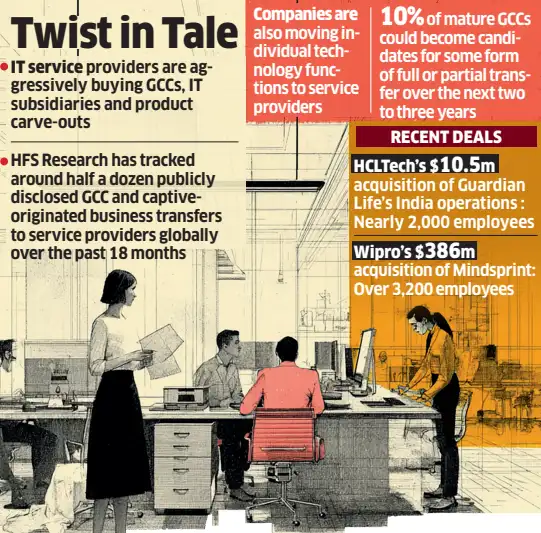
Why it matters: IT service providers are aggressively chasing business acquisitions in a low-growth environment, while companies are reassessing captive operations that lack scale or are difficult to justify economically.
What’s next: HFS Research expects the trend to continue, with around 10% of mature GCCs potentially becoming candidates for some form of full or partial transfer over the next two to three years.
Also Read: IT companies forecast to post muted second quarter

Insurance brokers are opposing Irdai’s proposed reforms, including caps on commissions paid to banks, brokers, and agents, according to letters from Ibai (Insurance Brokers Association of India) to the finance minister and prime minister, per Reuters.
What Irdai proposes: The regulator's proposals include linking commission levels to the complexity of products and effort required to sell, with mandatory insurance covers such as third-party motor policies earning little or no commission.
Brokers’ concern: Ibai says in its letters that the new regulation may put at risk at least one million jobs over a five-year period. It also argues that the reforms may lead to a resurgence of unethical practices, such as insurers disguising excess commissions as marketing fees.
What they want: Ibai urged Irdai (Insurance Regulatory and Development Authority of India) not to mandate hard caps on commissions without "published impact assessment covering policyholders, employment, public sector insurers, and foreign investment". It has also requested an audience with the finance minister and prime minister, and requested that the current framework be allowed to run till its scheduled 2028 review.

Suppliers to India’s semiconductor manufacturing industry are seeking a regulatory framework for handling of industrial gases, many of which are toxic and flammable.
What’s the concern: Suppliers want Peso (Petroleum and Explosives Safety Organisation) to issue an updated framework. Industry insiders said that existing guidelines do not cover all gases used in semiconductor manufacturing, and added that around 50 gases could be involved in the process.
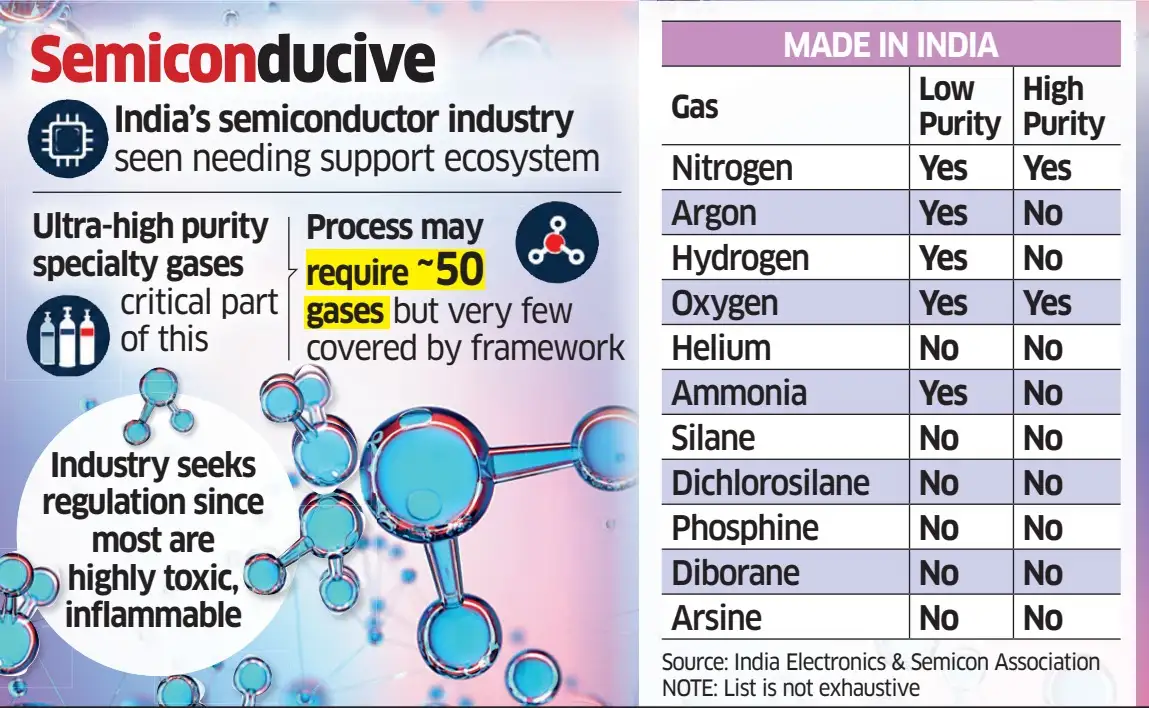
Why it matters: Suppliers say clear safety standards will be critical to prevent leaks, fires, and supply-chain disruptions while building investor confidence.
Global standards: Greater alignment with globally accepted practices would make it easier for semiconductor manufacturers operating in India to integrate their local facilities with overseas manufacturing and supply chains, said Diganta Sarma, head of business development and strategy at Inox Air Products.
..jpg "mamaearth-ipo-meet-ghazal-and-varun-alagh-cofounders-of-honasa-consumer (1).") (L-R) Honasa cofounders Varun Alagh and Ghazal Alagh
(L-R) Honasa cofounders Varun Alagh and Ghazal Alagh
Shares of Honasa Consumer rose 8.22% to close at Rs 478.10 on the BSE after the company released an update on its operating performance in Q2 FY27.
Growth outlook: Honasa’s largest brand, Mamaearth, is expected to report on-year NSV (net sales value) growth in the high teens, while its younger brands are expected to see growth around the mid-forties.
Offline push: The company said offline channels continue to lead, with both general trade and modern trade expected to post strong growth, supported by deeper direct distribution and improved point-of-sale execution. Online sales are also expected to maintain their growth momentum.
Profitability: Honasa Consumer expects to maintain its focus on improving Ebitda margins, with its Q2 FY27 operating margin likely to be in early double-digits, with strong on-year improvement.
Also in the letter:
■ Irdai caps face pushback
■ Chip firms seek gas rules
■ Honasa shares jump 8%
ElevenLabs targets all 22 Indian languages on its voice AI platform: cofounder Mati Staniszewski
ElevenLabs plans to expand its AI voice technology to all 22 officially recognised Indian languages in the coming months, as the London-based company looks to deepen its presence in what it calls its biggest market outside the US.
Language push: The company currently supports 14 Indian languages on its latest text-to-speech (TTS) model, Eleven V4, which was launched last week, Mati Staniszewski, cofounder and CEO of ElevenLabs, said at the company’s Bengaluru Summit on October 6.
Key market: India has been a key market for ElevenLabs from its early days, with JioStar among its first customers in the country.
Beyond voice: The company is pushing its Eleven Agents platform for enterprise use cases. The platform allows businesses to create, deploy, and monitor conversational AI agents across more than 90 languages, with enterprise security and controls.
Local expansion: The company is also building local teams in India and working with government and nonprofit organisations. It is partnering with the Indian government’s Department of Empowerment of Persons with Disabilities on technology to restore the voices of people who have lost them because of illness or injury.
Over 20,000 employees shift as IT firms acquire GCCs, captive tech carve-outs
More than 20,000 employees have moved from global capability centres (GCCs), enterprise information technology subsidiaries, and product operations to IT services providers in the past 12 months, as companies shift parts of their technology operations to external providers, per industry estimates.
Recent deals:
- TCS: Took over Best Buy’s India GCC under a multiyear deal.
- HCLTech: Acquired Guardian Life’s India operations, bringing nearly 2,000 employees under a seven-year partnership.
- Wipro: Acquired Olam Group’s IT and digital services business Mindsprint, involving more than 3,200 employees under an eight-year strategic transformation deal.
Pure GCC transfers: Around 3,000 of the 20,000-plus employees were part of pure GCC transitions, according to market research firm EIIRTrend. The broader pool also includes internal operations, third-party services, enterprise IT subsidiaries, and product carve-outs, where specific product operations are transferred to IT services providers.
Why it matters: IT service providers are aggressively chasing business acquisitions in a low-growth environment, while companies are reassessing captive operations that lack scale or are difficult to justify economically.
What’s next: HFS Research expects the trend to continue, with around 10% of mature GCCs potentially becoming candidates for some form of full or partial transfer over the next two to three years.
Also Read: IT companies forecast to post muted second quarter
Insurance brokers oppose Irdai's proposed reforms on commission caps
Insurance brokers are opposing Irdai’s proposed reforms, including caps on commissions paid to banks, brokers, and agents, according to letters from Ibai (Insurance Brokers Association of India) to the finance minister and prime minister, per Reuters.
What Irdai proposes: The regulator's proposals include linking commission levels to the complexity of products and effort required to sell, with mandatory insurance covers such as third-party motor policies earning little or no commission.
Brokers’ concern: Ibai says in its letters that the new regulation may put at risk at least one million jobs over a five-year period. It also argues that the reforms may lead to a resurgence of unethical practices, such as insurers disguising excess commissions as marketing fees.
What they want: Ibai urged Irdai (Insurance Regulatory and Development Authority of India) not to mandate hard caps on commissions without "published impact assessment covering policyholders, employment, public sector insurers, and foreign investment". It has also requested an audience with the finance minister and prime minister, and requested that the current framework be allowed to run till its scheduled 2028 review.
It’s safety first for gas suppliers at Semicon Inc
Suppliers to India’s semiconductor manufacturing industry are seeking a regulatory framework for handling of industrial gases, many of which are toxic and flammable.
What’s the concern: Suppliers want Peso (Petroleum and Explosives Safety Organisation) to issue an updated framework. Industry insiders said that existing guidelines do not cover all gases used in semiconductor manufacturing, and added that around 50 gases could be involved in the process.
Why it matters: Suppliers say clear safety standards will be critical to prevent leaks, fires, and supply-chain disruptions while building investor confidence.
Global standards: Greater alignment with globally accepted practices would make it easier for semiconductor manufacturers operating in India to integrate their local facilities with overseas manufacturing and supply chains, said Diganta Sarma, head of business development and strategy at Inox Air Products.
Honasa Consumer shares jump 8% as Q2 operating update points to strong growth
Shares of Honasa Consumer rose 8.22% to close at Rs 478.10 on the BSE after the company released an update on its operating performance in Q2 FY27.
Growth outlook: Honasa’s largest brand, Mamaearth, is expected to report on-year NSV (net sales value) growth in the high teens, while its younger brands are expected to see growth around the mid-forties.
Offline push: The company said offline channels continue to lead, with both general trade and modern trade expected to post strong growth, supported by deeper direct distribution and improved point-of-sale execution. Online sales are also expected to maintain their growth momentum.
Profitability: Honasa Consumer expects to maintain its focus on improving Ebitda margins, with its Q2 FY27 operating margin likely to be in early double-digits, with strong on-year improvement.
Want this newsletter delivered to your inbox?
I agree to receive newsletters and marketing communications via e-mail
Thank you for subscribing to Daily Top 5
We'll soon meet in your inbox.

