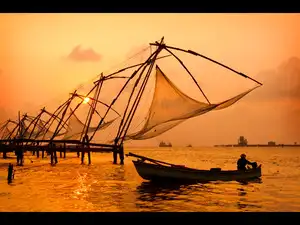
 iStock
Kochi supports a robust MSME (micro, small, and medium enterprise) ecosystem, with enterprises spread across coir, handicrafts, seafood, plastics, and information technology (IT).
Kochi, Kerala’s commercial and industrial hub, is known for a host of industries, including shipbuilding, maritime trade, food processing, tourism, spices, and more. The city also supports a robust MSME (micro, small, and medium enterprise) ecosystem, with enterprises spread across coir, handicrafts, seafood, plastics, and information technology (IT).
According to Udyam, Kerala has 24.16 lakh registered MSMEs. The dashboard numbers show that the registered units are primarily micro enterprises (over 12.88 lakh on Udyam Registration Portal plus 11.10 lakh informal micro enterprises on Udyam Assist Portal), alongside roughly 13,928 small, and 871 medium enterprises.
Grinson George, Director, ICAR-Central Marine Fisheries Research Institute, Kochi, says that a lot is going for Kerala, but policy bottlenecks persist. “There should be open water leasing policies in the coastal waters up to 12 nautical miles by the respective states. We submitted a draft policy to the Government of India, which has been circulated to all the states,” he says.
“Once these policy bottlenecks are removed, a lot of large investments can come in from the MNC side. This will not only support the creating an economic ecosystem but will also be beneficial for the coastal communities that are residing in those areas,” he adds.
Register for the Kochi event here
George points to the Kerala government’s ‘Mission Samudra’ initiatives, which he believes could deliver significant economic benefits. “The government has realised the potential of the 600-km coastline and the subsequent opportunities it offers. In a city like Kochi, every alternate job has some connection with the ocean—be it tourism, fisheries, freight management, hotel industry, and the like. Fishing is also a major activity in the city, and we have farming activities, such as coastal aquaculture and cage farming activities, etc., coming up. The Kerala government is taking special initiatives in these areas, including exploring seaweed-related integrated multi-trophic aquaculture,” he says.
Alex Ninan, National Vice President, Seafood Exporters Association of India (SEAI), shares George’s assessment of Kerala’s seafood industry, saying that although Kerala has the highest number of seafood processing factories, issues such as raw material availability exist. “Even though we have an excellent environmental situation for growing aquaculture, it is not happening to the extent it should. These are some of the concerns we have raised with the government, which they are looking into right now,” he says.
Among some of the new sectors coming up, Ninan sees biotechnology as a promising bet in the times to come. “A lot of people are getting into biotechnology. The thing about Kerala is that the literacy rate is high. So, we have a lot of these youngsters who want to venture out into different things, and the skill set is quite good. Unfortunately, many of them fly out of the country due to a lack of opportunities here. That is the sad part, and it is one of our concerns,” he says.
On the bright side, Jibran Asif, Director, Abad Group of Hotels & Resorts and Treasurer, Kerala Travel Mart Society, highlights some of the aspects that are going in favour of the state, specifically from a tourism perspective. Asif points out that road infrastructure has shown significant progress. “Connectivity from the northern to the southern parts of Kerala is improving, with the development of six-lane roads. This will make travel across the state much easier. Kerala also has four international airports, but only two are adequately utilised in terms of international flight connectivity. Improving connectivity through these airports presents another significant opportunity,” he says.
Elaborating on the untapped potential in tourism, Asif says that there are several opportunities to develop tourism experiences in and around Kochi. Challenges relating to air travel, however, continue to be a deterrent. “While airfares have increased across destinations, flights to Kerala, particularly Kochi, tend to be expensive compared with other major cities. This makes it difficult for travellers to choose Kerala. We are competing not just with other Indian states but also with international destinations. In wellness and beach tourism, for instance, we compete with Sri Lanka, while in leisure tourism, we compete with Thailand,” he highlights.
While Kerala holds a strong position in segments like wellness and ayurveda, it is leisure tourism where competition is stiffer. “For instance, a flight from Delhi to Kochi can cost around Rs 20,000-25,000, while travelling from Delhi to Thailand may cost only slightly more. Flight connectivity and pricing are, therefore, major issues. We have consistently highlighted the need to increase the number of flights to Kerala,” he says.
Another aspect is the promotion of lesser-known tourist destinations, since travellers are increasingly looking for experiences. “As road infrastructure improves, northern Kerala can be developed further. For instance, destinations such as Wayanad have good tourism infrastructure and accommodation properties. However, there is a need to develop circuits connecting them with places such as Kannur and Kasaragod, which have beautiful beach destinations but lack adequate hotel inventory,” he says.
According to Udyam, Kerala has 24.16 lakh registered MSMEs. The dashboard numbers show that the registered units are primarily micro enterprises (over 12.88 lakh on Udyam Registration Portal plus 11.10 lakh informal micro enterprises on Udyam Assist Portal), alongside roughly 13,928 small, and 871 medium enterprises.
Grinson George, Director, ICAR-Central Marine Fisheries Research Institute, Kochi, says that a lot is going for Kerala, but policy bottlenecks persist. “There should be open water leasing policies in the coastal waters up to 12 nautical miles by the respective states. We submitted a draft policy to the Government of India, which has been circulated to all the states,” he says.
“Once these policy bottlenecks are removed, a lot of large investments can come in from the MNC side. This will not only support the creating an economic ecosystem but will also be beneficial for the coastal communities that are residing in those areas,” he adds.
Register for the Kochi event here

George points to the Kerala government’s ‘Mission Samudra’ initiatives, which he believes could deliver significant economic benefits. “The government has realised the potential of the 600-km coastline and the subsequent opportunities it offers. In a city like Kochi, every alternate job has some connection with the ocean—be it tourism, fisheries, freight management, hotel industry, and the like. Fishing is also a major activity in the city, and we have farming activities, such as coastal aquaculture and cage farming activities, etc., coming up. The Kerala government is taking special initiatives in these areas, including exploring seaweed-related integrated multi-trophic aquaculture,” he says.
Alex Ninan, National Vice President, Seafood Exporters Association of India (SEAI), shares George’s assessment of Kerala’s seafood industry, saying that although Kerala has the highest number of seafood processing factories, issues such as raw material availability exist. “Even though we have an excellent environmental situation for growing aquaculture, it is not happening to the extent it should. These are some of the concerns we have raised with the government, which they are looking into right now,” he says.
Among some of the new sectors coming up, Ninan sees biotechnology as a promising bet in the times to come. “A lot of people are getting into biotechnology. The thing about Kerala is that the literacy rate is high. So, we have a lot of these youngsters who want to venture out into different things, and the skill set is quite good. Unfortunately, many of them fly out of the country due to a lack of opportunities here. That is the sad part, and it is one of our concerns,” he says.
On the bright side, Jibran Asif, Director, Abad Group of Hotels & Resorts and Treasurer, Kerala Travel Mart Society, highlights some of the aspects that are going in favour of the state, specifically from a tourism perspective. Asif points out that road infrastructure has shown significant progress. “Connectivity from the northern to the southern parts of Kerala is improving, with the development of six-lane roads. This will make travel across the state much easier. Kerala also has four international airports, but only two are adequately utilised in terms of international flight connectivity. Improving connectivity through these airports presents another significant opportunity,” he says.
Elaborating on the untapped potential in tourism, Asif says that there are several opportunities to develop tourism experiences in and around Kochi. Challenges relating to air travel, however, continue to be a deterrent. “While airfares have increased across destinations, flights to Kerala, particularly Kochi, tend to be expensive compared with other major cities. This makes it difficult for travellers to choose Kerala. We are competing not just with other Indian states but also with international destinations. In wellness and beach tourism, for instance, we compete with Sri Lanka, while in leisure tourism, we compete with Thailand,” he highlights.
While Kerala holds a strong position in segments like wellness and ayurveda, it is leisure tourism where competition is stiffer. “For instance, a flight from Delhi to Kochi can cost around Rs 20,000-25,000, while travelling from Delhi to Thailand may cost only slightly more. Flight connectivity and pricing are, therefore, major issues. We have consistently highlighted the need to increase the number of flights to Kerala,” he says.
Another aspect is the promotion of lesser-known tourist destinations, since travellers are increasingly looking for experiences. “As road infrastructure improves, northern Kerala can be developed further. For instance, destinations such as Wayanad have good tourism infrastructure and accommodation properties. However, there is a need to develop circuits connecting them with places such as Kannur and Kasaragod, which have beautiful beach destinations but lack adequate hotel inventory,” he says.
Add  as a Reliable and Trusted News Source
 Add Now!











 ETPrime Membership