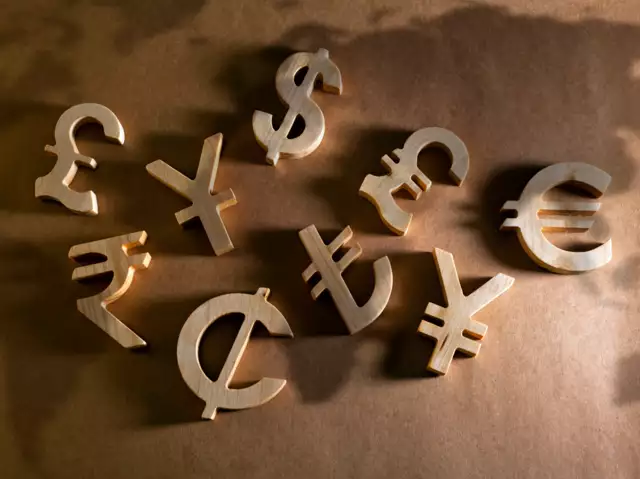
The backlash against Fairfax's acquisition of IDBI Bank reflects India's lingering suspicion of private and foreign capital. Despite strong economic fundamentals and the need for FDI, protectionist attitudes persist.
India's suspicion of foreign capital persists, risking investor confidence despite its growing need for FDI.
Aditya Sinha
Assistant consultant, Economic Advisory Council to PM
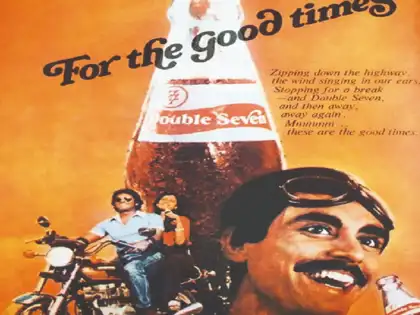
In 1977, Janata Party government asked Coca-Cola to dilute its equity to 40% and surrender its concentrate formula. Coca-Cola refused and exited India. GoI responded with a homegrown cola, Double Seven, developed by Central Food Technological Research Institute (CFTRI) in Mysore and manufactured by PSU Modern Bakeries. Named after the year, it is remembered by few, least of all for its taste. Coca-Cola returned in 1993. But the sentiment that drove it out never left.
Consider the present. India's real GDP grew 7.8% in April-June 2026. CAD in 2025-26 was $25.2 bn, or 0.6% of GDP. Forex reserves stood at $717.06 bn on Oct 30. Retail inflation, at 5.54% in September, is a wart. Few large economies can produce such a table.
One row is an embarrassment. In 2025-26, gross FDI was a record $94.53 bn. Foreign investors took back $53.58 bn. Indian companies invested $33.29 bn abroad. What remained, net FDI, was $7.65 bn. In 2020-21, it was nearly $44 bn. That is a fall of more than four-fifths in 5 yrs. A deficit of $25.2 bn was met by net FDI of $7.65 bn. The rest was borrowed, or came as portfolio money that flees at the first tremor. FDI creates no debt and arrives with technology and managers. A country in this position does not have the luxury of insulting those who bring it.
ET Bureau
Capital Under Suspicion
Yet, that is what we are doing. On Oct 14, GoI selected Fairfax Financial Holdings of Canada as the buyer of 60.72% of IDBI Bank for Rs 52,878 cr. The process took 4 yrs. The bank had spent May 2017 to March 2021 under Prompt Corrective Action framework of RBI, kept alive by capital from GoI and LIC. Fairfax bid Rs 81 a share.
GoI's benchmark valuation was Rs 75.99. Book value was Rs 51.85. The market price before final offers were invited was Rs 70.38. RBI cleared the bidders as fit. Fairfax is no fly-by-night operator. It set up ICICI Lombard with ICICI Bank in 2001, and put capital into CSB Bank in 2018.
Live Events
For this, it has been rewarded with a demand for a JPC, a 2-day strike and 3 charges: a profitable bank is being sold; it is being sold cheap; and the buyer will pay with the bank's own money. The third is a question for RBI and Sebi, which must test the proposed transfer of Digit and IIFL Capital into the bank. The second collapses on the numbers above. The first is not an argument at all.
ET Bureau
State's Costly Grip
Why should a profitable bank not be sold? It fetched 56% over book value because it is profitable. Would critics prefer that we sell only what nobody wants? Air India was sold on that principle, after 2 decades and losses. GoI and LIC keep 34% of whatever the bank becomes.
The objection has nothing to do with this transaction. It is inherited. Dadabhai Naoroji published Poverty and Un-British Rule in India in 1901, and the drain of wealth became the economic case for freedom. That was an honourable argument against a colonial power. After 1947, it curdled into doctrine against capital itself.
Industrial Policy Resolution of 1956 reserved the commanding heights for the state. IDBI was created by Industrial Development Bank of India Act 1964. 14 banks were nationalised on July 19, 1969. Fera 1973 set the 40% ceiling that evicted Coca-Cola. The word 'socialist' entered the Preamble in 1976. In 1991, the country pledged its gold to pay for imports. That was the bill.
In that inheritance, private capital is tolerated, foreign capital is suspected, and profit is proof of guilt. The state's ownership is an end, not a means. The statutes have gone. The instinct has not. It surfaces whenever a public asset is sold, and it asks only one question. Who is taking what is ours? It never asks the other. What did it cost us to keep it?
A bank that needed 4 yrs of regulatory intensive care and repeated infusions of public money was never ours for free. Nor was Double Seven.
Scrutiny belongs to regulators and auditors. What we are witnessing is something else. It is an attempt to lift the hammer after it has fallen. Every investor is watching. A country that punishes the winner of its own auction should not be surprised when the next auction has no bidders. The old maxim is pacta sunt servanda - agreements must be kept. Capital has a long memory. It forgives slowly.
(Disclaimer: The opinions expressed in this column are that of the writer. The facts and opinions expressed here do not reflect the views of www.economictimes.com.)






Subscription


 ET Bureau

 as a Reliable and Trusted News Source
 Add Now!












 ETPrime Membership